



Big Pharma's secret payments to corrupt doctors, scientists finally to be exposed by US government
Wednesday, December 10, 2014 by: Ethan A. Huff, staff writer
Tags: Sunshine law, corruption, pharmaceuticals
- Home remedies from herbal teas and grocery foods dissolve kidney stones and reverse renal failure
- Ten reasons why you shouldn't vaccinate your children
- Indian black salve: The magical cancer cure
- Royal Jelly benefits humans as well as bees
- 30 solid scientific studies that prove vaccines are linked with autism
- Bill Nye's logic: Rape, murder and pedophilia should be legal because 'You can't tell people what to do!'
- Top 9 vaccines you NEVER need and exactly why the CDC has to scare everybody into getting them
- Aajonus Vonderplanitz PhD, key informant in prosecution of Sharon Palmer and James Stewart, found to have faked academic credentials
- Naturally Prevent and Remove Dangerous Arterial Plaque
- The dirty history of Big Pharma's scientific censorship, oppression and destruction of human knowledge
- The United Nations 2030 Agenda decoded: It's a blueprint for the global enslavement of humanity under the boot of corporate masters
- Smokers or past smokers: Six ways to cleanse and revitalize your lungs
- Big Pharma suffers another major blow as study debunks high cholesterol myths, admitting statins are totally worthless
- Chinese herbs prevent hair loss & stimulate natural hair restoration without the need for baldness drugs
- Did you know? Oregano delivers more antioxidants than blueberries, oranges or apples
- Dr. Weil was right: Astragalus herb really helps fight the flu (influenza)
- Ten Natural Ways Grow Hair and Reduce Hair Loss
- Prominent heart doctor exposes the myths about cholesterol, statins and low fat diets
- The REAL FAKE NEWS exposed: '97% of scientists agree on climate change' is an engineered hoax... here's what the media never told you
- Home remedies from herbal teas and grocery foods dissolve kidney stones and reverse renal failure
- Gandhi still right after 90 years: Vaccines are toxic, unhealthy and ineffective
- Lack of Forgiveness Can Affect Our Health
- There is nothing innocent about these baby carrots
- Ten reasons why you shouldn't vaccinate your children
- Top 9 vaccines you NEVER need and exactly why the CDC has to scare everybody into getting them
- Boost Low White Blood Cell Count and Immune Function Naturally
- The best and worst forms of magnesium to take as a supplement
- Health Basics: The 11 most toxic vaccine ingredients and their side effects
- How to Detox Fluorides from Your Body
- Top six alkaline foods to eat every day for vibrant health
- Forget Filling Cavities: Regrow Your Teeth Instead
- Five unbeatable essential oils to help stop chronic digestive distress
- Heal and Soothe Stomach Ulcers without Mainstream Drugs
- Indian black salve: The magical cancer cure
- Lowe's agrees to $500,000 fine for violating lead paint rules
- Principle of astrology proven to be scientific: planetary position imprints biological clocks of mammals
- The REAL FAKE NEWS exposed: '97% of scientists agree on climate change' is an engineered hoax... here's what the media never told you
- Peanut oil in vaccines behind widespread peanut allergy epidemic
- 'Never has there been a safe vaccine,' Suzanne Humphries, MD, says in interview
- Lack of Forgiveness Can Affect Our Health
- Home remedies from herbal teas and grocery foods dissolve kidney stones and reverse renal failure
- Forget Filling Cavities: Regrow Your Teeth Instead
- Bill Gates says vaccines can help reduce world population
- The United Nations 2030 Agenda decoded: It's a blueprint for the global enslavement of humanity under the boot of corporate masters
- The best and worst forms of magnesium to take as a supplement
- Global warming data FAKED by government to fit climate change fictions
- Apricot Seeds Kill Cancer Cells without Side Effects
- Eighteen Overlooked Symptoms of Adrenal Fatigue
- Shock findings in new GMO study: Rats fed lifetime of GM corn grow horrifying tumors, 70% of females die early
- Ten reasons why you shouldn't vaccinate your children
- Beat cancer with 35% hydrogen peroxide
- How to Detox Fluorides from Your Body
- Canola oil: a chemical carcinogen that doesn't belong anywhere near your food
- Baking Soda Prevents Kidney Disease, Renal Failure and Kidney Dialysis
- The REAL FAKE NEWS exposed: '97% of scientists agree on climate change' is an engineered hoax... here's what the media never told you
- Beat cancer with 35% hydrogen peroxide
- The best and worst forms of magnesium to take as a supplement
- The United Nations 2030 Agenda decoded: It's a blueprint for the global enslavement of humanity under the boot of corporate masters
- Apricot Seeds Kill Cancer Cells without Side Effects
- Bill Gates says vaccines can help reduce world population
- Forget Filling Cavities: Regrow Your Teeth Instead
- Six little-known natural remedies for tinnitus
- The MMR vaccine, autism connection
- Supplements to detox the body from vaccinations
- Reverse and eliminate cataracts naturally without surgery
- Dandelion root extract found to kill leukemia cells, prostate cancer cells and chemo-resistant melanoma
- What's really in vaccines? Proof of MSG, formaldehyde, aluminum and mercury
- Peanut oil in vaccines behind widespread peanut allergy epidemic
- High-dose vitamin C injections shown to annihilate cancer
- Indian black salve: The magical cancer cure
- INVESTIGATION: Three days before Dr. Bradstreet was found dead in a river, U.S. govt. agents raided his research facility to seize a breakthrough cancer treatment called GcMAF
- The aloe vera miracle: A natural medicine for cancer, cholesterol, diabetes, inflammation, IBS, and other health conditions





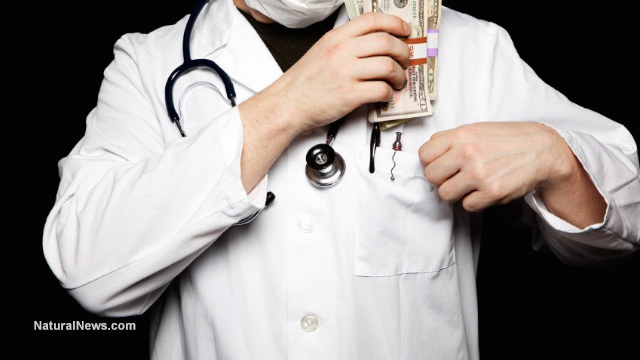
The Physician Payments Sunshine Act, which was successfully moved through the Senate with the help of an extensive investigation led by Senator Charles Grassley (R-IA), provisions that doctors who receive payoffs from drug or vaccine companies must disclose this when pushing new therapies or medical procedures from what would otherwise appear to be unbiased intentions.
The law was reportedly added to Obamacare because it was unlikely to pass on its own due to intense industry pressures against any sort of reform. Paying off doctors has become the bread and butter of Big Pharma drug marketing. It's both discreet and highly effective, repeatedly creating the illusion that the medical profession at large endorses the latest drugs and medical procedures, many of which aren't safe and don't work.
Many medical groups have become dependent upon drug industry payoffs
According to the Harvard Business Review's (HBR) Paul Thacker, who served as Sen. Grassley's lead investigator from 2007 to 2010, doctors and medical groups routinely accepts cash payments from the drug industry for speaking engagements, scientific papers, and other medical propaganda designed to make drugs and medical devices appear safer and more effective than they actually are.An investigation spearheaded by NPR (National Public Radio), Consumer Reports, and ProPublica found that in the three years leading up to its publishing in late 2010, drug companies had settled cases totaling $7 billion for paying doctors to promote drugs. In many cases, doctors were encouraged to prescribe drugs for off-label conditions, or to prescribe expensive drugs when they weren't actually needed.
"Companies were paying physicians to give speeches on behalf of their products and to publish studies (ghostwritten by the companies) that downplayed those products' side effects," wrote Thacker in a recent piece for HBR, noting that many medical professionals have been resistant to congressional efforts to reign in this unconscionably deceitful practice.
"After we launched investigations of more than three dozen patient-advocacy groups and professional medical societies, it became clear why: Most of those organizations depended on income from industry, and many physician-leaders of these groups received large consulting fees."
Disclosure doesn't always deter drug industry corruption
Though drug companies have had to fork out billions of dollars' worth of fines in recent years for defrauding the government and pushing many a dangerous and ineffective drug on consumers, including the infamous Vioxx and Avandia scandals, it is still apparently worth it for the industry to use trusted physicians as mouthpieces for ruthless drug promotion.And even with tighter restrictions on payment disclosure, drug companies are likely to continue bribing the medical industry to push their unsafe and potentially deadly products. According to a 2012 study published in the journal JAMA Internal Medicine, formerly known as Archives of Internal Medicine, disclosure requirements are unlikely to affect either prescribing behavior or health care costs, which could render them moot.
At the same time, a separate study published in the New England Journal of Medicine (NEJM) revealed that disclosure does affect the way some physicians view published medical studies. When it is transparent that a paper was funded or ghostwritten by a drug company, doctors are likely to scrutinize it more harshly, found researchers.
Science journals even more plagued by conflicts of interest
Interestingly, medical science has made much greater strides towards addressing conflicts of interest problems than general science. While NEJM and JAMA instituted their first conflict of interest policies back in 1984 and 1985, respectively, the two leading science journals, Science and Nature, didn't institute theirs until 1992 and 2001, respectively.In 2009, researchers from Tufts University found that science journals have almost always lagged behind medical journals in addressing conflicts of interest, and are generally worse at enforcing their already established disclosure policies.
"Industry has funded campaigns to undermine scientific work that has major public health implications, such as secondhand smoking, obesity, regulation of chemicals, and climate change," added Thacker. "In each case, hidden money buys off science experts, funds think-tank papers, and litters journals with ghostwritten studies."
Thacker's solutions include requiring all agencies that deal with the publishing of science to fully disclose all income sources and other potential conflicts of interest. He also urges the medical community to adopt universal reporting standards that others in the field of science can mimic, while at the same time disallowing the further publishing of any ghostwritten studies drafted by special interests.
Sources:
http://www.gpo.gov (pdf)
http://www.naturalnews.com
http://archinte.jamanetwork.com
http://www.nejm.org
http://www.tandfonline.com


Sunshine law at FETCH.news
Get independent news alerts on natural cures, food lab tests, cannabis medicine, science, robotics, drones, privacy and more.

Take Action: Support Natural News by linking to this article from your website
Permalink to this article:
Embed article link: (copy HTML code below):
Reprinting this article:
Non-commercial use OK, cite NaturalNews.com with clickable link.
Follow Natural News on Facebook, Twitter, Google Plus, and Pinterest

Science News & Studies

Medicine News and Information

Food News & Studies

Health News & Studies

Herbs News & Information

Pollution News & Studies

Cancer News & Studies

Climate News & Studies

Survival News & Information

Gear News & Information

News covering technology, stocks, hackers, and more






"Big Tech and mainstream media are constantly trying to silence the independent voices that dare to bring you the truth about toxic food ingredients, dangerous medications and the failed, fraudulent science of the profit-driven medical establishment.
Email is one of the best ways to make sure you stay informed, without the censorship of the tech giants (Google, Apple, Facebook, Twitter, YouTube, etc.). Stay informed and you'll even likely learn information that may help save your own life."
–The Health Ranger, Mike Adams