



In the older children, the connection between two brain areas involved in reward and motivation strengthened more in those from stable backgrounds than in children who had faced more difficult experiences, the report stated. Experts told the Epoch Times that early experiences influence brain wiring but do not determine a child's destiny. A child's developing brain constantly records patterns, and researchers are beginning to map how those patterns become part of the brain's wiring, according to the report.
What Counts as Early-Life Stress?
Chronic childhood stress can stem from long-term parental conflict, neglect, or abuse, according to the report. Deprivation can also be subtle. Johan Liebenberg, a clinical psychologist, told the Epoch Times that regular social drinking could become a form of deprivation if it leaves a parent repeatedly distracted or unavailable. The same can apply whenever a parent is consistently too preoccupied to notice a child's needs, he said.
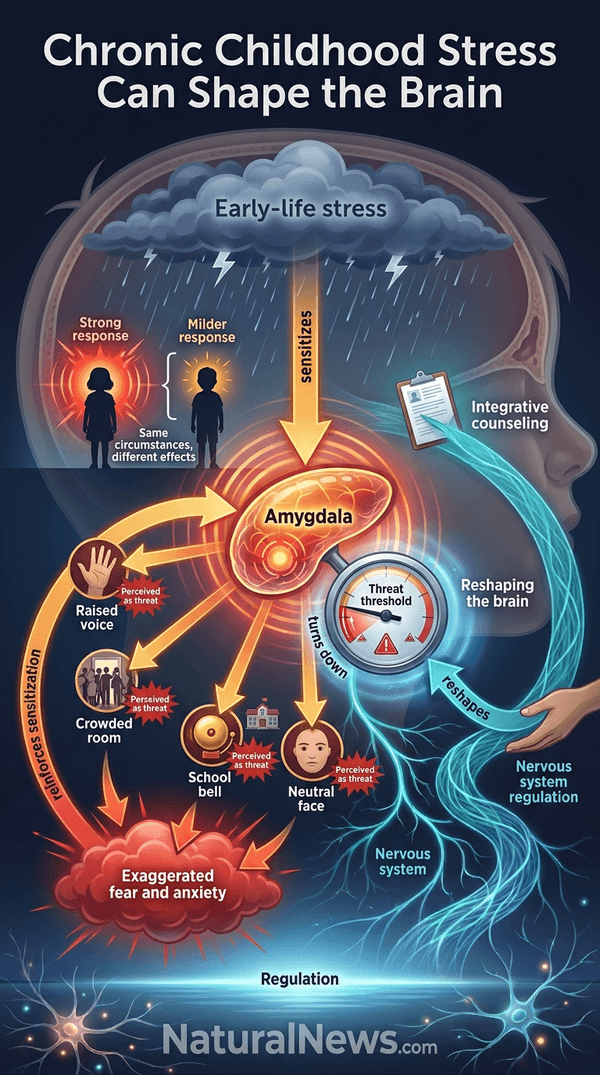
The same circumstances can affect two children differently. Sandra Nathan, an integrative counselor and nervous system regulation specialist, told the Epoch Times that what matters is not simply the event itself but how the child's developing nervous system experiences it, and whether a safe, responsive adult helps the child make sense of what is happening. Studies also indicate that early life stress can reduce hippocampal volume while sensitizing the amygdala, leading to exaggerated fear and anxiety responses [1].
What the Brain Learns From Chronic Stress
Early-life stress can sensitize the amygdala, the brain's threat and fear center, so that things that might not normally feel threatening are perceived as threats, producing stronger fear and anxiety, according to the report. A stressful childhood can also disrupt development of the prefrontal cortex, which is involved in decision-making and impulse control, the report stated. One possible mechanism is cortisol, which influences the branching of neurons and the strength of their connections.
Lidalize Grobler, an educational psychologist, told the Epoch Times that when the threat is chronic, the nervous system never gets the chance to settle. Adults who experienced chronic childhood stress often have "a highly activated nervous system" and are more likely to struggle with anxiety and depression, Grobler said.
Early stress may also affect how genes are used. Catherine Jensen Pena, a neuroscientist and assistant professor at the Princeton Neuroscience Institute, told the Epoch Times that a recent mouse study found early-life stress can change how DNA is packaged inside brain cells, potentially leaving some stress-related genes more easily activated later in life. She described such changes in the epigenome as thought to contribute to long-lasting functional changes in the brain, heightened stress sensitivity, and vulnerability to neuropsychiatric disorders.
The effects may extend beyond the person who experienced the stress. Parents' childhood trauma has been associated with higher levels of emotional and behavioral problems and cognitive difficulties in their children, and some studies have found that mothers with a history of childhood trauma tend to have newborns with smaller brain volumes, according to the report.
Signs to Watch For
Because early-life stress can take many forms, so can the ways a child responds to it. Nathan told the Epoch Times that parents might notice changes in mood or behavior, including increased anxiety, irritability, withdrawal, or emotional outbursts, as well as changes in sleep, appetite, concentration, school performance, and physical complaints such as headaches or stomach aches.
Other children respond in the opposite way. Nathan said some become very compliant rather than disruptive, try hard to please everyone, or seem unusually responsible for their age. Adults may later describe themselves as anxious, overthinkers, people-pleasers, or unable to switch off, she said.
Because such signs are common in childhood and can have many causes, Nathan said a change from what is usual for a particular child is often more informative than any single symptom. She encouraged parents to ask not just how to stop a behavior but what the behavior might be communicating.
How to Reshape a Child's Stressed Brain
Early experience is influential but "is not destiny," Nathan told the Epoch Times. Grobler said the same plasticity that lets stress shape the developing brain also works in the other direction. Grobler said one solid relationship a child can rely on can help buffer the potential long-term effects of early-life stress, adding that parents cannot eliminate early-life stress from children but can remain present when it happens.
Nathan recommended simple routines around meals, bedtime, and time together to provide a sense of stability when other aspects of life feel uncertain. She said ten minutes of undivided attention, listening, or playing together can help strengthen a child's sense of connection and security. When a child is upset, she suggested acknowledging the child's feelings before correcting behavior, then talking about what happened and setting boundaries once the child is calmer. Nathan also said that when parents get something wrong, returning afterward to acknowledge it can be meaningful.
Some therapies can also help. According to the report, Parent-Child Interaction Therapy, in which a therapist coaches parents as they interact with their child, can reduce parenting stress, negative parenting, child behavioral problems, and trauma symptoms while lowering the risk of abuse. For older children, group mindfulness-based cognitive therapy has been shown to improve emotion regulation and social functioning in adolescents with mood or psychosis symptoms, particularly those who have experienced high levels of adversity, according to the report.
None of this means parents need to be perfect. Nathan told the Epoch Times that what matters is that a child experiences enough consistency, connection, and repair. Grobler said parents cannot protect children from every difficult experience, but can be present, loving, and attuned as they move through them.
References
- Early life stress and brain development: Neurobiological and behavioral. https://www.sciencedirect.com/science/chapter/bookseries/pii/S0079612325000044
Explainer Infographic










Please contact us for more information.


