


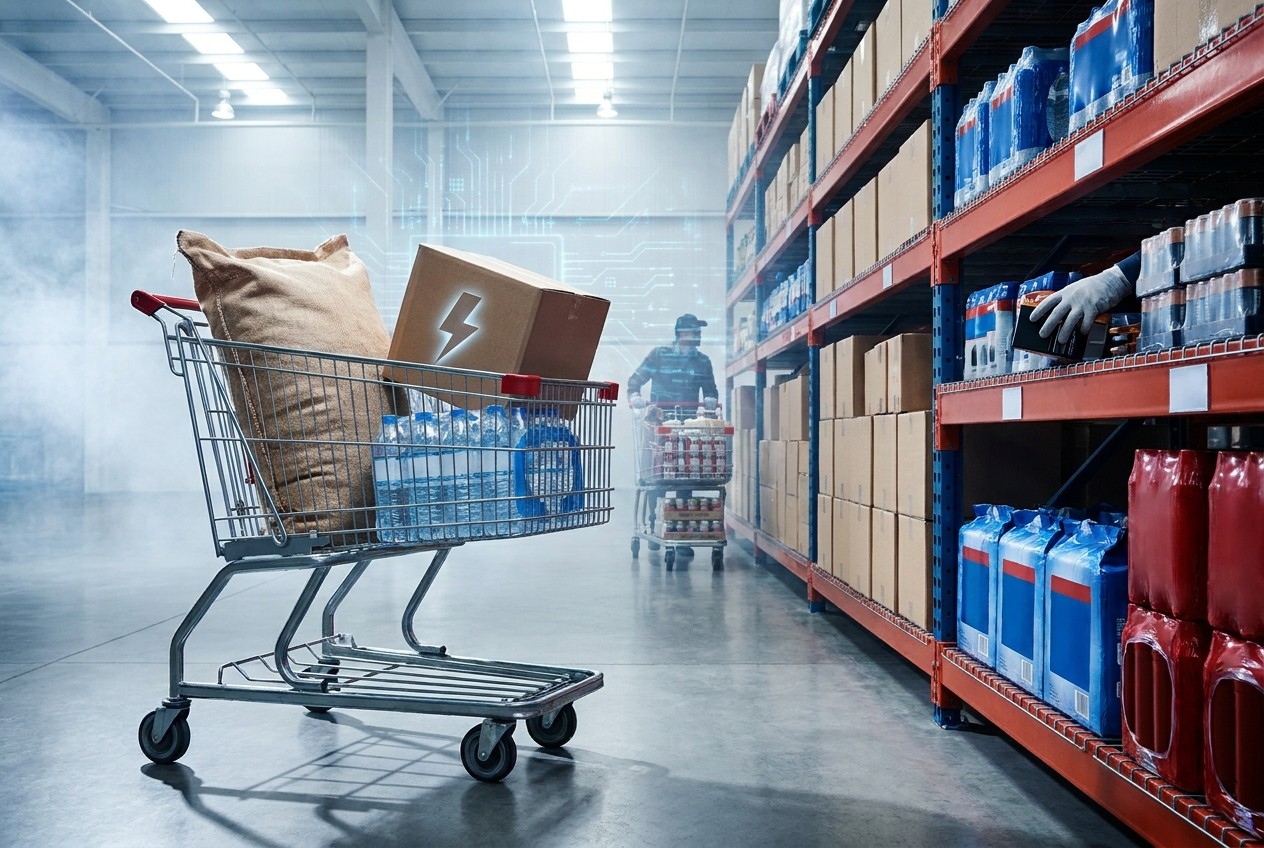
The analysts said panic purchases have picked up at the membership warehouse retailer and likely lifted same-store sales [2]. The clearest measure cited in the note was generator inventory.
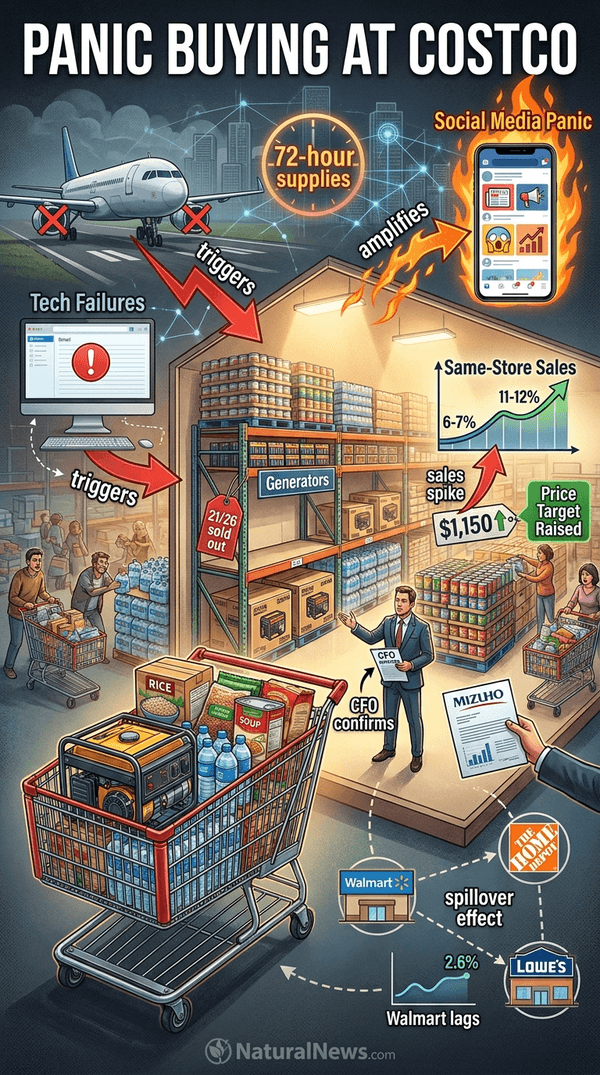
As of Sunday night, Nov. 15, 21 of the 26 high-ticket generators the company offers online were sold out, the note stated [3]. Reports of shoppers buying bottled water, generators and batteries circulated as the outages dominated social media discussion [4].
Same-Store Sales Rise 8.1% in October
Mizuho analysts said conversations with Costco management suggested same-store sales trends in the first three weeks of October were similar to prior months. Sales at U.S. comparable locations, excluding gasoline, climbed 11% to 12% during the final week of October – up from roughly 6% to 7% growth during the first three weeks of the month, according to estimates reported by NewsNation [5].
Same-store sales, or sales at more established locations, are a widely followed metric for retailers. The analysts did not specify which emergency-prep items drove the increase beyond the generator sellout, but they said the final-week acceleration changed the monthly picture.
Costco has not publicly commented on the analysts' note. Broader retail context has been uneven: comparable sales at Walmart U.S. stores open at least a year, excluding fuel, rose 2.6% in the second quarter, below the lowest analyst estimate compiled by Bloomberg [6].
Other Retailers May Also See Gains From Emergency Prep
Costco is known for extra-large package sizes intended to go a long way, such as 50-pound bags of rice and 40-pound cases of chicken. That bulk format gives the chain a central role when households decide to stock up at once, a pattern observed during earlier periods of disruption when shoppers flocked to big box wholesale stores to stock up on food and supplies [7].
The Mizuho analysts said other mass retailers – including Walmart, Home Depot and Lowe's – also may be benefiting from shoppers making emergency preparations [8].
The analysts attributed the sales boost to specific events: the Microsoft Outlook outage, the ground stoppage for all U.S. airline flights and apocalyptic concerns flaring up across social media [9]. They said these factors contributed to increased emergency-prep sales at Costco and possibly other retailers.
Costco Chief Financial Officer Gary Millerchip confirmed to Bloomberg an increase in purchases of non-perishable food items and emergency gear. He attributed it to the various concerns that have surfaced during this period [10].
Analysts Raise Price Target, Note Elevated Valuation
Mizuho raised its price target on Costco to $1,150 a share from $1,100, partially based on the strength of the panic buying [11]. The analysts anticipate that pantry-loading and holiday shopping will add to Costco's sales [8][11]. The stock's current multiple, the analysts suggested, leaves little room for error.
The episode carries a broader lesson about concentrated dependence on digital systems. A series of high-profile technology disruptions involving major banks, airlines and technology companies has sparked panic-buying, a phenomenon widely seen during the uncertainty of the Wuhan coronavirus (COVID-19) pandemic. Some people responded by purchasing emergency supplies, stocking up on food and water and keeping cash on hand in case critical systems become unavailable [12].
Commentators have argued that the term "panic buying" is often misapplied, since buying extra supplies in response to real disruptions is not inherently irrational [13], and that stocking up ahead of trouble is a deliberate strategy rather than a panicked reaction [14]. Households that keep provisions on hand – water, non-perishable food and backup power -- reduce their exposure when flights stop, email platforms fail or stores run short. Officials have urged households to maintain at least 72-hour supplies [15].
Conclusion
Mizuho analysts anticipate that pantry-loading and holiday shopping will add to Costco's sales [11]. Costco has not publicly commented on the analysts' note. The analysts' observations are based on conversations with management and their own analysis, according to the note.
The underlying driver of the sales gain -- anxious households restocking essentials after a week of outages -- is one that preparedness advocates say points to a durable habit rather than a temporary fad. Building a structured, year-round supply plan, rather than reacting in a burst when news breaks, is the approach preparedness writers recommend for households that want to avoid being caught short [16].
References
- Costco is benefiting from ‘apocalyptic concerns’ as customers stock up on goods, analysts say. https://www.marketwatch.com/story/costco-is-benefiting-from-apocalyptic-concerns-as-customers-stock-up-on-goods-analysts-say-24f611ab
- Tech outages are causing people to panic-buy. Costco is benefiting, Mizuho says. https://www.cnbc.com/2026/11/18/tech-outage-costco-panic-buying.html
- Costco gets sales lift from outage-driven emergency stockpiling. https://qz.com/costco-sales-lift-outage-stockpiling-mizuho-111826
- Costco shoppers panic-buy water, generators after freak outages. https://nypost.com/2026/11/17/business/costco-shoppers-panic-buy-water-generators-after-freak-outages/
- Customers turn to Costco for emergency supplies after string of tech outages. https://www.newsnationnow.com/business/costco-panic-buying-surge-amid-tech-outages/
- Walmart Crashes Most Since 2022 After Huge Comp Store Sales Miss. https://www.zerohedge.com/markets/walmart-crashes-most-2022-after-huge-comp-store-sales-miss
- Panic buying setting in across US as coronavirus outbreak fears rise but preppers who have expected this are REA - NaturalNews.com, March 01, 2020. by NaturalNews.com
- Costco Sales Rise as Shoppers Stock Up on Essentials After Outages, Analysts Say. https://archive.ph/AMddg
- Costco Shoppers Are Panic-Buying Due to Outages, Analysts Say. https://www.allsides.com/news/2026-11-19-0800/business-costco-shoppers-are-panic-buying-due-outages-analysts-say
- Shoppers Rush to Stock Up on Emergency Supplies, Driving Sales Surge at Costco. https://lavocedinewyork.com/en/news/2026/11/19/shoppers-rush-to-stock-up-on-emergency-supplies-driving-sales-surge-at-costco/
- Costco Shoppers Are Panic-Buying Due to Outages, Analysts Say. https://www.bloomberg.com/news/articles/2026-11-17/costco-shoppers-are-panic-buying-due-to-outages-analysts-say
- How Americans Should Prepare for Major Power and Tech Outages. https://www.ntd.com/how-americans-should-prepare-for-major-power-and-tech-outages_1186137.html
- Health Ranger Report - panic buying word manipulation - Mike Adams - BrightVideos.com, April 09, 2020.
- It's Not Panic Buying; It's Preparedness: Why Smart People Are Stocking Up Now - NaturalNews.com, September 22, 2026.
- Doomsday Shopping Lifts Costco and Walmart as Preppers Buy Emergency Supplies. https://www.benzinga.com/analyst-stock-ratings/price-target/26/11/63412145/doomsday-shopping-lifts-costco-and-walmart-as-preppers-buy-emergency-supplies
- Prepping 101 A year round blueprint for building confidence and readiness one month at a time - NaturalNews.com, February 06, 2026.
Explainer Infographic








Please contact us for more information.


