


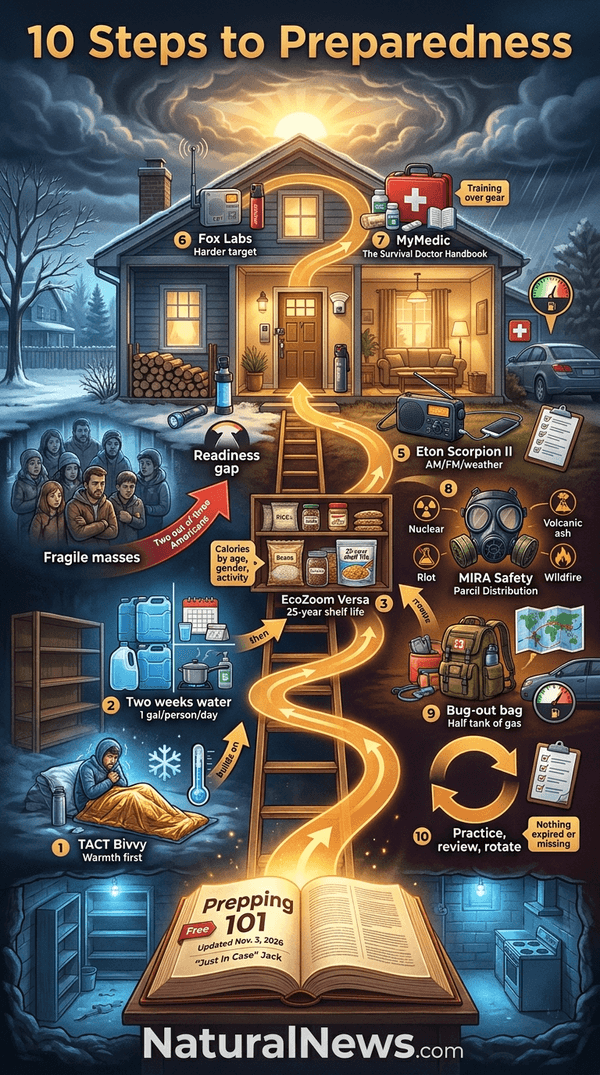
The guide says two out of three Americans do not feel prepared for a three-day disaster, citing that figure as evidence of a gap in household readiness. Its purpose is to address contradictory advice circulating in the preparedness space and to help readers avoid what it terms the "fragile masses."
According to the guide, the topics are ordered to move a beginner from a vulnerable starting point toward a base of supplies, tools and confidence for most future disasters. Each step is intended to build on the previous one and completing all 10 steps provides a foundation for short-term disruptions.
Warmth and Water Lead Guide's First Steps
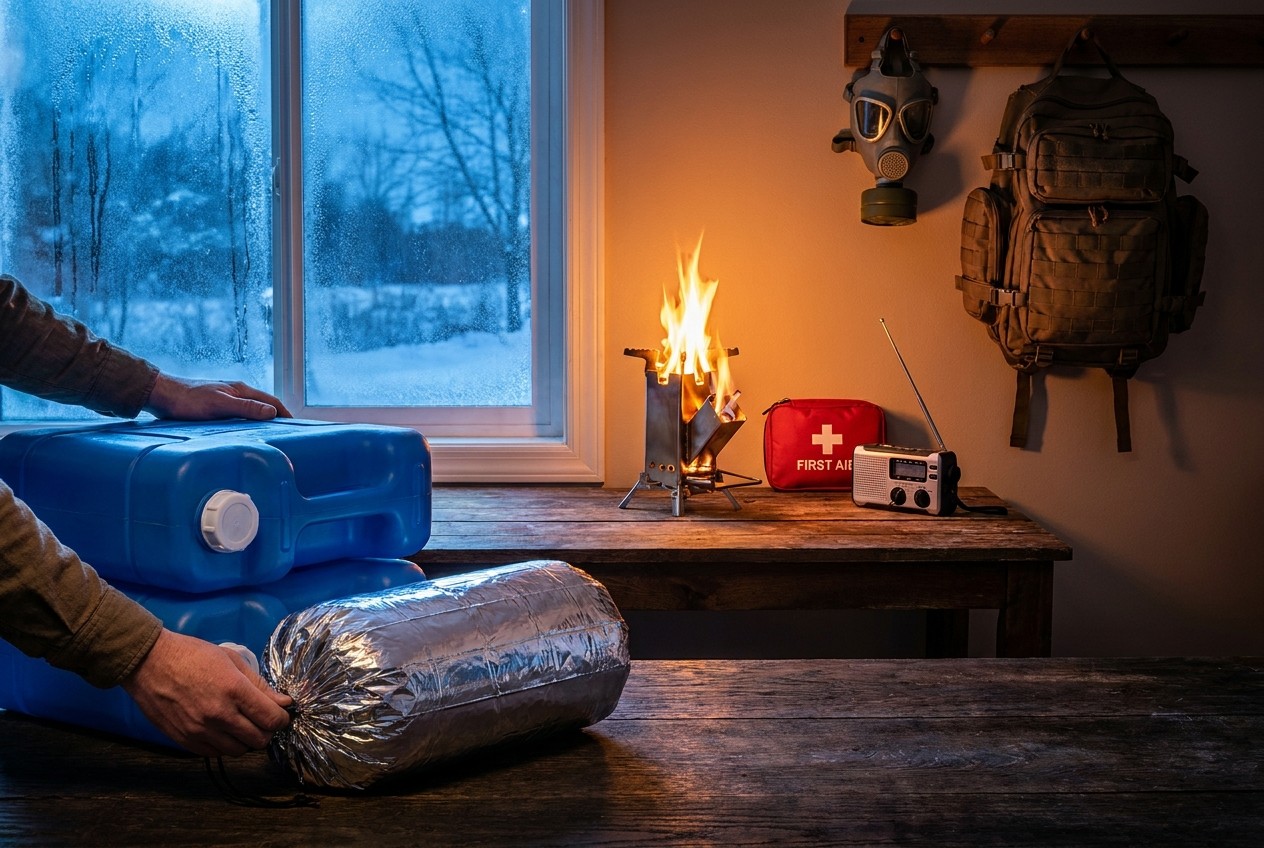
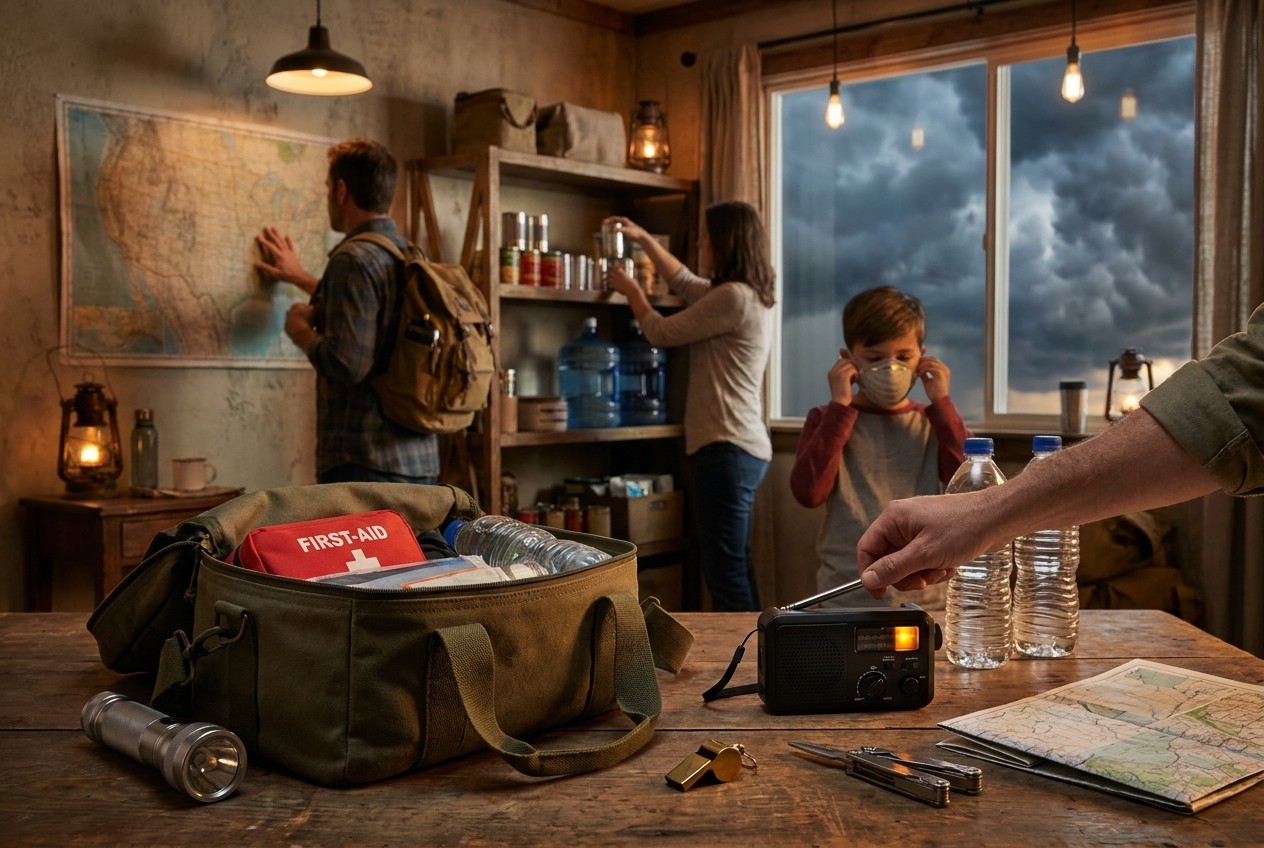
Step 1 of the guide recommends having one emergency sleeping bag per household member for below-freezing power outages. But it notes that this can be skipped by households with a wood stove or fireplace and an adequate wood supply. The guide states that a lack of warmth can be fatal in freezing temperatures, making this step a priority in cold climates.
Step 2 calls for stockpiling two weeks of water at one gallon per person per day. The guide states that half the stored water is intended for drinking and half for cooking and sanitation. It recommends food-grade emergency water containers and cites affordability and attainability as reasons for the two-week target.
Water storage is a common element of preparedness planning. The Prepper's Blueprint, by Tess Pennington, advises assessing existing supplies and then acquiring what is missing while prioritizing nutritional value [2]. Other preparedness resources note that stockpiling food and water reduces the impact of disruptions to normal shopping patterns [3].
Food Storage and Cooking Methods Detailed
Step 3 advises stockpiling two weeks of non-perishable calories, calculated by age, gender and activity level. The guide offers DIY options such as rice, beans, peanut butter and hardtack, or done-for-you freeze-dried meals lasting 25 years or more. Freeze-dried meal suppliers provide an alternative for those who do not want to assemble their own stockpile.
Step 4 recommends a rocket stove to boil water with minimal wood fuel. The guide says users should stock enough firewood to cook two weeks of food and warns against burning wood indoors due to fire and fume risks. It notes that a backyard fire pit is inefficient compared with a rocket stove.
Preparedness literature consistently addresses cooking contingencies. Jim Cobb's Prepper's Long-Term Survival Guide includes checklists for food preservation and storage equipment, including canning supplies and dehydrators [4].
Communications and Defense Steps Included
Step 5 recommends a hand-crank radio to receive AM/FM/weather information when power is out. The guide describes the radio as a lifeline for information during a crisis because televisions, computers and phones may not work without electricity. It notes that some models allow the hand crank to charge a phone.
Step 6 addresses personal defense with pepper spray and home defense with deadbolts, alarms and motion-sensing lights. The guide states renters should request deadbolts in writing and may use door stop alarms or jammer bars. The goal is to make a home a harder target than neighboring homes.
Home security planning is reflected in other preparedness materials. Jim Cobb's Urban Emergency Survival Plan lists tools for bug-out bags and notes that a few tools can make the difference between thriving and surviving [5]. Jim Cobb's Prepper's Home Defense, referenced in a bibliography, addresses security strategies to protect a family [4].
Medical, Gas Mask and Bug-Out Preparations
Step 7 calls for a basic first aid kit and training, citing MyMedic kits and The Survival Doctor Handbook. The guide states that emergency rooms may be full or inaccessible during a widespread disaster and that first responders may prioritize their own families. It recommends that households learn basic first aid and keep the supplies needed to perform it.
Step 8 recommends having at least one quality gas mask and two filters per mask. The guide lists nuclear attacks, chemical attacks, riots, volcanic ash, pandemics and wildfires as scenarios in which a gas mask may be necessary. Having at least one mask provides options for a household.
Step 9 advises building a bug-out bag and keeping at least half a tank of gas. The guide says hunkering down is preferred for most disasters, but evacuation may be necessary for floods or fires. It recommends that residents identify safe travel paths out of their neighborhoods.
The concept of a bug-out bag is tied to military practice. A reference document states that the term is related to the "bail-out bag" carried by military aviators and to the Korean War practice of U.S. Army units preparing to "bug out" when being overrun was imminent [6]. Other guides describe the contents of a get-home bag and note that emergency rations vary in shelf stability [7].
Coalition and Advanced Resilience Advised
Step 10 recommends joining a survival coalition after completing the first nine steps. The guide states the 10 steps cover warmth, water, food, cooking, communications, defense, medical, air and bug-out needs. It also says the basics are not sufficient for long-term disasters and describes advanced measures such as rainwater collection, gardens, debt reduction and side businesses.
The guide concludes that preparedness should reduce fragility and increase resiliency. Readers who complete all 10 steps will be better positioned for future disasters.
Community resilience is a recurring theme in preparedness media. Preparedness advocates often emphasize that a single household's readiness can be strengthened by working with neighbors, sharing resources and coordinating response plans ahead of a disruption. Building local networks and identifying trusted contacts are commonly recommended as complements to the individual steps outlined in the guide.
References
- Prepping 101: How To Easily Prepare For The Future FAST. https://www.skilledsurvival.com/prepping-basics/
- The Preppers Blueprint - The Step-By-Step Guide To Help You Through Any Disaster. Tess Pennington
- Store This, Not That!: The Quick and Easy Food Storage Guide. by Crystal Godfrey & Debbie Kent
- Preppers Long-Term Survival Guide. Jim Cobb
- Urban Emergency Survival Plan. Jim Cobb
- Offtheshelf Red Cross preparedness kit Bugout bag Wikipedia. PScript5dll Version 522
- Building a Get Home Bag. David Nash
Explainer Infographic








Please contact us for more information.


