


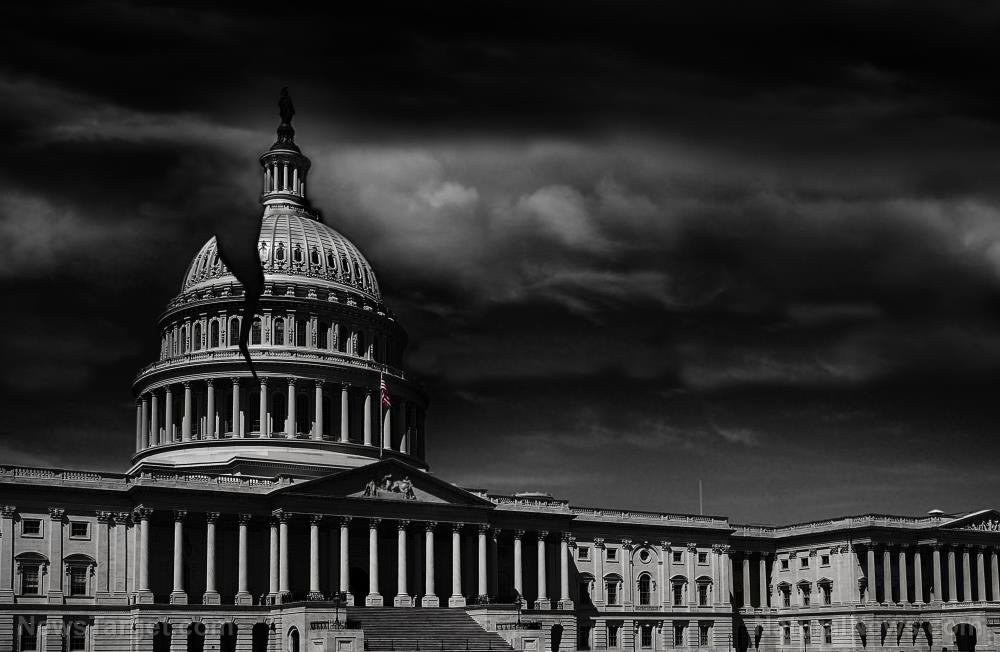
The memo, which demands pre-approval for any agency employee to speak to Congress, is more than a bureaucratic formality. It is a calculated strategy to weaponize executive power against legislative oversight, a process the Supreme Court has long recognized as a core constitutional duty. By centralizing control over testimony, the administration creates a single chokepoint where political appointees can decide which truths reach the public, and which remain buried.
Key points:
- The Trump administration’s directive to block executive branch testimony without White House approval reflects a broader escalation in partisan conflict.
- Congressional oversight, once a tool for accountability, has devolved into a weaponized theater of political retribution.
- Public trust in government has collapsed, with 70% of Americans disapproving of Congress and 28% distrusting both parties.
- The cycle of obstruction and retaliation undermines efforts to address real issues like healthcare, immigration, and economic stability.
- The memo creates a “chokepoint” for filtering information, shielding elites from scrutiny while the public bears the cost.
The war of attrition
The Scharf memo is the latest salvo in a decades-old script: the party in power resists oversight as a “witch hunt,” while the opposition accuses the executive of obstruction. Yet the stakes have never been higher. Congressional Research Service data reveals both branches have increasingly weaponized legal tools to escalate disputes, turning hearings into spectacles and subpoenas into political pawns. The result has been the evolution of system where accountability is reduced to a game of chess, with the public left to pick up the pieces.
Consider the recent warning to incoming House Oversight Chairman Robert Garcia, who was told to limit investigations to “legitimate” inquiries. The message is clear: the executive branch will tolerate only those probes it deems palatable. But what happens when “legitimate” is defined by those who hold power? When career officials are filtered out of the process, who remains to speak for the citizens who seek to be represented and heard?
The public’s precipice
While lawmakers trade barbs, Americans are drowning in a sea of mistrust. Pew Research Center data shows a staggering 85% of U.S. adults believe elected officials do not care about their concerns, and 70% hold an unfavorable view of Congress. A record 28% distrust both parties. This is not a country choosing sides; it is a nation watching its institutions crumble. The Scharf memo, with its veiled threats of “extortion” and “baseless attacks,” only accelerates this collapse. Russia, China, Iran - all competing powers and enemies are laughing, watching the US lose its values, consolidate power out of desperation, and devolve into political distractions, division, and weakness.
Oversight, designed to illuminate government dysfunction, will soon fuel that same dysfunction, shielding executive officials from scrutiny. When Democrats subpoena agency heads in the coming year, Republicans will label it a “witch hunt.” When Republicans demand transparency, Democrats will spend their time concealing their scandals. The cycle perpetuates itself, with each side using the other’s tactics as a shield. And in the middle, the people who pay taxes and depend on services are left with a government that talks past them, not to them.
For those who still believe in the system, the path forward is murky, but oversight must be tied to real legislation and be governed by an independent judicial process -- not be subject to the political whims and of payback from democrats. Nor should the republicans consolidate power to avoid real scrutiny. Investigations should inform policy and set precedent, providing a pathway for better behavior, reminding public officials that they serve the people, not the other way around. Until then, the public will remain what it has always been in this cycle: a spectator, bearing the cost of a political war they never asked to fight.
Sources include:









Please contact us for more information.


