



The research, a prospective analysis of births in a large American birth cohort, found that the link was strongest among mothers exposed during the third trimester of pregnancy. DINCH exposure was not associated with prematurity in the study, although the authors noted that other studies have found such an association.
"Our findings suggest that a chemical promoted as a safer replacement for phthalates and other plasticizers may affect how babies grow in the womb," said study lead author Leonardo Trasande, MD, MPP, of NYU Langone Health, according to the university's press release. "Even small differences in birth size can matter because fetal growth problems can raise the risk for heart disease, learning difficulties, obesity, and other issues that can echo into adolescence and adulthood" [1].
DINCH Introduced as Phthalate Replacement; Exposure Increasing
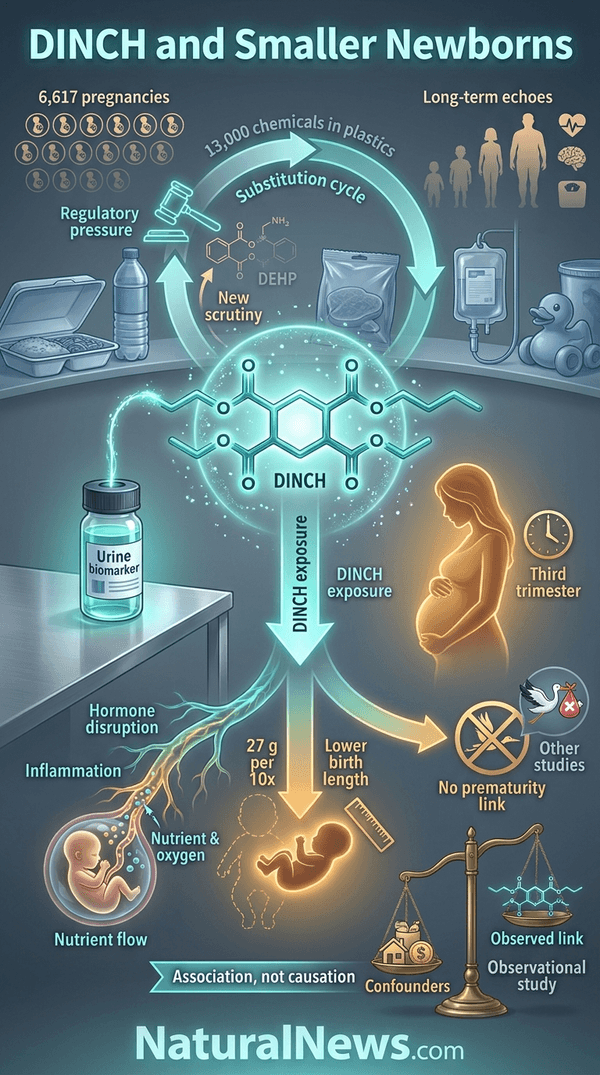
DINCH, or di(isononyl) cyclohexane-1,2-dicarboxylate, was introduced in 2002 as a replacement for phthalate plasticizers, according to Environmental Health News. It is commonly used in soft plastics such as food packaging.
The substitution followed years of regulatory pressure on older phthalates. A growing body of evidence has tied phthalates, substances used to make everyday products such as food packaging, medical devices, and toys, to increased risk of premature birth, infertility, and other health concerns. In response, plastics manufacturers began replacing phthalates with newer chemicals, including DINCH [1].
Independent research on phthalate alternatives has reached similar conclusions. The article states that higher DINCH exposure during pregnancy was associated with lower infant birth length and birthweight, and that DINCH exposure was not associated with prematurity in this study [2].
The reporting on plastics chemicals has grown alongside consumer awareness. More than 13,000 known chemicals are present in plastics, with many more not yet identified, and plastics are considered one of the main sources of chemical exposure in humans [3].
Study Details: Birth Size and Third-Trimester Exposure
The research was a prospective analysis of births in a large American birth cohort examining prenatal DINCH exposure and adverse birth outcomes. Led by NYU Langone Health researchers, the analysis of 6,617 pregnancies linked higher levels of DINCH in the urine of pregnant women to lighter and smaller newborns. Every tenfold increase in exposure to DINCH resulted in a 27-gram reduction in newborn birth weight [1].
Higher DINCH exposure during pregnancy was associated with lower infant birth length and birthweight, and the association was strongest for mothers exposed during the third trimester, according to Environmental Health News [2]. Reporting on the study stated that DINCH exposure during the third trimester of pregnancy was more strongly tied to lower birth weight for gestational age than exposure in earlier trimesters [4]. DINCH exposure was not associated with prematurity in this study, although other studies have found that DINCH was associated with prematurity [2]. A small analysis in pregnant women undergoing fertility treatment linked higher DINCH exposure to an increased chance of preterm birth, a finding not seen in the current report [5].
Laboratory studies in animals and human cells suggest that when DINCH breaks down in the body, its by-products can interfere with hormones that guide fetal development and trigger inflammation that may affect how nutrients and oxygen reach the baby [1]. Trasande said, "Even small differences in birth size can matter because fetal growth problems can raise the risk for heart disease, learning difficulties, obesity, and other issues that can echo into adolescence and adulthood" [1].
The study is observational, and the researchers cautioned that the analysis cannot prove that DINCH exposure directly causes smaller birth size [6]. Women with higher DINCH levels may differ from women with lower levels in other ways, including diet, income, neighborhood, and other chemical exposures that also affect birth weight. Researchers adjust for as much of that as they can [7]. Trasande is the Jim G. Hendrick, MD, Professor of Pediatrics at NYU Grossman School of Medicine [1].
Context: Phthalate Regulations, Industry Substitution, and Health Risks
Separate research led by NYU Langone Health and NYU Grossman School of Medicine estimated that di-2-ethylhexylphthalate (DEHP) was linked to approximately 1.97 million preterm births globally in 2018, about 8 percent of all cases, and was associated with about 74,000 newborn deaths [8].
The findings highlight an ongoing debate over chemical replacements and whether substitutes are adequately tested for safety before widespread use. Independent coverage described the study as showing that a chemical used to make plastic more flexible, once introduced as a safer substitute for older additives now known to be harmful, may itself also be harmful, slowing babies' growth in the womb [1].
At the same time, awareness of how nutrition and lifestyle shape pregnancy outcomes has grown. One commentary states that the quality of daily food intake is the most important and often ignored factor determining pregnancy outcomes, and that the health of the fetus is determined by the woman's diet, exercise, and lifestyle choices [9]. Eating habits matter before conception as well; a study published in the Human Reproduction journal found that women who ate more junk food and less fruit took longer to conceive, according to researchers at the University of Adelaide led by Professor Claire Roberts [10]. Separate reporting has documented hormone-disrupting phthalates in common fast foods in the U.S. [11].
Conclusion: Association, Not Causation; Further Scrutiny of Substitutes
The study reports an association between DINCH exposure and smaller newborn size. It does not establish causation, and the authors cautioned that the analysis cannot prove that DINCH exposure directly causes smaller birth size [6]. Reporting on the paper noted additional limits: the study is observational, and families with higher exposure may differ in diet, income, or other chemical exposures [12].
Researchers and environmental health advocates said the results raise questions about regrettable substitution and chemical regulation. Some of the new compounds may warrant closer scrutiny; independent research noted that although phthalate alternatives were introduced as safer substitutes, they may not be without risk [13].
The study authors next plan to examine other plasticizers being used as alternatives for phthalates and to study in more detail how DINCH may slow fetal growth [6]. Further research and monitoring are needed to confirm findings and assess long-term health effects.
References
- Exposure to ‘Safer’ Plastic Additive During Pregnancy Linked to Smaller Birth Size. https://nyulangone.org/news/exposure-safer-plastic-additive-during-pregnancy-linked-smaller-birth-size
- Exposure to supposedly “safer” phthalate substitute during pregnancy linked to smaller newborns. https://www.ehn.org/exposure-to-supposedly-safer-phthalate-substitute-during-pregnancy-linked-to-smaller-newborns
- Plastic food packaging contains harmful endocrine-disrupting chemicals, study confirms. https://www.ehn.org/harmful-chemicals-in-plastic-packaging
- Exposure to 'Safer' Plastic Additive During Pregnancy Linked to Smaller Birth Size. https://www.morningstar.com/news/pr-newswire/20261013ph65001/exposure-to-safer-plastic-additive-during-pregnancy-linked-to-smaller-birth-size
- Exposure to 'Safer' Plastic Additive During Pregnancy Linked to Smaller Birth Size. https://www.prnewswire.com/news-releases/exposure-to-safer-plastic-additive-during-pregnancy-linked-to-smaller-birth-size-302900789.html
- Exposure to 'Safer' Plastic Additive During Pregnancy Linked to Smaller Birth Size. https://www.webull.com/news/15740726213092352
- The ‘Safer’ Plastic Chemical Linked to Smaller Babies: What the New DINCH Study Actually Found. https://whatismicroplastics.com/dinch-plastic-pregnancy-study/
- Nearly 2 Million Preterm Births Worldwide Linked to Plastic Chemicals, NYU Study Finds. https://www.ntd.com/nearly-2-million-preterm-births-worldwide-linked-to-plastic-chemicals-nyu-study-finds_1136061.html
- An article by GreenMedInfo.com
- Women trying to conceive should ditch the junk food and eat more fruit says new study - NaturalNews.com, June 20, 2018
- Scientists Find Hormone-Disrupting Chemicals - ChildrensHealthDefense.org.
- Scientists found that a plastic chemical sold as the safer replacement for phthalates showed up in over half of pregnant women and was linked to smaller babies. https://tech-paper.com/plastic-chemicals-pregnancy-dinch-birth-weight/
- Placental toxicity of alternative plasticizers: Current knowledge and future directions. https://doi.org/10.1016/j.reprotox.2025.109143
Explainer Infographic









Please contact us for more information.


