


Given the expectation that Trump would restart the war after the midterms, optimism has grown that Trump may finally have abandoned the fantasy of a military victory, Trita Parsi wrote on Substack.
The president said on Nov. 9 that additional military action in Iran was quite unlikely but said the United States will be locked and loaded if needed [2].
War Risk and Post-Midterm Constraints
Trump acknowledged on Wednesday that the Iran war played a role in his Republican Party's resounding defeat in the midterm elections, as Democrats won control of both the House of Representatives and the Senate. "I think a part of it was Iran," Trump told Fox News. Iran was a piece of it, he said in an interview with The Wall Street Journal [3].
But even if the risk of war declines, that does not necessarily mean the likelihood of a deal increases, Parsi wrote.
Obstacles to a Negotiated Settlement
Parsi identified specific sticking points that complicate any negotiated settlement.
According to the article, those issues make it difficult both to reach a deal and to keep it. Trump dismissed Iran's enriched uranium stockpile as having little value while simultaneously demanding Iran hand it over to the United States, according to a report on the conflicting statements made during a recent interview with Salem News broadcaster [4].
The Iranian government has stated that the Strait of Hormuz will remain closed until Washington meets its demands: lifting the blockade, releasing frozen Iranian assets, lifting oil sanctions, and ending U.S. military operations. Most critically, Iran has stated that if these demands are not met within three to four weeks, it will severely escalate [5].
The Swiss Cheese Status Quo
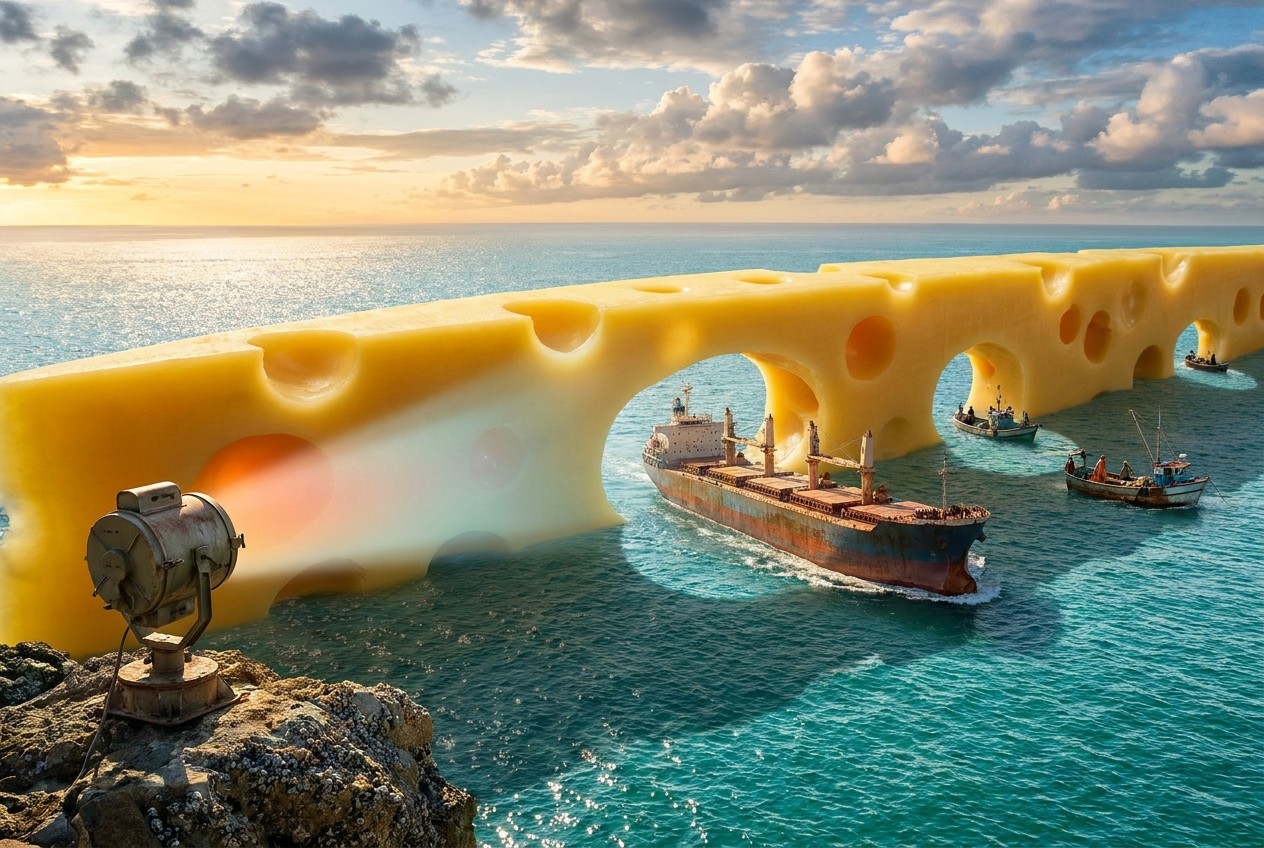
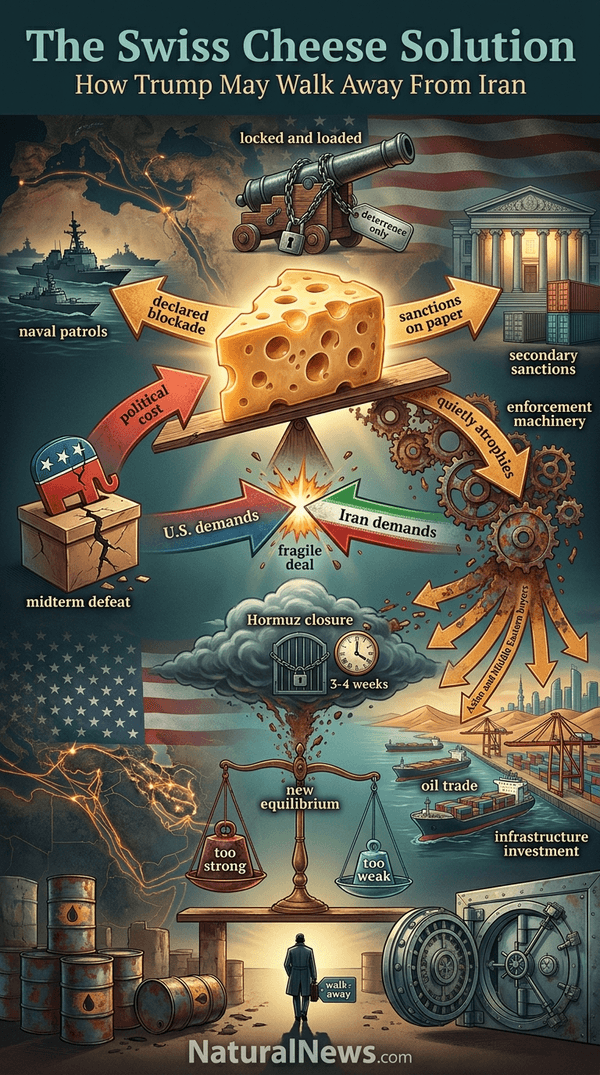
The most likely scenario may prove to be neither war nor peace yet different from the middle path Trump chose last Friday, Parsi wrote. In this scenario, Trump's economic warfare and blockade would only exist on paper. Meaning, Trump rejects both war and peace, walks away and claims to retain the blockade and sanctions infrastructure, but in reality imperceptibly begins to let it wither away [1].
The blockade begins to loosen, sanctions enforcement begins to decay, and slowly but surely, Asian and Middle Eastern countries begin trading with and investing in Iran, according to Parsi. A new equilibrium emerges in which sanctions enforcement is strong enough for the U.S. to claim the restrictions are still in place, yet weak enough to prevent Tehran from challenging the new status quo [1].
Parsi wrote that the Swiss cheese scenario is the only walk-away option that could work. Because if Trump seriously retains the blockade and the sanctions, tensions between the U.S. and Iran would be such that the two countries would constantly be on the verge of war with each other as they are right now. Such an unstable status quo would eventually escalate into another war, defeating the very purpose of the walk-away [6].
Conclusion: Cost and Political Considerations
Parsi wrote that the Swiss cheese scenario is suboptimal compared with a peace deal that would end 47 years of enmity, uphold non-proliferation goals, open the Iranian economy to American companies, and stabilize the region. According to Parsi, the walk-away option carries the benefit, from Trump's perspective, of avoiding an agreement that would manifest the failure of his war, as critics viewed the Islamabad Memorandum [1].
Parsi cited Trump's aversion to admitting defeat, his fear of appearing as a loser, his impatience with complicated diplomacy, and Iran's disinterest in providing an ego-soothing exit ramp, concluding that Trump may choose the option because it will cost him less [7].
The president has acknowledged the political cost of the conflict. In an interview with CBS's 60 Minutes, Trump stated that the war in Iran and high gas prices were responsible for the GOP's election debacle on November 3, adding a third reason: dislike for Israel [8]. According to Parsi, Trump may ultimately choose the Swiss cheese walk-away option not because it is better, but because it will cost him less [1].
References
- The Swiss cheese solution: how Trump may walk away from Iran. https://palestina-komitee.nl/the-swiss-cheese-solution-how-trump-may-walk-away-from-iran/
- Trump Says There Is a ‘Good Chance’ Iran War Will End Soon. https://theepochtimes.com/world/trump-says-there-is-a-good-chance-iran-war-will-end-soon-6122774
- Trump Acknowledges Role of Iran War in Election Losses. https://theepochtimes.com/us/trump-acknowledges-role-of-iran-war-in-election-losses-6118047
- Trump dismisses Irans enriched uranium stockpile as worthless then demands it back - NaturalNews.com, May 05, 2026.
- Bright Videos News - AI BUBBLE CRASH HIDDEN FRONTIER AI TECH - Mike Adams - BrightVideos.com, August 21, 2026.
- Trita Parsi. https://x.com/tparsi/status/2120266765481419025
- The Swiss Cheese Solution: How Trump May Walk Away From Iran. https://tritaparsi.substack.com/p/the-swiss-cheese-solution-how-trump
- Trump on “60 Minutes”: War, Gas Prices, Dislike of Israel Caused GOP Defeat; Ready to “Work a Deal” to Keep Illegals in Country. https://thenewamerican.com/us/trump-on-60-minutes-war-gas-prices-dislike-of-israel-caused-gop-defeat-ready-to-work-a-deal-to-keep-illegals-in-country/
Explainer Infographic




Please contact us for more information.


