


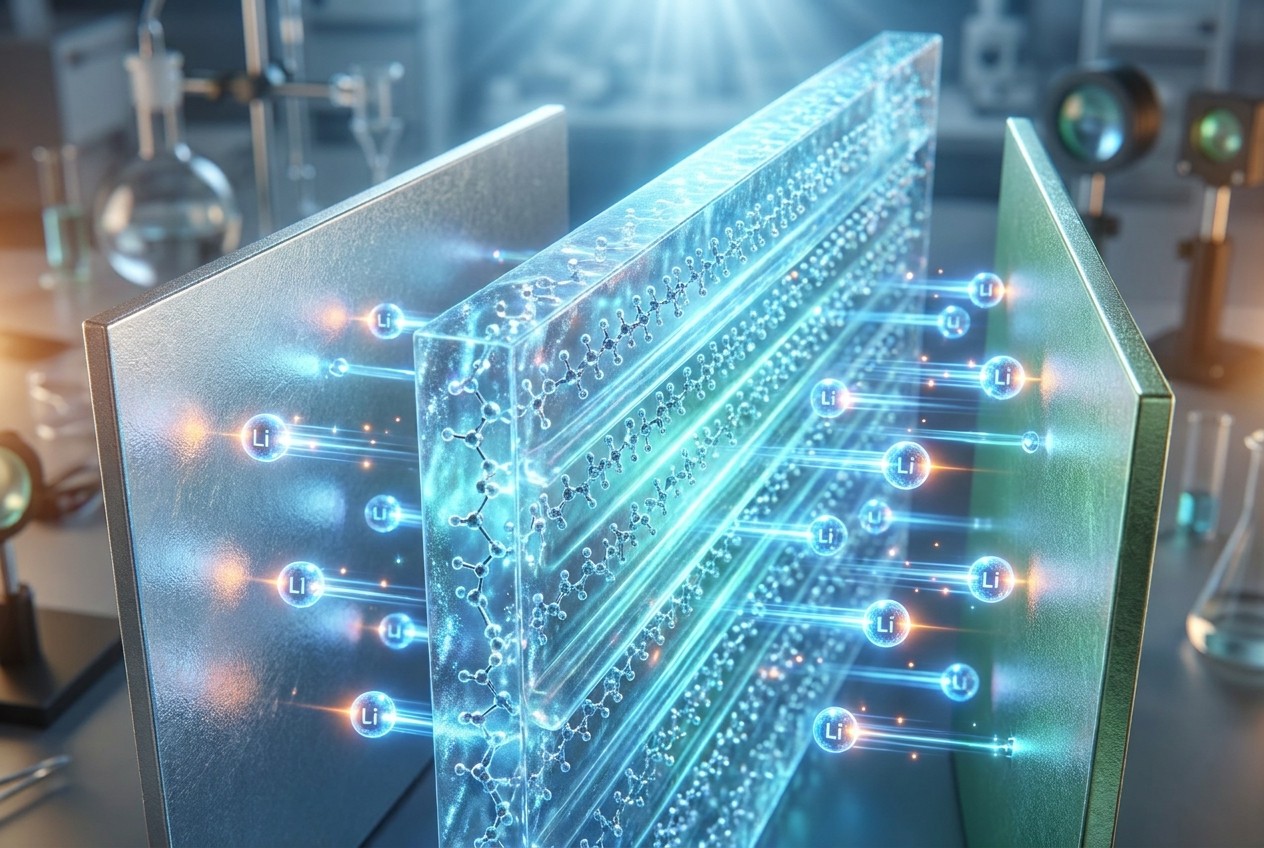
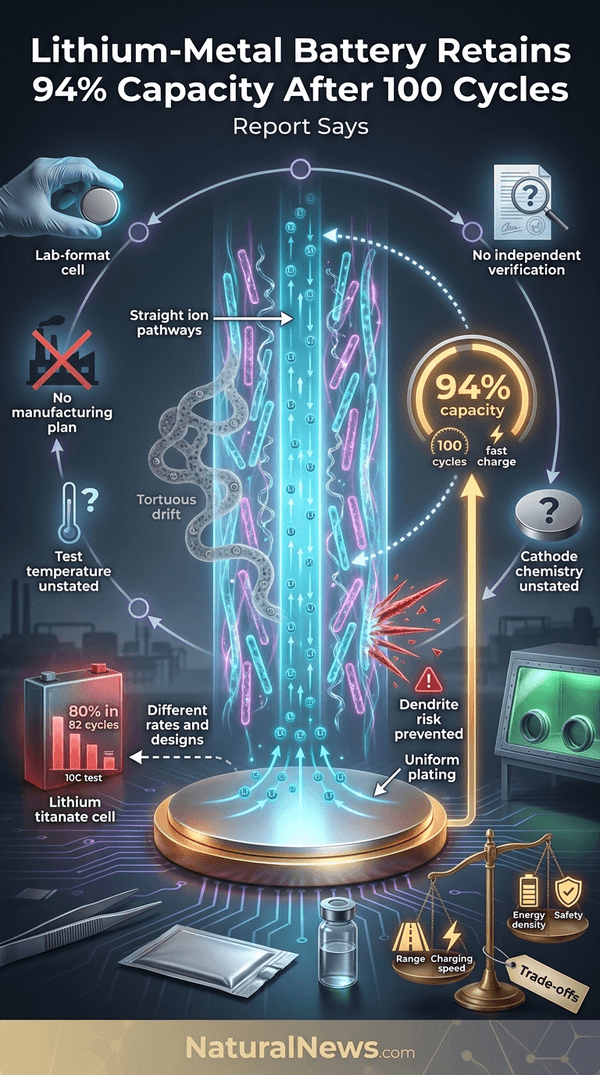
The report described the cell as a laboratory-format battery and did not specify a commercial manufacturing location or production timeline. The report attributed the improved cycling performance to the separator design, which the researchers said guides lithium ions along straight pathways to the electrode [1][2].
Separator Design and Reported Function
The separator in a lithium-metal battery physically separates the anode from the cathode while permitting lithium ions to pass through during charging and discharging. According to the report, the KAIST team used liquid-crystal polymers and polyethylene glycol chains to construct a separator that aligns ion pathways directly toward the electrode rather than allowing ions to migrate along indirect routes [2][1].
The technology may aid the development of long-range, fast-charging, high-energy batteries with better safety and lifespan, the report stated [2].
A separate account of the research stated that the system prevents dendrite risk while maintaining 94% of its capacity after 100 cycles [1]. Lithium-metal batteries have been regarded as attractive high-energy-density options due to the large specific capacity and the low reduction potential of metallic lithium, according to a research publication on ultrafast rechargeable lithium-metal batteries [3].
Reported Performance Metrics
The 94% capacity retention after 100 cycles was measured at a 4C charging rate, according to the report [4][5]. The report did not specify the exact test temperature, the cell format dimensions, or the cathode chemistry used in the evaluation.
For comparison, lithium titanate cells tested at a 10C rate fell to 80% of their original capacity within 82 cycles, according to separate testing reported by a graphene battery developer [6]. The same testing reported energy efficiency of 94% at those rates, compared with 64% for the lithium titanate cell [6].
Other lithium-metal battery research has reported different cycling outcomes under different test protocols. The report did not specify whether the KAIST cell was tested beyond 100 cycles.
Industry Context and Unresolved Questions
Lithium-metal batteries have been associated with higher energy density than conventional lithium-ion cells, according to researchers and industry sources. The report did not state an energy density figure for the KAIST cell.
The report did not state a commercial timeline, manufacturing cost estimate, or production partner for the separator technology. Previous lithium-metal battery research has encountered challenges including cycle life, safety, and manufacturing scalability. A publication in Nature Communications stated that progress in extending the cycle life of lithium-metal batteries has primarily been achieved through strategies focused on slow charging and fast discharging conditions, with limited practical impact, and that accelerated performance degradation under fast charging and slow discharging remains a challenge [7].
The report did not provide an independent expert assessment of the KAIST results. The University of Maryland researchers who developed a redesigned electrolyte that enabled an EV battery to reach 90% charge in 14.7 minutes presented their result as a charging-performance milestone for a laboratory cell format, and the publication did not describe independent third-party verification of the result in the material reviewed [8]. A similar absence of independent verification applies to the KAIST separator report.
Conclusion
The report did not state whether the results have been submitted for peer review, whether the separator has been tested in larger cell formats, or whether any commercial partner has licensed the technology. Independent verification of the result was not provided in the report, and the article did not state whether the testing was conducted by the researchers who developed the separator or by a separate laboratory.
The research adds to a series of fast-charging and capacity-retention claims from battery developers, including results reported by groups at the University of Chicago, the University of Maryland, and others [9][8].
References
- Liquid Crystal Separator Enables 15-Minute Charging in Lithium Metal Batteries | Kantan.News. https://kantan.news/news/liquid-crystal-separator-enables-15-minute-charging-in-lithium-metal-batteries
- KAIST develops lithium metal battery separator that maintains 94% .... https://www.dongascience.com/en/news/80773
- (PDF) An Ultrafast Rechargeable Lithium Metal Battery. https://www.researchgate.net/publication/326578297_An_Ultrafast_Rechargeable_Lithium_Metal_Battery
- Researchers developed a lithium-metal battery that retains. https://www.facebook.com/ieexplains/posts/researchers-developed-a-lithium-metal-battery-that-retains-94-percent-capacity-a/1560141412823559/
- Aligned separator design improves lithium metal battery fast-charging performance and stability. https://techxplore.com/news/2026-11-aligned-lithium-metal-battery-fast.html
- GMG’s fast-charging graphene battery holds up through 1,000 cycles in. https://www.graphene-info.com/gmg-s-fast-charging-graphene-battery-holds-through-1000-cycles-new-tests
- Electrolyte diluent with large electrostatic potential difference for fast charging and slow discharging lithium metal batteries. https://www.nature.com/articles/s41467-026-69870-7
- Report: Redesigned Electrolyte Enables EV Battery to Reach 90% Charge in 14.7 Minutes. https://www.naturalnews.com/2026-11-04-redesigned-electrolyte-ev-battery-almost-full-charge.html
- Lithium-Metal Batteries Charge Forward - ETI. https://energytech.pme.uchicago.edu/news/lithium-metal-batteries-charge-forward/
Explainer Infographic






Please contact us for more information.


