


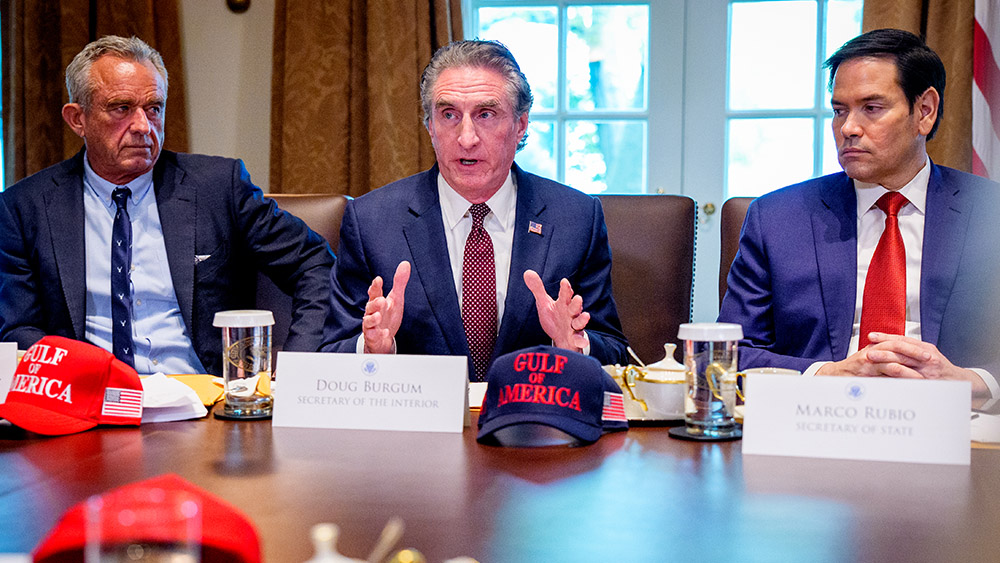
- Interior Secretary Doug Burgum holds between $18.1 million and $64.4 million in AI company investments through his co-founded firm Arthur Ventures.
- Burgum serves as the White House’s point person on building AI infrastructure on public lands he oversees.
- At least 380 of President Trump’s political appointees or their spouses hold stock in Nvidia, the world’s most valuable company due to AI.
- The Bureau of Land Management is reviewing permits for approximately 15 data centers on public land.
- Government ethics officials say Burgum’s holdings comply with federal law, but critics cite appearance of conflicts.
A conflict at the heart of the AI revolution
Interior Secretary Doug Burgum, the Trump administration’s designated point person for constructing the nation’s artificial intelligence infrastructure, holds between $18.1 million and $64.4 million in personal investments within the AI industry he now helps shape, according to financial disclosure documents analyzed by ProPublica. As the White House compares the AI buildout to the Manhattan Project—the World War II effort that produced the atomic bomb—questions arise about whether the official overseeing development on 91.3 million acres of potential public land is serving the nation or his portfolio.
The financial web
Burgum, who sold a software company to Microsoft 25 years ago, co-founded the investment firm Arthur Ventures. His 2026 financial disclosure shows concentrated holdings in AI-related companies. In the year before joining the administration as North Dakota’s governor, he made between $2.1 million and $11 million in capital gains from AI investments. In 2025 alone, he sold millions in AI stocks, generating additional gains worth between $2.5 million and $15.1 million.
His ethics agreement required resigning from Arthur Ventures positions but not divesting his financial interests there.
“Secretary Burgum has met his federal ethics and financial disclosure obligations,” a department spokesperson told ProPublica, adding that suggestions his decisions are driven by personal investments are “false and completely unsupported.”
A pattern across the administration
Burgum is not alone. ProPublica’s database of Trump administration financial disclosures shows 380 political appointees or their spouses hold stock in Nvidia, the AI chip giant that became the world’s most valuable company due to the data center boom. More than 320 have ties to Alphabet, which plans to spend at least $195 billion this year on AI infrastructure. More than 240 are invested in Meta Platforms, which is building a “fleet” of data centers.
Bureau of Land Management Director Steve Pearce, who oversees the largest land manager in the country, owns stock in Nvidia, Meta, Microsoft, Apple, Alphabet and Titan Development, a real estate firm that acquired land for data centers in the Southwest.
The BLM is reviewing permit applications for about 15 data centers and 17 associated infrastructure projects in Arizona, Nevada, Oregon, Utah, Wyoming and Idaho.
Ethics review of former Interior secretaries
A review of recent Interior secretaries reveals a sharp departure. Deb Haaland, former President Joe Biden’s appointee, held no direct financial investments in companies the department regulated. Ken Salazar, former President Barack Obama’s first Interior secretary, listed ownership of his family’s ranch but few other investments. Sally Jewell agreed to divest her oil and gas stocks as a condition of confirmation.
By contrast, Trump’s first-term Interior secretaries faced scrutiny. Ryan Zinke was found by the agency’s inspector general to have improperly assisted a development in his hometown, while David Bernhardt reportedly carried a card listing his potential conflicts.
Public opposition and closed doors
Burgum met with representatives from Amazon, Microsoft and Alphabet more than 20 times between January and November 2025. An unreported June 2025 dinner included a high-ranking United Arab Emirates AI delegation at an upscale Washington restaurant, leading to a signed memorandum of understanding to collaborate.
When a Fox News poll showed 70% of voters opposed data centers, Burgum alleged “foreign influence” and “misinformation” fueled opposition. Democratic senators sent an October letter demanding Burgum “immediately cease all efforts to hijack public lands for the development of data centers.”
The transparency test
The AI arms race with China presents legitimate national security concerns. But the concentration of personal wealth in the industry Burgum oversees raises questions the administration has not adequately answered. Ethics rules prohibit not just actual conflicts but the appearance of them. As former Bush ethics lawyer Richard Painter noted, in the Bush administration, such holdings would have required recusal. For a nation placing its AI future on public lands, the public deserves officials whose decisions serve the country first—not their portfolios.
Sources for this article include:








Please contact us for more information.


