


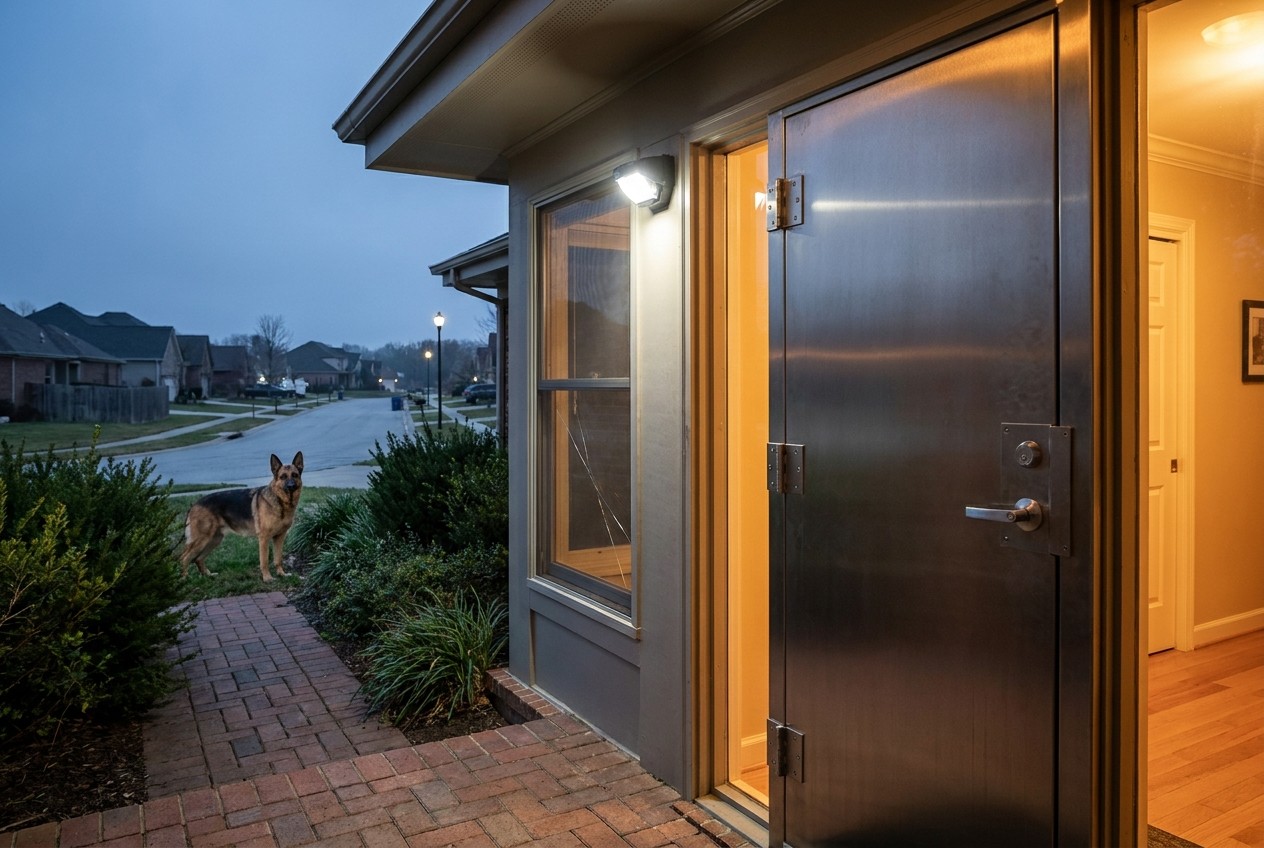
Henry stated that most modern U.S. construction is roughly six to eight inches of surface insulated with fiberglass, closed in with large windows and doors made from wood or fiberglass, usually filled with glass [5].
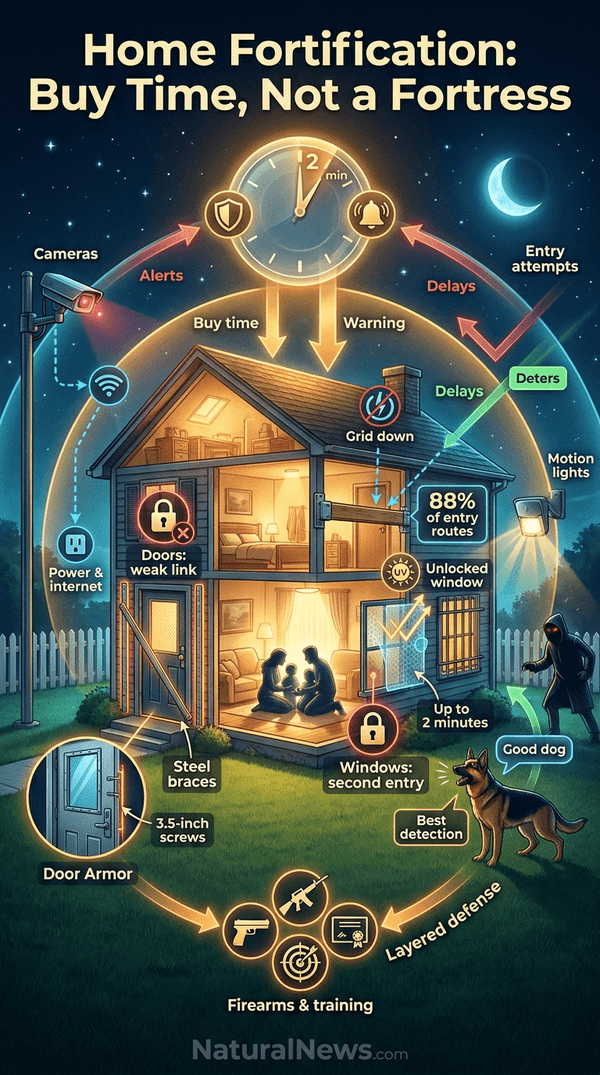
According to Henry, the goal of home fortification is to buy time and receive warning, not to create an impenetrable fortress when things go south. He added that any steps that can first alert occupants to someone outside trying to get in, and then buy time to act, are enhancing security [5].
Coverage of home security topics has also emphasized that fortifying a home is an equally important component of personal safety alongside firearms and self-defense training [1].
Layered Approach Focuses on Entry Points First
Henry recommends focusing first on actual entry points rather than property edges [5]. He added that while knowing someone is in the yard could be helpful, preventing them from getting in as long as possible is more important.
Henry explains that first-floor doors and windows should be prioritized because they account for 88% of common entry routes [5].
Guidance published separately by NaturalNews.com similarly stresses securing property against intruders who are looking for easy targets, noting that most home invaders seek unsecured access points [2]. The article's layered framework aligns with broader preparedness guidance that treats the home as a sanctuary to be reinforced against external threats [3].
Door Hardening: Steel Doors, Door Armor, Barricade Brackets
Henry identifies security cameras as a tool for advance warning, documentation, and deterrence [5]. He noted that technical systems depend on power and internet, and may not function if the grid is down [5].
According to Henry, the physical door is the real weak link [5]. He describes modern U.S. doors as steel panels wrapped around a frame rather than solid steel, and adds that steel replacement doors are relatively cheap and a better choice for home security if not fitted with large amounts of glass.
He recommends Door Armor, which is a set of thin steel braces that reinforce the hinge plates, lock cores, and jamb with 3 1/2-inch screws. Henry adds that installation is quick and painless.
Additionally, Henry recommends a simple bracket that holds a 2-by-4 to further reinforce the door, mounted to the wood the door jamb attaches to, and says these can be saved for installation when the grid goes down.
Separate preparedness guidance echoes that outward-opening doors cannot be barricaded but can be jammed shut using a belt, purse strap, or length of rope or twine [4].
Window Security and Detection Methods
According to Henry, windows are the second most common entry point for burglars and are harder to secure. He recommends window locks first, noting that unlocked windows give an intruder an easy way in.
Henry recommends security window film, which could give up to two minutes more time when someone starts trying to get in. He states that film is virtually invisible, can be installed like window tint, and often cuts down on UV as an added benefit.
He also lists security window bars and plywood as options, noting that plywood blocks visibility and that cutting shooting slots into it would weaken it.
For detection, Henry says that motion sensor lights have been around for a long time and help, but that only a very scared intruder would be frightened by lights going on. Henry added that a well-trained dog is the best method for detecting when someone is outside the house.
Low-Cost Steps and Escape Planning
Henry concluded that low-cost home fortification steps can make a home harder to enter and safer for occupants.
The article's framing is consistent with other preparedness reporting that states how your home becomes a sanctuary when normal systems fail, and that reinforcing it can increase the chances of surviving a disaster [3].
Separate guidance from NaturalNews.com emphasizes that personal safety and property protection are increasingly top of mind for homeowners, and that fortifying the home is an equal partner to firearms and self-defense training [1].
References
- Practical tips for improving home security and personal safety - NaturalNews.com, March 17, 2025.
- Home defense and fortification: 5 Tactical tips to help you survive a home invasion - NaturalNews.com, September 08, 2021.
- 9 Ways to turn your home into a fortress before SHTF - NaturalNews.com, December 14, 2019.
- 100 Deadly Skills Survival Edition: The SEAL Operatives Guide to Surviving in the Wild. by Clint Emerson
- Home Fortification Tips That Can Save Your Life. https://theprepperjournal.com/2021/01/09/home-fortification-tips/
Explainer Infographic












Please contact us for more information.


