



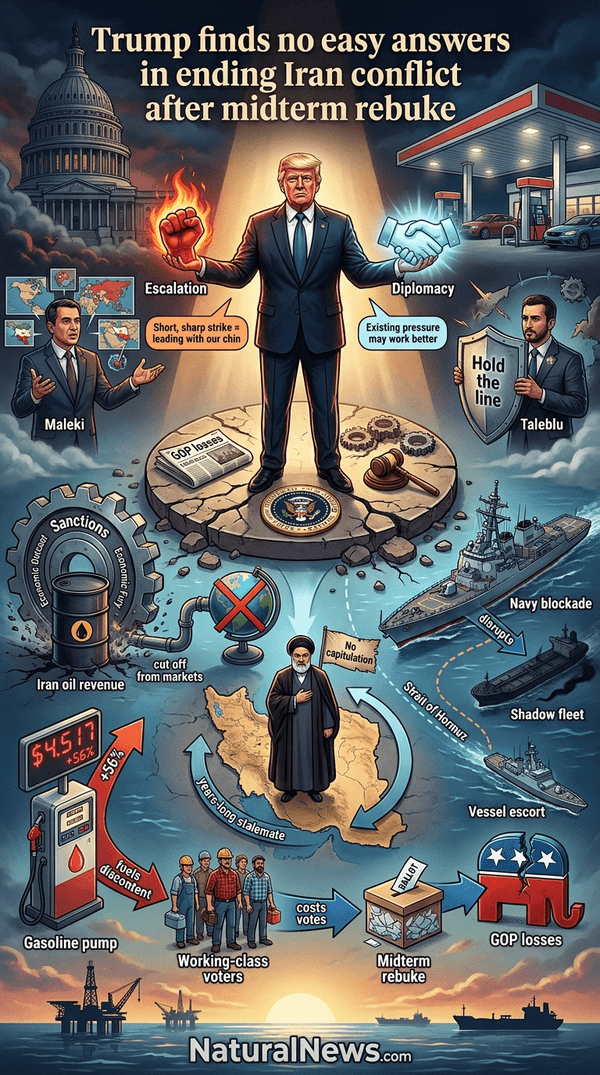
Trump, speaking to reporters Wednesday, acknowledged the war was "a piece of" the election outcome and said he had no regrets about the decision to bomb Tehran, according to the same report. Gasoline prices have risen sharply since the conflict began in late February, with the national average reaching $4.517 per gallon as of May, a 56% increase, according to NaturalNews.com [1].
No final decision by the administration on next steps was announced as of Wednesday.
Trump, Vance differ on election impact as gas prices cited
The president added, "If I had it to do again, I'd have to do it again, because long term, it's the only answer," the report said.
The vice president's statement marked a departure from the administration's earlier messaging, which had emphasized national security justifications for the conflict. The White House did not issue a statement indicating a change in military policy following the election.
The election results came amid rising public discontent over fuel costs. A Reuters/Ipsos poll released in June found that only 24% of Americans believed the war was worth its costs, while half said it was not [2]. Gas prices remain a visible reminder of the conflict for consumers, with the national average at $4.04 per gallon as of April, up from pre-war levels [3].
Experts recommend holding the line on maximum pressure
Miad Maleki, a senior fellow at the Foundation for Defense of Democracies, said Iran "can fight on many different fronts" but cannot easily fight a domestic conflict "that is becoming more and more difficult for them to fight," according to the same report.
Behnam Ben Taleblu, the senior director of FDD’s Iran Program, argued that a "short, sharp strike would be leading with our chin" and recommended instead to "hold the line," the report said.
The experts' assessment suggests that the administration's existing strategy of economic and military pressure may be more effective than expanding the conflict. Their remarks came as Trump weighed options that included both diplomatic engagement and military escalation.
Sanctions, blockade and the shadow fleet
The administration has built a set of sanctions and an economic blockade against Tehran during the war. The U.S. Navy has disrupted Iran's shadow fleet, which was previously used to move sanctioned oil to customers in China. The Treasury Department is escalating measures under policy pushes dubbed Operation Economic Outcast and Economic Fury [4].
The sanctions and blockade have contributed to Iran's economic strain. The blockade has deprived the regime of a key external revenue source.
Iran points to midterm results; regional oil flows shift
A commercial vessel escort operation has blunted Iranian attempts to control the Strait of Hormuz, the report said. The naval blockade has deprived the regime of an external revenue source.
The war has compounded those pressures, but Iran's leadership has signaled no willingness to capitulate.
Taleblu says concession would be escalatory
He said the United States is in a war and that the Islamic Republic is "keen to continue" it because the regime has survived.
The president's options remain constrained by the election results and the ongoing economic impact of the conflict. With Democrats set to control Congress, the administration faces increased scrutiny over its handling of the war. The path forward remains uncertain, with experts advising against new strikes and Iran showing no signs of backing down.
References
- Iran conflict sends US gas prices soaring 56, fueling largest inflation spike in three years - NaturalNews.com, May 20, 2026.
- Poll: One in Four Americans Say Iran War Was Worth the Costs - NaturalNews.com, September 29, 2026.
- Energy Secretary's grim forecast 3 gas may be more than a year away for Americans - NaturalNews.com, April 21, 2026.
- Bright Videos News - 3RD PARTY with Nima - Mike Adams - BrightVideos.com, September 03, 2026.
Explainer Infographic







Please contact us for more information.


