



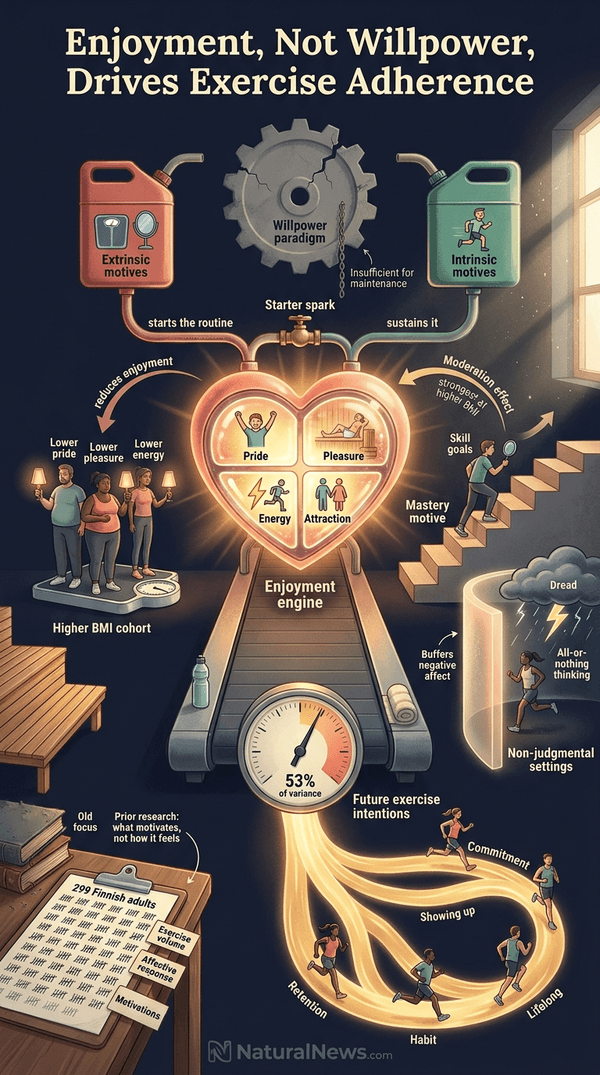
The report stated that pleasant affective experiences, particularly pride and attraction to physical activity, were among the strongest positive predictors of future exercise intentions. Participants with higher body mass index (BMI) reported less pride, pleasure, energy, and attraction to exercise, and scored higher on body-related motives such as weight management and appearance, according to the study.
The findings suggest that extrinsic motives may help start an exercise routine, while intrinsic motives such as genuine enjoyment may sustain it over time, the report stated.
Study Methods and Participants
Researchers surveyed 299 adults in Finland and divided them into groups based on BMI, according to the report. The study measured how much people exercised, their emotional responses to physical activity, and their motivations for working out.
Emotional responses included feelings of pride, pleasure, energy, and attraction to movement. The report stated that most prior research has focused on what motivates people to exercise rather than how exercise makes them feel and whether those experiences differ by body size.
The study's design reflects a broader gap in exercise science identified in prior literature. Research on adherence to physical activities has historically prioritized the effect of psychological variables and sought to apply different psychological theories to explain adherence by identifying factors that influence behavior [1]. The Finnish study's focus on affective response represents a distinct approach, measuring in-the-moment emotional reactions rather than general motivational orientations.
Key Findings: Enjoyment Predicts Intention
People in the higher BMI group reported lower enjoyment and psychological motives for exercise, while scoring higher on extrinsic motives, the study found. Pleasant affective experiences, particularly pride and attraction to physical activity, accounted for 53% of the variance in future exercise intentions, according to the report.
Mastery motive, or the desire to improve at an activity, also played a significant role in predicting future exercise intentions. A moderation effect showed that the relationship between attraction to exercise and future intentions was strongest among people with higher BMIs.
The report stated that when exercise feels like a chore driven by external pressure, it is harder to sustain, but when it feels genuinely rewarding in the moment, people are more likely to keep showing up. This finding is consistent with observations in fitness literature that individuals should be encouraged to monitor the amount of enjoyment they derive from their activity [2]. The study's results suggest that the emotional quality of the exercise experience itself -- not just the motivation to begin -- may be a critical determinant of long-term adherence.
Practical Implications for Exercise Routines
The report suggested prioritizing enjoyment over optimization, noting that a slightly less optimal workout a person enjoys will beat a perfect workout they dread. It recommended focusing on mastery rather than outcomes, such as setting skill-based goals instead of purely outcome-based ones.
The report advised noticing how one feels during and after exercise, reducing all-or-nothing thinking, and experimenting with different modalities until something clicks emotionally. The study noted that social support and non-judgmental settings may be essential for reducing negative affective responses to exercise, particularly for people who have had uncomfortable experiences in fitness spaces.
These recommendations align with findings that exercise-related all-or-nothing thinking exists among individuals who have tried but failed to sustain regular exercise [3]. Previous research has also documented that the language used around exercise can carry psychological consequences, with framing exercise as a moral obligation potentially activating controlled motivation that is less durable than autonomous motivation [4]. The Finnish study's emphasis on creating positive emotional experiences represents a bottom-up approach to building sustainable habits, rather than relying on discipline or external pressure.
Conclusion: Sustainable Movement Tied to Positive Experience
The study aligns with hedonic theories of motivation, which propose that people naturally approach activities that feel pleasant and avoid those that feel unpleasant, according to the report. The report stated that over time, negative exercise experiences can become encoded as memories that bias future decisions toward avoidance, even when someone wants to be more active.
The article quoted the takeaway: 'The most sustainable workout routine isn't the one that burns the most calories or helps you build muscle fastest -- it's the one that feels good enough to keep doing.' None of this suggests abandoning strength training, cardio, or other modalities with proven health benefits, the report stated, but how people approach these activities may matter as much as what they do.
The findings contribute to a growing body of research indicating that adherence to physical activity is influenced by factors beyond conscious effort. For individuals seeking to build lasting exercise habits, the study's implications point toward a focus on the quality of the experience itself -- cultivating feelings of pride, pleasure, and mastery -- as a foundation for consistency.
References
- Health of HIV Infected People: Food, Nutrition and Lifestyle with Antiretroviral Drugs Volume I. Ronald Ross Watson
- ACSM's resource manual for Guidelines for exercise testing and prescription. Durstine J Larry
- Why All-or-Nothing Thinking About Exercise Is the Real Reason You Keep .... https://memios.substack.com/p/why-all-or-nothing-thinking-about
- The Psychology of Exercise Consistency: Why We Stop and How to Start .... https://www.psychreg.org/psychology-exercise-consistency-why-we-stop-how-start-again/
Explainer Infographic










Please contact us for more information.


