


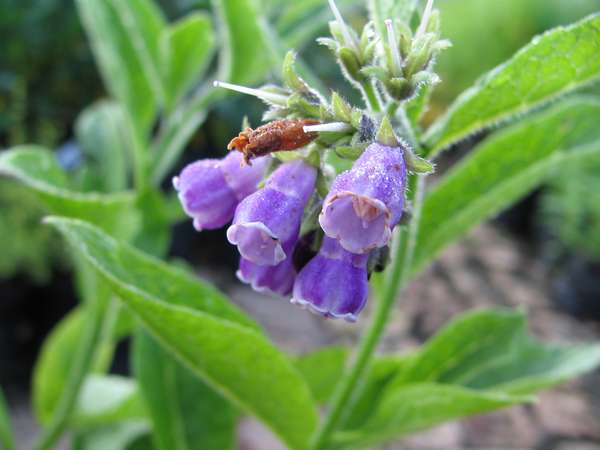
- Comfrey (Symphytum officinale) is a potent healing herb known for its high allantoin content, which promotes cell regeneration and accelerates tissue repair. People traditionally use it for wounds, fractures, and joint pain. However, it contains pyrrolizidine alkaloids (PAs) that can cause liver toxicity, making internal or prolonged topical use unsafe.
- Comfrey is widely used in creams, salves and poultices for short-term treatment of cuts, bruises, sprains, arthritis and skin conditions like eczema. Its anti-inflammatory and analgesic properties make it effective for external injuries and muscle soreness.
- Comfrey has been a staple in traditional herbal medicine, earning names like "knitbone" and "boneset" for its bone-healing abilities. European folklore also believed it could ward off evil spirits and promote good health.
- The plant features large, hairy leaves, bell-shaped flowers, and thick, mucilaginous roots. While its leaves have a mild, bitter taste and were historically used in soups or teas, modern culinary use is rare due to toxicity concerns.
- Comfrey should not be ingested or used by pregnant/nursing women, individuals with liver conditions or those on liver-affecting medications. External use should be approached with caution and under professional guidance to avoid potential health risks.
Long revered as a powerful healing herb, comfrey (Symphytum officinale) is known by a variety of evocative names like knitbone, boneset, bruisewort and slippery root. It has been used for centuries to treat wounds, fractures and a host of other ailments.
However, its potent healing properties come with a caveat: Internal or prolonged topical use of comfrey is strongly discouraged due to its potential to cause liver toxicity. Despite this, comfrey remains a fascinating subject in the world of herbal medicine, offering a unique blend of benefits and risks that warrant careful consideration.
The healing power of comfrey
Comfrey's reputation as a healing herb stems from its high concentration of allantoin, a compound that promotes cell proliferation and accelerates tissue repair. This makes it particularly effective for treating external injuries such as cuts, bruises, sprains and fractures.
Historically, comfrey was so widely used for bone injuries that it earned the nickname "knitbone." Its anti-inflammatory and analgesic properties also make it a popular remedy for arthritis, joint pain and muscle soreness.
Topical applications of comfrey are generally considered safe when used for short periods. Comfrey creams, salves and poultices are commonly applied to the skin to reduce swelling, ease pain and promote healing.
However, the plant contains pyrrolizidine alkaloids (PAs), which are toxic to the liver when ingested or absorbed in large quantities over time. For this reason, internal use of comfrey – whether as a tea, tincture or supplement – is strongly discouraged by health authorities, including the U.S. Food and Drug Administration and the European Medicines Agency (EMA).
In rural England, comfrey has long been a staple in the farmer's herbal toolkit. One anecdote tells of an elderly farmer who, after a fall from his tractor, applied a poultice of freshly crushed comfrey leaves to his swollen ankle.
Within days, the swelling subsided and he was back to work, crediting the herb for his speedy recovery. While such stories highlight comfrey's remarkable healing potential, they also underscore the importance of using it responsibly and with full awareness of its risks.
Appearance and taste
Comfrey is a striking plant, with large, hairy leaves and bell-shaped flowers that range in color from white and pink to purple. Its leaves are broad and lance-shaped, while its roots are thick and black, earning it the name "slippery root" due to their mucilaginous texture. The plant thrives in damp, fertile soil and can grow up to three feet tall.
As for taste, comfrey leaves have a mild, slightly bitter flavor, which makes them a less-than-ideal culinary herb. However, they have been used sparingly in traditional recipes, often as a nutrient-rich addition to soups or stews. The mucilaginous quality of the leaves can also lend a thickening effect to dishes, though modern recipes rarely feature comfrey due to its toxicity concerns.
Conditions comfrey may help address
While comfrey's internal use is discouraged, its topical applications have shown promise in addressing a variety of conditions:
- Wound healing: Comfrey's allantoin content promotes cell regeneration, making it effective for treating minor cuts, scrapes and burns.
- Bone and joint health: Its anti-inflammatory properties can help alleviate pain and swelling associated with fractures, sprains and arthritis.
- Skin conditions: Comfrey salves are sometimes used to soothe eczema, psoriasis, and dry, cracked skin.
- Muscle soreness: Athletes and individuals with overworked muscles may find relief by applying comfrey-based creams to sore areas.
Comfrey's many names reflect its diverse uses and cultural significance. In addition to "knitbone" and "boneset," it is sometimes called "blackwort" (referring to its dark roots) or "healing herb." In traditional European herbalism, comfrey was often planted near homes as a protective charm, believed to ward off evil spirits and bring good health.
Recipe suggestions
While comfrey is not commonly used in modern cooking due to its toxicity, it has appeared in historical recipes. Here are a few creative names for dishes that might incorporate comfrey in small, controlled amounts:
- Comfrey and potato aoup: A hearty, nutrient-dense soup thickened with comfrey leaves.
- Knitbone tea infusion: A traditional herbal tea (not recommended for internal use today).
- Comfrey leaf fritters: Crispy fritters made with a light batter and finely chopped comfrey leaves.
- Bruisewort balm: A homemade salve combining comfrey, beeswax and essential oils for topical use.
A word of caution
Despite its many benefits, comfrey's potential for liver toxicity cannot be overstated. Pregnant or nursing women, individuals with liver conditions and those taking medications that affect the liver should avoid comfrey entirely. Even for external use, it is advisable to consult a healthcare professional before incorporating comfrey into your wellness routine.
Comfrey is a plant of contrasts: A potent healer with a dangerous side. Its ability to mend bones, soothe skin and reduce inflammation has earned it a place in the annals of herbal medicine, but its toxic compounds serve as a reminder that nature's remedies must be approached with respect and caution. Whether used as a poultice for a sprained ankle or a salve for dry skin, comfrey's legacy as a healing herb endures – but only when used wisely.
Watch this video about some of the many uses of comfrey.
This video is from the Perma Pastures Farm channel on Brighteon.com.
Sources include:










Please contact us for more information.


