


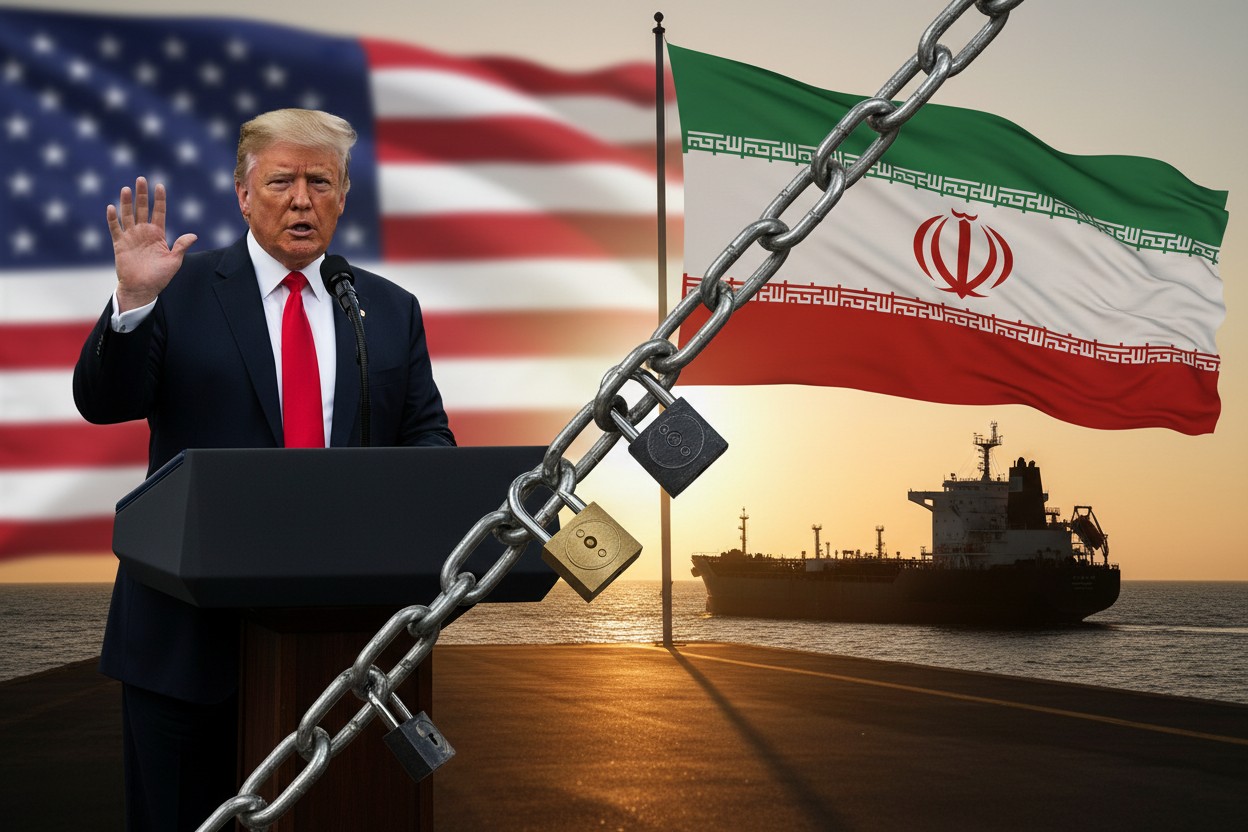
- A new billboard in Tehran depicts President Trump behind bars with a threat to kill him, marking the latest escalation in Iran’s wartime propaganda.
- Tehran’s streets also feature a parody of Belgian surrealist René Magritte’s work and a mock prison cell holding a Trump impersonator.
- State-backed propaganda invokes the Minab school tragedy, where more than 100 children died in a suspected U.S. strike, to stoke anti-American anger.
- Diplomatic talks continue even as U.S. forces carried out limited strikes in the Strait of Hormuz, with oil prices dropping on peace hopes.
- Democrats won both chambers of Congress in a midterm rebuke of Trump, who admitted the unpopular Iran war was part of the reason.
A towering billboard in Tehran’s Enghelab Square now shows President Donald Trump behind bars with a threat on his life, marking the latest escalation in Iranian state-sponsored propaganda as the eight-month-old U.S.-Israeli war with Iran remains unresolved. The display, which reads “We will kill Trump,” follows the Feb. 28, 2026, strike that killed then-Supreme Leader Ayatollah Ali Khamenei and has turned the Iranian capital into a gallery of anti-American political theater.
Tehran’s street gallery mixes surrealism with death threats
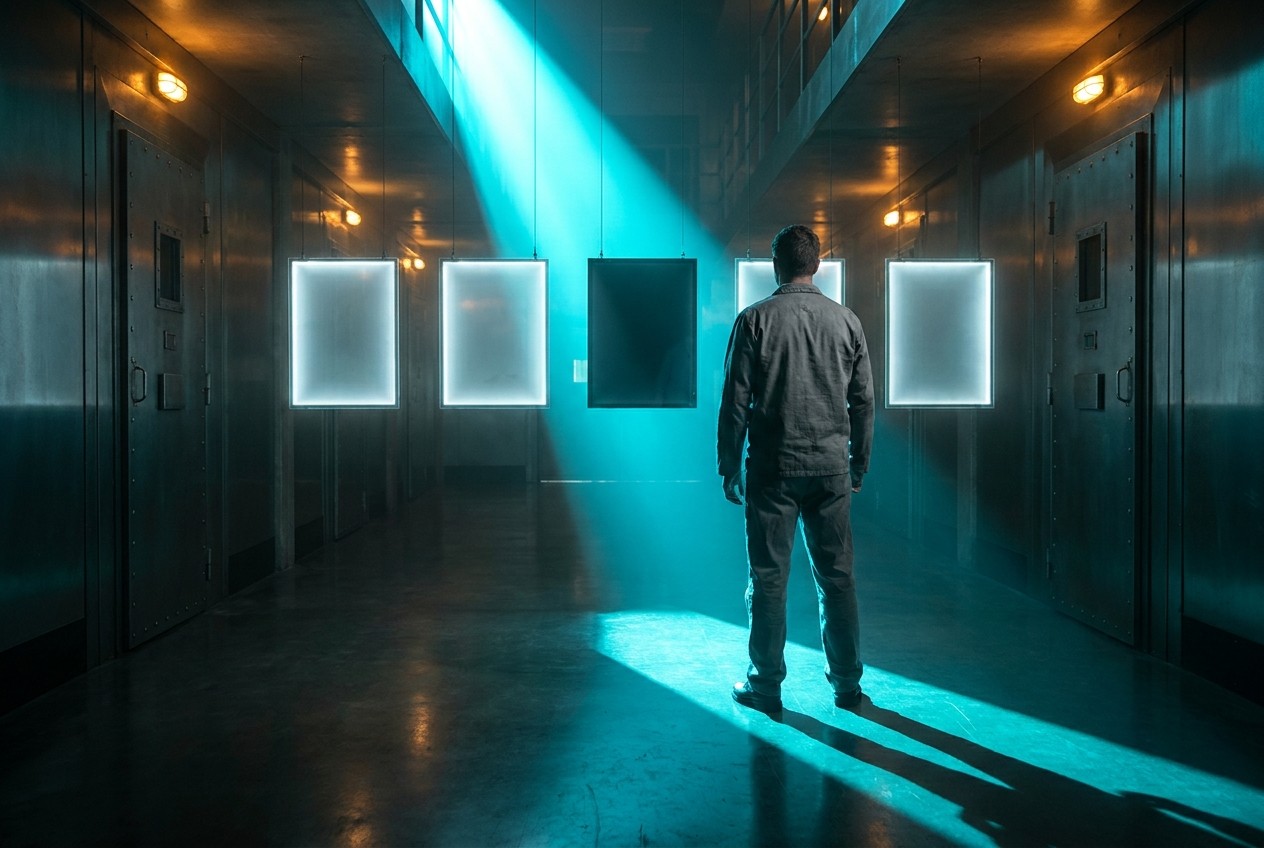
An open-air exhibition at Tajrish Square riffs on “The Son of Man,” the 1964 masterpiece by Belgian surrealist René Magritte, replacing the famous green apple with a bomb that hides Trump’s face. Another painting shows a bloodied Trump pinned to the floor under someone’s foot. Nearby, a life-sized mock prison cell has been housing a Trump impersonator since late last month, while a screen next to it shows images of destruction from the U.S. strikes on Iran.
State-backed murals have been lining Tehran’s streets since the 1979 Islamic Revolution, but this campaign is a wartime production. The billboards in Enghelab Square are being run by the city’s Beautification Organization and the Islamic Propagation Organization. Many of them were designed by artists from Owj, a media group tied to the Islamic Revolutionary Guard Corps (IRGC). In July, another billboard asked in English, “who is D nexT one?” — capitalizing only Trump’s initials — followed by a hashtag related to the late Sen. Lindsey Graham, who had passed away just a few days earlier.
Propaganda draws on Minab school tragedy
Much of the imagery leans on the destruction of an elementary school in Minab, which was hit on the first day of the war by what are believed to be U.S. Tomahawk missiles fired during the American Operation Epic Fury campaign. More than 100 children died. A July billboard showing Trump inside a coffin read “In memory of Minab’s children,” and a March display linked the Minab girls to the victims of convicted sex offender Jeffrey Epstein — part of a recurring propaganda theme that also claims Trump started the war to distract from the Epstein files.
U.S. officials have said they are reviewing the strike, but preliminary findings suggest it was a mistake caused by outdated targeting data; the school had once belonged to an IRGC base but was separated from it years ago.
Diplomatic window remains open amid Strait of Hormuz strikes
Despite the escalating rhetoric, Qatar and other mediators have been working on a draft U.S.-Iran deal. Trump has said an agreement “could happen” but warned that fighting could resume if talks fail.
Talks haven’t been enough to halt the shooting. On Monday, U.S. forces hit Iranian targets on Qeshm Island in the Strait of Hormuz in what officials called limited and defensive strikes, despite Trump’s vow to hold off until after the midterms. A U.S. official said the IRGC had fired on an American aircraft. Oil prices, which remain high due to Iran’s closure of the strait, still posted their steepest one-day drop since July as traders bet on peace, with Brent crude down about 7.6 percent.
Trump has played down the conflict, insisting on Fox News that “there hasn’t been shooting for months” and calling it a very soft war.
Voters deliver a verdict on an unpopular war
Voters saw it differently. Democrats swept to control of both the House and Senate on Tuesday in results that are being widely received as a rebuke of Trump, and the president himself told Fox News that “part of it was Iran.” He also told the Financial Times that he did not have any immediate plans for new strikes.
Tehran’s billboards might be grabbing headlines, but the louder message came from the American voters. A war that was once billed as lasting a matter of weeks has delivered little more than high gas prices, a standoff at sea and endless propaganda fodder for the very regime it targeted. The surest way to shut down Tehran’s prison-cell theater is a deal that ends the war, not another round of bombs.
Sources for this article include:




Please contact us for more information.


