



Metformin, the most widely prescribed drug for prediabetes, showed little difference in long-term chronic disease outcomes compared with placebo, the study found.
The results arrive as health officials estimate that more than one in three American adults aged 20 and older has prediabetes, a condition in which blood sugar is higher than normal but not yet high enough for a diagnosis of diabetes [1].
Background: The Diabetes Prevention Program
The original trial began in 1996 with funding from the National Institutes of Health. The lifestyle group received coaching on healthier eating, weekly physical activity, and modest weight loss.
In the early years, the lifestyle group reduced its risk of developing diabetes more than the metformin group did, according to trial results. Researchers later published the original findings in the New England Journal of Medicine, reporting that lifestyle intervention and metformin both reduced the incidence of Type 2 diabetes in persons at high risk [2].
The long-term question was whether those early advantages would translate into fewer chronic illnesses decades later. The 2026 JAMA analysis was designed to answer it by following volunteers into their seventies [3].
Long-Term Follow-Up Results
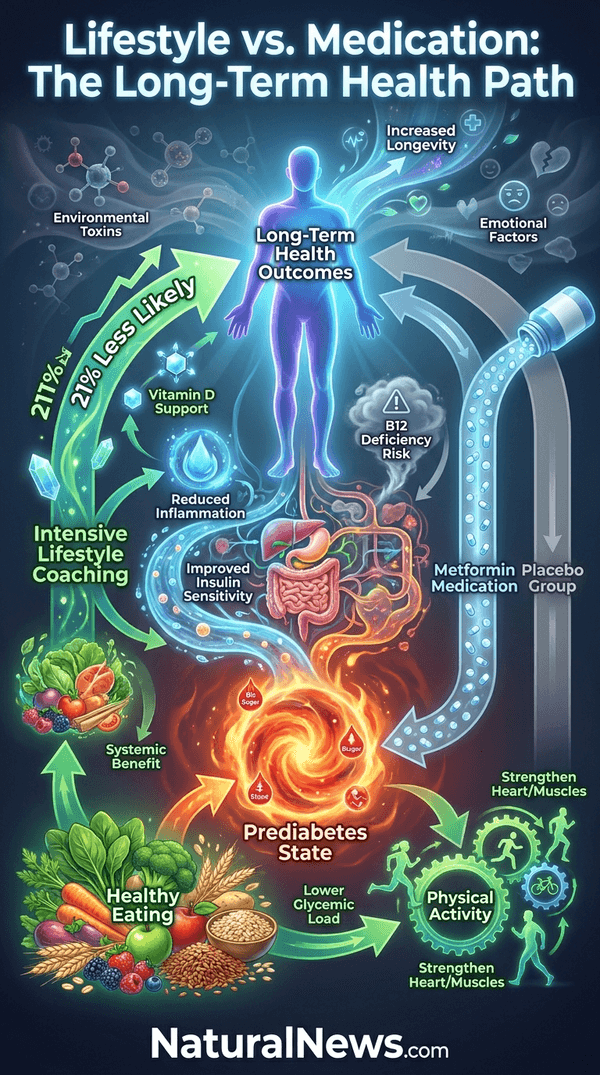
By their seventies, 85% of the volunteers had at least two long-term conditions, such as heart disease, kidney disease, or depression, according to the study. Compared with the placebo group, the lifestyle group was 21% less likely to develop multiple chronic diseases.
Metformin made little difference in the long-term risk of multiple chronic diseases, and the lifestyle advantage held even when diabetes was excluded from the tally.
The findings add to a mixed record on metformin. Separate research has linked long-term metformin use to vitamin B12 deficiency, with up to 30% of long-term users potentially affected, and other work has found that the drug may blunt some exercise benefits [4][5].
Why Lifestyle Changes Affect Multiple Systems
A drug can target one number, such as blood sugar, but daily habits can affect nearly every system in the body at once, researchers said. Physical activity strengthens the heart and muscles, better food reduces inflammation, and modest weight loss eases strain on the liver.
The study authors stated that Western medicine often treats lifestyle advice as a suggestion and medication as the primary fix, but these results reverse that order. Medical texts have long noted that drug therapies for prediabetes may simply mask the onset of diabetes, raising practical questions about when patients should be re-tested and whether medication should be withdrawn before testing [6].
The biological case for lifestyle change rests on more than blood sugar alone. Insulin resistance is one part of a broader metabolic picture in which environmental toxins, glycemic load, obesity, emotional factors, and chronic inflammation all play a role [7]. Dietary fat profiles also influence cell membrane composition and insulin binding, which helps explain why food choices can shape metabolic outcomes beyond any single measurement [8].
Recommended Lifestyle Habits from the Trial
The lifestyle group aimed for about 150 minutes of brisk movement each week, roughly 30 minutes on five days. Brisk walking, cycling, dancing, and swimming all counted, and breaking the time into 10-minute walks after meals also helped.
The program emphasized whole, minimally processed foods: filling half the plate with vegetables, adding a palm-sized portion of protein, swapping refined grains for whole grains, and replacing packaged snacks with fruit or plain yogurt.
Other research supports the emphasis on specific nutrients. A meta-analysis of clinical trials led by Anastassios Pittas, chief of Endocrinology, Diabetes and Metabolism at Tufts Medical Center, found that vitamin D supplementation increased the likelihood of returning from prediabetes to normal blood sugar levels by 27% compared with placebo [9]. Published reviews have also shown that natural compounds, including phenolic compounds, flavonoids, and alkaloids, have anti-diabetes and prediabetes properties [10].
Conclusion
The findings suggest that lifestyle changes may offer broader protection against chronic disease than metformin for people with prediabetes.
The researchers said the results support using intensive lifestyle intervention as a primary strategy to prevent multiple chronic conditions [3]. For patients and clinicians weighing treatment options, the study adds long-term evidence to a debate that has often focused on short-term blood sugar numbers [11][12].
References
- Half of Every Adult Will Develop Pre Diabetic - Mercola.com, December 09, 2015.
- Diet, Exercise and Chronic Disease: The Biological Basis of Prevention by Ardies C Murray
- Study: Lifestyle Changes Reduce Chronic Disease Risk in Prediabetes by 21% - NaturalNews.com, June 23, 2026.
- The unseen cost of a common drug: Widespread Metformin use linked to vitamin B12 deficiency - NaturalNews.com, November 20, 2025.
- Common diabetes drug may undermine critical exercise benefits, study finds - NaturalNews.com, August 26, 2026.
- ABC of diabetes by Holt Tim A
- Integrative Medicine.
- Beat diabetes naturally: the best foods, herbs, supplements and lifestyle strategies to. Murray Michael T. Lyon Michael R Michael Robert 1959
- Vitamin D Supplementation Linked to Improved Blood Sugar in Prediabetes, Study Finds. https://www.naturalnews.com/2026-08-28-vitamin-d-linked-to-improved-blood-sugar-prediabetes.html
- Application of natural compounds in the treatment and prevention of prediabetes. https://pmc.ncbi.nlm.nih.gov/articles/PMC10719952/
- Prediabetes Treatment: Medications & Lifestyle Changes. https://www.goodrx.com/conditions/prediabetes/diagnosed-with-prediabetes-now-what
- Treating Prediabetes With Medications … or Not. https://pmc.ncbi.nlm.nih.gov/articles/PMC11536470/
Explainer Infographic












Please contact us for more information.


