



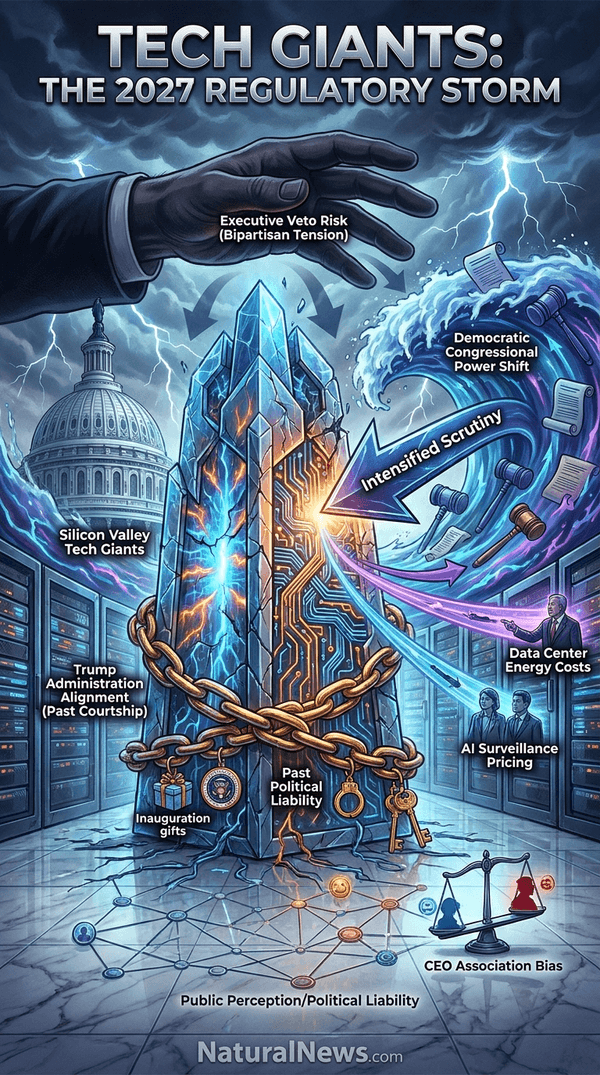
The article states that after two years of a Republican-controlled House of Representatives and Senate, Democratic lawmakers are expected to intensify investigations into technology firms and propose legislation on artificial intelligence (AI) safety. The industry's efforts to build ties with the Trump administration could become a political liability under Democratic control, the report said.
The report also underscores how the industry's attempts to get on President Donald Trump's good side last year became a political liability [1]. It suggests that Silicon Valley's courtship of Trump, which included donations to his inauguration and policy adjustments, could be a central focus of future oversight.
Tech Industry's Courtship of Trump Draws Scrutiny
After Trump's 2024 election victory, multiple AI and defense technology firms donated to his inauguration, visited Mar-a-Lago and adjusted their policies, according to The Hill. Executives including Amazon's Jeff Bezos, X's Elon Musk and Google's Sundar Pichai attended the inauguration, signaling closer ties between Silicon Valley and the new administration.
Strategist Cooper Teboe told The Hill that Big Tech has "done nothing to prevent themselves from being the villain of the 2028 storyline." A Politico poll cited in the report found that Americans are more likely to assume top tech CEOs are Republican, including Anthropic's Dario Amodei.
The perception of the industry as aligned with Trump could complicate its relationship with Democrats, who are expected to investigate those ties. This shift in political fortunes highlights the risks of the industry's close association with the Trump White House.
Early Signals of Democratic Pressure
Three Democratic senators – Elizabeth Warren of Massachusetts, Richard Blumenthal of Connecticut and Chris Van Hollen of Maryland – released a 27-page report on data center energy costs, according to The Hill. Over at the House, Rep. Frank Pallone Jr. (D-NJ) expanded an investigation into AI-powered surveillance pricing.
These actions are seen as early signals of the oversight that could come in 2027. Teboe predicted that Democrats will focus on AI as part of reshaping the party.
The early inquiries by Warren, Blumenthal, Van Hollen, and Pallone suggest that Democrats are already laying the groundwork for more extensive investigations. According to the report, these efforts could serve as a template for a Democratic Congress in 2027, if the party wins in the Nov. 3 midterms.
Potential Targets and Bipartisan AI Concerns
Tech figures who donated to Trump's White House ballroom project, such as Palantir's Shyam Sankar and Microsoft's Fred Humphries, could face early scrutiny, The Hill reported. The House Oversight Committee has vowed to investigate Trump family crypto ventures. Sacha Haworth of the Tech Oversight Project told the report that Republicans find it difficult to distance themselves from industry interests.
Rep. Suhas Subramanyam (D-VA) told The Hill that Democrats are better positioned to pass AI safety legislation, but Trump could veto such bills. This bipartisan interest in AI regulation suggests that tech firms may face pressure from both parties.
The report indicates that the bipartisan consensus on AI safety and data center impacts is a significant factor in the upcoming scrutiny. These issues could form the basis for legislative action in addition to investigative hearings.
Outlook: Investigations and Legislative Push
Democrats are expected to pursue oversight and AI safety bills, using vetoes as messaging for 2028, according to The Hill. The industry faces a dual threat of congressional probes and regulatory legislation. The political climate suggests sustained scrutiny of tech's ties to Trump and its influence in Washington.
This comprehensive approach to oversight could reshape the relationship between Silicon Valley and the federal government. Per the article, Silicon Valley's efforts to align with Trump have made it a target for Democrats.
According to the piece, the 2028 election could see tech become a central issue, with Democrats using oversight to build their case. The Hill's report provides a detailed look at the challenges Silicon Valley faces as it navigates a potentially hostile Congress, with its theme remaining a key indicator of the political landscape ahead of the 2026 midterms.
Reference
- Silicon Valley braces for firestorm of Dem scrutiny in 2027. https://thehill.com/policy/technology/6176186-silicon-valley-democrats-scrutiny/
Explainer Infographic







Please contact us for more information.


