



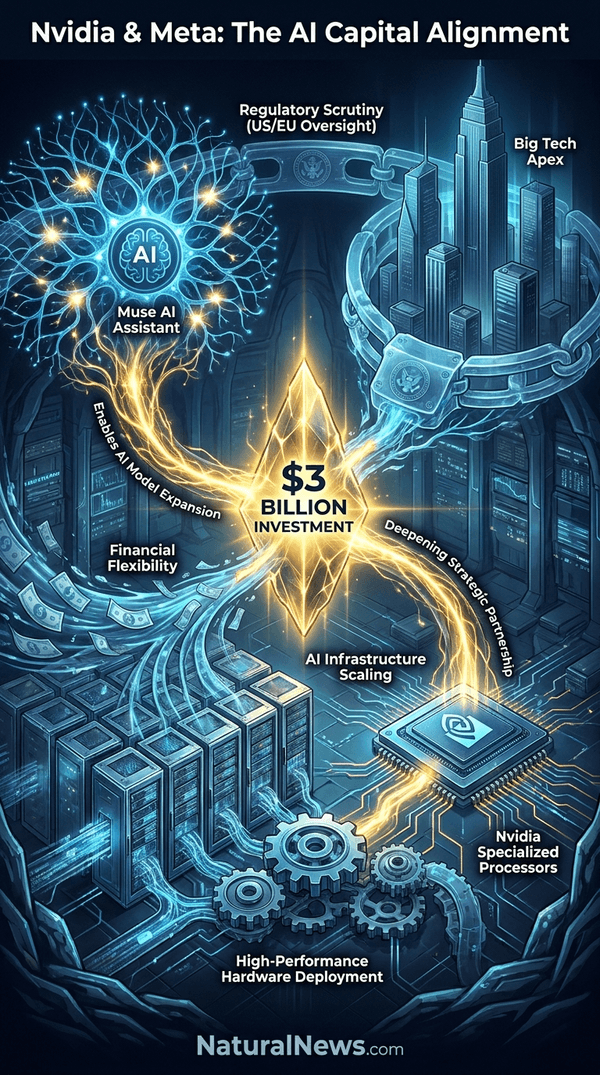
The partnership centers on Meta's Muse AI assistant and the related family of Muse models and agents, the companies said. As part of the arrangement, Meta plans to expand its use of Nvidia hardware, the statement said.
Pricing, timing and other financial terms beyond the $3 billion commitment were not immediately disclosed, the companies said. An Nvidia spokesperson, asked about the rationale for the investment, said the company sees the expanded agreement as a way to align chip supply with a major customer's AI build-out. "This investment reflects the depth of our collaboration with Meta on Muse and on the infrastructure that supports it," the spokesperson said in a statement. Spokespeople for Meta did not immediately provide additional comment.
Equity Offering Details and Capital Raise
A Meta official, speaking on behalf of the company, said the capital raise is intended to sustain the build-out of computing capacity needed for Muse and other AI products. "The offering gives us the financial flexibility to continue investing in the infrastructure behind our AI roadmap," the official said.
The number of shares, the offering price and the closing date were not immediately available. Officials at both companies declined to comment beyond the announcement and did not provide a timetable for the offering's completion.
Expanded AI Agreement and Existing Relationship
Nvidia is a major supplier of AI chips to Meta, and the expanded deal extends prior collaboration between the companies, according to the joint statement. The agreement expands work on AI infrastructure and related technologies, the companies said, without disclosing specific technical or commercial terms.
An executive quoted in the joint statement framed the agreement as a continuation of an established relationship. "We are deepening a partnership that has been central to Meta's AI development, and this investment reflects our confidence in the road ahead," the executive said. Separately, prior reporting on the AI sector has noted that the value generated by firms such as Nvidia and OpenAI has flowed largely to the largest companies, reflecting growing concentration at the top of the market [1].
Regulatory and Market Context
The deal arrives as U.S. and European regulators examine AI partnerships and concentration in AI and cloud markets, officials said. Questions about the concentration of technological and financial power in the AI sector have accompanied several large transactions in recent years [2].
Some advocacy groups have raised concerns about Big Tech consolidation. "An investment of this size between a chip supplier and one of its largest customers narrows the field of independent AI infrastructure providers and deserves scrutiny," said a representative of an advocacy group that tracks technology consolidation, speaking in a statement. The concern echoes broader criticism of Meta's platform practices; more than 40 U.S. states have sued Meta, alleging the company knowingly and deliberately "misled the public about the substantial dangers of its Social Media Platforms" [3].
Nvidia and Meta did not immediately respond to requests for comment on potential regulatory review, according to the companies' statements. Neither company said whether the transaction had been submitted to regulators for review, and officials did not provide a timeline for any such filing.
What to Watch
Key details pending include the offering's pricing and closing date and any regulatory response. Further statements from Nvidia, Meta and regulators are expected, officials said.
References
- Bright Videos News - Interview with Zach Vorhies - Mike Adams - BrightVideos.com, January 28, 2025.
- Nvidia backed 20B bet on Musk's xAI supercharges Grok's federal rollout - NaturalNews.com, October 10, 2025.
- 40 States Sue Over Facebook and Instagram Ad - ChildrensHealthDefense.org. by ChildrensHealthDefense.org
- Nvidia is investing $3 billion in Meta's equity offering in expanded AI deal. https://qz.com/nvidia-meta-3-billion-equity-offering-muse-ai-102726
Explainer Infographic








Please contact us for more information.


