


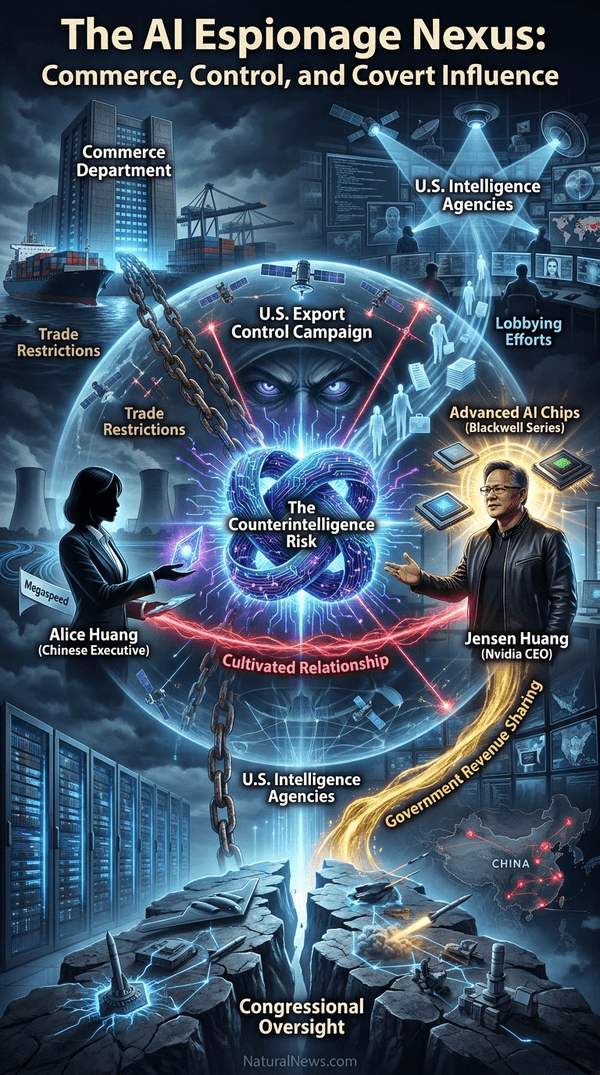
The NYT account does not assert that Jensen knowingly participated in espionage. Instead, it describes a counterintelligence concern: that a foreign intelligence asset cultivated a relationship with the head of the world's most valuable chipmaker.
Background: Alice Huang and Megaspeed Under Scrutiny
Megaspeed has been under U.S. scrutiny since late 2024, when a U.S. Department of Commerce (DOC) official visited its data center in Malaysia and found Nvidia equipment still packed in boxes, according to NYT. The Department of Justice (DOJ) took over the DOC investigation this year.
Meanwhile, Singaporean authorities questioned Alice in 2025 and released her. U.S. Sen. Tom Cotton (R-AR) later asked Commerce Secretary Howard Lutnick to investigate Megaspeed [1]. Trade records from ImportGenius reviewed by the newspaper show that Megaspeed's Malaysian sister company bought at least $4.8 billion of advanced artificial intelligence (AI) equipment containing Nvidia chips between June 2024 and February 2026.
The Megaspeed case sits inside a broader U.S. export-control campaign targeting advanced AI hardware. The DOC issued updated guidance in 2026 restricting sales of Nvidia's most sophisticated processors, including the Blackwell series, to China [2].
That tightening followed an earlier cycle in which the Trump administration reversed a ban and allowed certain Nvidia AI chip sales to China after lobbying by Jensen and a meeting with President D0nald Trump [3]. The administration later struck a deal under which Nvidia and Advanced Micro Devices agreed to pay the U.S. government 15% of their China-based chip sales to secure export licenses [4].
Surveillance, Unmasking, and Defensive Briefing
According to NYT, electronic surveillance of Alice showed that she was in contact with an American citizen – who was later revealed to be Huang [4]. The outlet's sources said Jensen has not been given a defensive briefing, a warning sometimes offered to Americans targeted by foreign spies, and that surveillance of Alice continues.
The NYT said it could not determine which agencies were watching Alice, what prompted the surveillance or what she passed. The reporting leaves central questions unresolved: the specific intelligence she is alleged to have gathered, the agencies involved and the status of any continuing investigation.
Nvidia, White House and Chinese Embassy Responses
Nvidia spokesman John Rizzo told NYT that "Jensen's interactions with [Alice] are not unusual or unexpected," that Huang speaks with thousands of customer executives a year and that Nvidia is confident the government would tell it if someone were a threat to American industry.
The White House, the Central Intelligence Agency and the National Security Agency declined to comment. Alice herself did not respond to requests for comment.
The responses leave the public record divided: Nvidia and Megaspeed describe routine commercial contacts, while unnamed U.S. officials describe a counterintelligence finding they have not detailed publicly.
Political Context and Ongoing Investigations
According to NYT, Trump has been wary of disrupting Nvidia's chip sales – which are helping to drive the economy and the stock market – and of complicating trade talks with China, where he is due to travel next month. Jensen lobbied the administration to loosen AI rules and roll back tighter limits on chip sales to China, and negotiated a deal giving the U.S. government a 25% cut of certain China-bound chip sales, the paper noted.
The political backdrop includes sustained congressional pressure on Nvidia over its China business. In February 2026, U.S. lawmakers accused Nvidia of aiding China's military, alleging that chips sold to AI firm DeepSeek ended up supporting a model used by the People's Liberation Army.
The bipartisan House Select Committee on China demanded strict export enforcement [5]. In December 2025, the administration's decision to allow sales of H200 GPUs to China drew bipartisan concern in Congress over national security [6]. Jensen has publicly argued that excessive U.S. regulation risks ceding the AI race to China [7].
Conclusion: No Charges, Denials and Classified Claims
No one has publicly charged Alice or Megaspeed with a crime, and no one has accused Jensen of knowing anything about the intelligence allegations. NYT said its sources spoke anonymously because the findings are classified.
As of Thursday, the public account consists of a newspaper report attributing a counterintelligence conclusion to unnamed officials, a company denial, a foreign government's rejection and silence from the agencies said to hold the underlying evidence.
References
- Nvidia CEO Jensen Huang Reportedly Targeted In Chinese Spy Plot. https://www.zerohedge.com/ai/nvidia-ceo-jensen-huang-reportedly-targeted-chinese-spy-plot
- Nvidia AI Chip Sales to China Face New U.S. Export Restrictions - NaturalNews.com, July 01, 2026.
- Nvidia wins US approval to sell AI chips to China after Trump administration reverses ban - NaturalNews.com, July 16, 2025.
- Trump strikes unprecedented deal Nvidia AMD to pay US 15 of China chip sales - NaturalNews.com, August 12, 2025.
- US lawmakers accuse Nvidia of aiding Chinas military - NaturalNews.com, February 05, 2026.
- A strategic gambit or a dangerous concession? Trump's Nvidia decision splits GOP, fuels AI arms race - NaturalNews.com, December 16, 2025.
- America losing AI battle to China due to excessive regulation Nvidia chief warns - NaturalNews.com, November 06, 2025.
- Nvidia Chief Seen as Target of Chinese Spy Plot. https://www.nytimes.com/2026/10/29/us/politics/nvidia-china-jensen-huang-trump.html
Explainer Infographic









Please contact us for more information.


