


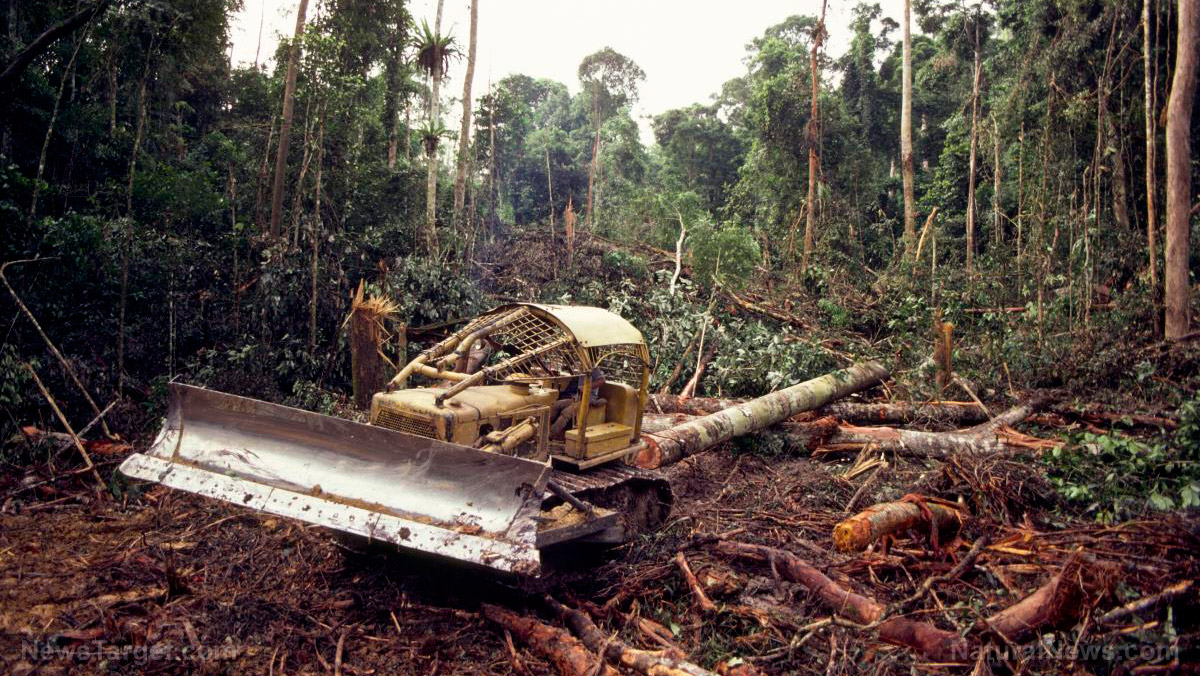
- In Finland, a Google-affiliated company bulldozed 1,300 acres of forest for a data center, destroying the habitat of the local wildlife. This forced wolf packs to hunt for food in human villages, terrifying residents and showing how AI infrastructure directly causes ecosystem collapse.
- Data centers are in direct competition with humans for resources such as land, water and electricity. By 2030, data centers in Texas alone are expected to use 400 billion gallons of water annually, worsening drought conditions.
- The average data center now spans around 224 acres (the size of 450 football fields), and the largest sites exceed 1,000 acres. This development is targeting prime agricultural land, accelerating the loss of food-producing soils and converting them into machine infrastructure.
- Every time someone uses ChatGPT, streams a movie or asks Siri a question, they are supporting an infrastructure that is sucking up resources needed for human survival.
- Globalist elites pushing the AI boom see forests as obstacles, communities as inconveniences and natural resources as inputs for a future where machines rule over people. This is a war on humanity, where "digital existence trumps physical well-being" and the goal is to make humans secondary to AI.
The artificial intelligence (AI) revolution isn't just reshaping digital lives: it's literally reshaping the landscape, and the consequences are turning deadly for wildlife and terrifying for rural residents.
In Finland, the stark reality of what happens when Big Tech bulldozes nature for data centers has arrived with teeth bared.
After Google's affiliate developer Tuike Finland Oy hacked down approximately 1,300 acres of pristine boreal forest near the village of Otanmaki, the ecosystem collapsed. And then the wolves came.
When the forest falls, the wildlife flees
The destruction was sudden and brutal. What was once a thriving habitat for deer, moose and smaller prey animals became tracts of mud and stumps.
With their food sources obliterated, the region's wolf packs had no choice but to venture into human settlements.
Residents reported wolves appearing in village streets, driven by hunger and desperation. One lifelong resident described watching wild animals flee the decimated forest only to be followed by their predators.
The wolves weren't attacking people yet. But the fear is real, and the disruption to daily life is profound.
This isn't an isolated incident. It's a pattern repeating across the globe as the AI data center boom accelerates with little regard for natural ecosystems.
The American nightmare: Data centers devouring communities
Back in the United States, the same story plays out, just with different characters. In West Virginia, a grove of critically endangered chestnut trees faces bulldozing for an Anthropic hyperscale facility.
In Indiana, once-bountiful wetlands are being tilled for Google data centers. In New Jersey, authorities slapped a data center operator with a $1 million fine after discovering 62 illegal gas generators spewing exhaust into surrounding neighborhoods.
The competition for land is fierce and growing. The average data center site now covers about 224 acres, which is roughly 450 football fields. The largest campuses exceed 1,000 acres.
And these facilities are increasingly targeting agricultural and rural land, accelerating the loss of productive farmland already under pressure from development.
Water wars: Data centers vs. communities
But land isn't the only resource being consumed. Water, the most precious resource for human survival, is being siphoned at alarming rates.
A medium-sized data center uses around 300,000 gallons daily, equivalent to 1,000 homes. Larger facilities guzzle up to five million gallons per day.
In Texas, projections suggest data centers will consume 400 billion gallons of water annually by 2030. This is happening in a state plagued by drought.
Two-thirds of all data centers built since 2022 sit in water-stressed areas like southern Arizona, the Colorado River Basin, and Texas.
By 2028, AI-related data centers could require 32 billion gallons annually, enough for 360,000 households.
The hidden cost of convenience
Every time people use ChatGPT, stream a show or ask Siri for directions, they are drawing on infrastructure that's competing with humans for survival necessities.
Land for farming versus land for servers. Water for drinking versus water for cooling. Electricity for homes versus electricity for data processing.
The globalists pushing this agenda don't care about the consequences. They see forests as obstacles, communities as inconveniences and natural resources as inputs for their AI-powered transhumanist future.
They want a world where humans are secondary to machines, where digital existence trumps physical well-being.
What can be done
Some communities are fighting back. Local governments are exploring policies to treat data centers as distinct land uses, steering development away from prime farmland.
Water monitoring requirements and drought contingency planning are emerging. Some facilities are adopting air cooling or using reclaimed wastewater.
But these are Band-Aids on a bullet wound. The fundamental issue remains: AI data centers are consuming resources faster than ecosystems can replenish them, and the human cost, from Finnish villages facing wolves to American communities facing water shortages, is mounting.
The question isn't whether AI will transform the world. It already is.
The question is whether humans will let it transform them into a species that's traded real life for digital illusion, real communities for server farms and real forests for barren mud pits where wolves stalk human settlements.
Watch the video below about residents "fed up" with the data center invasion.
This video is from the Puretrauma357 channel on Brighteon.com.
Sources include:








Please contact us for more information.


