


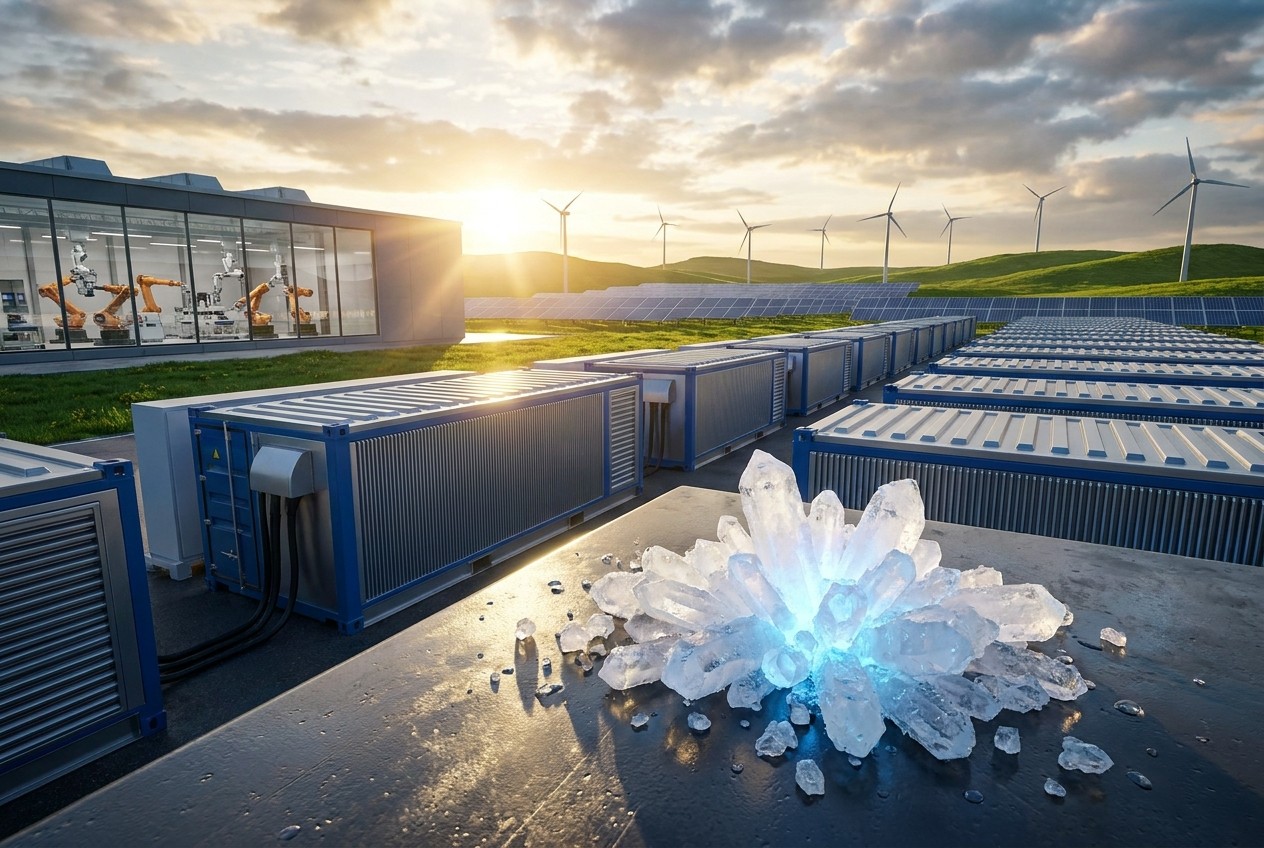
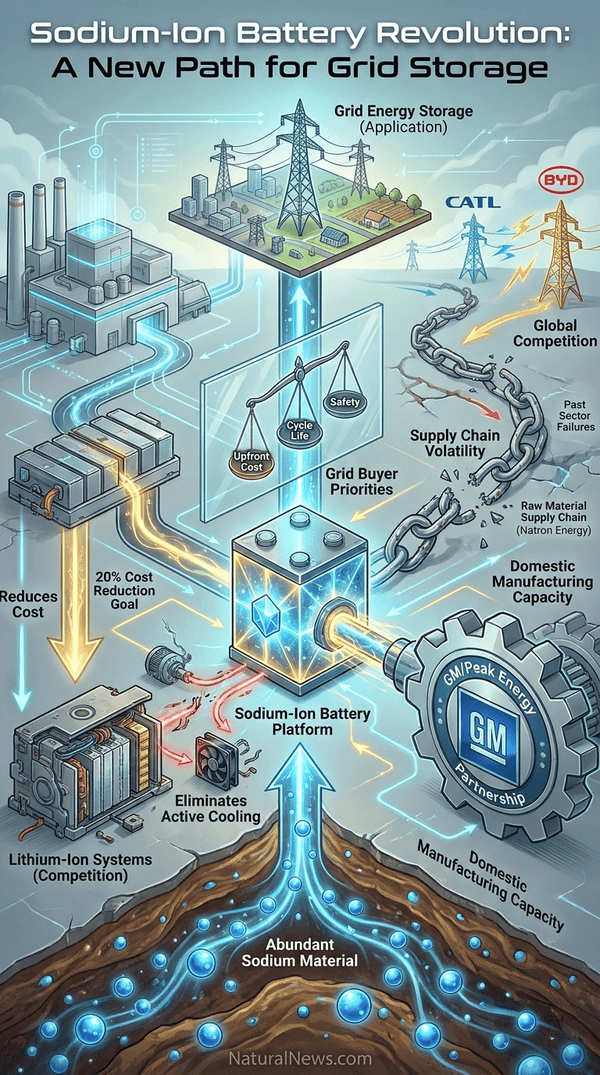
The company said the passively cooled platform eliminates the need for active cooling equipment, a design choice it links to the projected cost reduction.
The 20 percent figure is a company projection rather than an independently verified market price, according to the announcements.
Cost and Performance Targets
The projected savings stem in part from removing active cooling, which consumes power and adds equipment and maintenance costs.
Industry analysts note that grid storage buyers weigh several factors when selecting a system, including upfront cost, cycle life, safety, and discharge duration, and that vendor cost claims typically require field data before procurement decisions follow.
Materials and Supply Chain
Sodium-ion chemistry relies on sodium, a material the companies and trade coverage describe as abundant and widely available, in place of lithium.
GM's role extends beyond investment. Under the partnership, the automaker plans to produce sodium-ion cells for Peak Energy, tying the grid-storage effort to domestic manufacturing capacity.
Scaling production and securing consistent material inputs remain stated challenges for the technology. Earlier failures in the sector illustrate the difficulty: Natron Energy, once the only North American company poised for large-scale sodium-ion production, abruptly ceased operations after planning a $1.4 billion gigafactory in North Carolina [1]. The Peak Energy announcements did not disclose detailed supply-chain commitments or volume targets.
Grid Storage Market Context
Sodium-ion batteries are drawing increased attention from utilities, manufacturers, and grid planners as an alternative to lithium-ion chemistry, according to industry reports. The technology uses abundantly available raw materials and can leverage existing lithium-ion production infrastructure, those reports state [2]. Chinese manufacturers BYD and CATL are expanding sodium-ion output, while U.S. companies including Peak Energy and Inlyte Energy move toward domestic production [3].
CATL introduced its TENER Sodium energy storage system in Munich on June 29, 2026, describing it as the world's first field-validated sodium-ion energy storage solution prepared for commercial use [4]. BYD has shifted its energy storage strategy in 2026 toward low-cost sodium batteries for grid-scale applications, targeting utilities, renewable developers, and grid operators [5].
In this competitive landscape, sodium-ion systems would compete with lithium-ion and other storage technologies on cost, performance, and availability. The announcements did not project market share, and neither company declared the technology a winner over lithium-ion.
References
- Sodium Ion Battery Revolution Collapses Natron Energys 14 Billion Gigafactory Shutdown Exposes Flaws in US Energ - NaturalNews.com, September 27, 2025.
- Sodium Ion Batteries Gain Ground in Energy Storage Market - NaturalNews.com, May 23, 2026.
- Sodium Ion Batteries Emerge in U.S. as China Expands Output, Report Says - NaturalNews.com, August 11, 2026.
- CATL Unveils Sodium Ion Battery System for Grid Storage - NaturalNews.com, July 02, 2026.
- Grid Storage's New Player: Why Sodium Ion Could Power the Future of Renewable Energy - NaturalNews.com, June 26, 2026.
Explainer Infographic









Please contact us for more information.


