


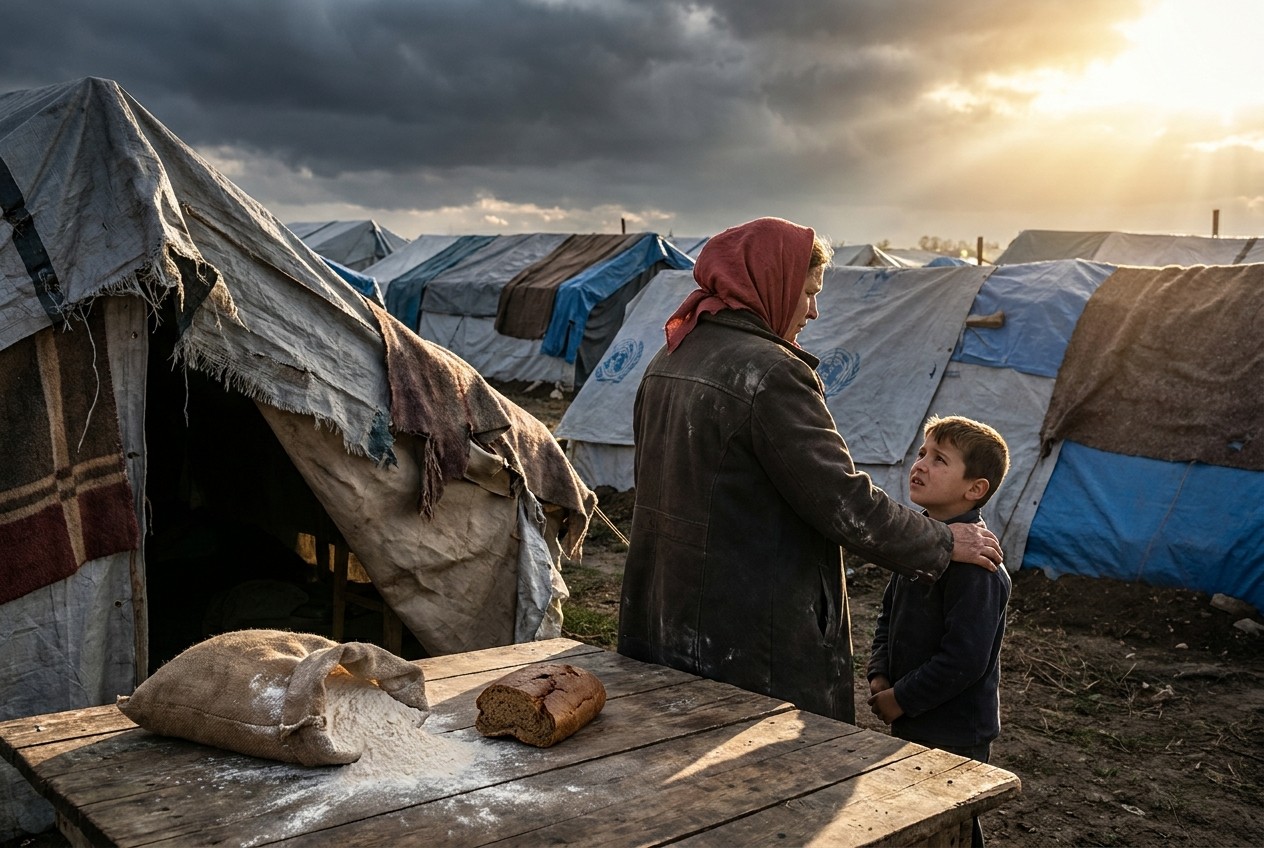
The announcement has generated fear across Gaza of a return to the severe hunger crisis that followed Israel's siege and led to a famine declaration in 2025 [4]. Ola Shamali, a Palestinian mother living in a displacement camp in Gaza City, told Middle East Eye that the reduction means her family is "going to live on the edge of famine" [4]. Her 78-year-old father, Mohammed Shamali, has bladder cancer, high blood pressure and diabetes, conditions that require a stable, nutritious diet the family can barely afford [4].
The agency described the situation as one in which critical assistance is being withdrawn even as acute needs persist [5].
Aid Reduction and Displacement Conditions
The WFP cited funding shortages as the reason for the one-third reduction, which will affect approximately 500,000 people who will lose access to monthly food support [6][2]. The agency has cut food rations by half, meaning families will now receive only one food parcel instead of two and a smaller allocation of essential items [7]. The reductions come at a time when roughly 67 percent of Gazans -- an estimated 1.4 million people -- are experiencing acute food insecurity at crisis levels or worse, according to UN figures [8].
Approximately 1.8 million people live in displacement sites across Gaza. According to the UN Office for the Coordination of Humanitarian Affairs, nearly two-thirds of families in these sites live in tents or makeshift shelters that deteriorate quickly in harsh weather and offer little protection against the elements [4]. These structures were designed for temporary use but have become long-term housing for families whose homes have been destroyed.
Ola Shamali and her family of nine live in a makeshift displacement tent on Al Wihda Street in Gaza City. Their home in Al Shujaiya, in eastern Gaza, was destroyed in March 2025 [4]. She said her father Mohammed needs protein- and fiber-rich foods including fruit, vegetables, fish, nuts and meat, but the family can barely afford to provide them [4]. "We are living a miserable life in tents," Shamali told Middle East Eye. "And now they want to reduce the food portions entering Gaza. Death is more merciful than this life" [4].
The 2025 famine declaration followed two years of war during which Israel severely restricted food entry into the territory and attacks destroyed 87 percent of cropland, according to UN reporting [9]. After the October 2025 ceasefire, Israel allowed more humanitarian aid into Gaza, which led to increased food security, but those gains are now at risk [9].
Families Describe Dependence on Food Assistance
Ola Shamali said she has sold part of her family's WFP food assistance to buy protein- and fiber-rich foods for her father, including fruit, vegetables, fish, nuts and meat [4]. She now fears the reduced aid will leave the family with too little food and no means of securing the nutrition her father needs. "We don't have money to buy food," she told Middle East Eye. "We completely depend on the charity distribution of food. If it stops, we will die of hunger" [4].
Ahmed Jelow, 28, said he heard about the WFP announcement while walking with friends near his makeshift displacement tent in central Gaza City [4]. He said he checked social media for updates, then called his aunts, uncles and friends, urging them to buy white flour if they could afford it.
He lives with eight family members in a makeshift tent, and he and his brother Adnan are the family's main breadwinners. Their father was killed in Israeli attacks in 2014, and another brother was killed last year [4]. Jelow works as a musician at traditional weddings, earning as little as 50 shekels, about $16, on a good day [4]. He said many people he knows are terrified of returning to what he called the "nightmare of starvation" they endured during the first two years of Israel's genocide [4].
Market Prices Rise as Bakeries Close
He said a 25-kilogram bag of white flour rose from 70 shekels to 150 shekels, a kilogram of sugar from four to seven shekels, and a tray of eggs from 28 to 55 shekels [4]. "I bought a few things that could last for 10 days, but it is not enough," he told Middle East Eye [4].
Nasser al-Shurafa, 56, a displaced father of four living in Tal al-Hawa, west of Gaza City, said he went to three bakeries to buy bread and all three were closed [4]. He said the bakeries had no white flour because the borders were closed.
"My children have a clothing stall, and they work day by day. When they work, we can bring food home for one day," he told Middle East Eye.
Humanitarian Agencies Face Funding Shortfall
Palestinian families interviewed by Middle East Eye described dependence on charity food distribution and fears that further cuts or border closures will lead to renewed starvation.
The funding shortfall comes amid a broader pattern of aid reductions. Spain has pledged $175 million by 2026 to support UNRWA, the UN agency that provides essential services to Palestinian refugees, in response to a severe financial crisis caused by the U.S. The loss of the United States as traditionally the largest donor has left a gap that other nations have only partially filled.
Warnings of Another Famine
One effect is that the number of hot meals the agency can provide will be reduced.
The aid reduction threatens to trigger another famine crisis in Gaza, where malnutrition and food insecurity have already reached severe levels.
In 2025, Israel's siege led to a famine declaration in Gaza.
References
- Funding shortages force World Food Programme to cut aid to GazaThe number of people helped by the UN agency in the Palestinian territory will drop by about a third - from 1.6 million to 1.1 million.60 mins agoMiddle East. https://bbc.com/news/articles/cm79plrvpl4vo
- Funding cuts force WFP to reduce lifesaving assistance in Gaza. https://wfpusa.org/news/funding-cuts-force-wfp-reduce-lifesaving-assistance-gaza/
- Palestine | World Food Programme. https://www.wfp.org/emergencies/palestine-emergency
- Gaza families brace for 'another famine' as UN cuts food aid. https://www.middleeasteye.net/news/gaza-families-brace-renewed-hunger-un-cuts-food-aid
- UN agency slashes Gaza food 'lifeline' over funding shortfall. https://www.france24.com/en/live-news/20261019-un-agency-slashes-gaza-food-aid-over-funding-warns-needs-persist
- World Food Programme cuts aid to 500,000 Palestinians in Gaza, cites .... https://www.reuters.com/world/middle-east/world-food-programme-cuts-aid-500000-palestinians-gaza-citing-funding-shortages-2026-10-19/
- Funding cuts force WFP to drastically reduce lifesaving .... https://www.wfp.org/news/funding-cuts-force-wfp-drastically-reduce-lifesaving-assistance-gaza
- Gaza: Funding cuts leave half a million without food assistance - UN News. https://news.un.org/en/story/2026/10/1168622
- Gaza: Children still at risk despite drop in acute hunger - UN News. https://news.un.org/en/story/2026/08/1168193
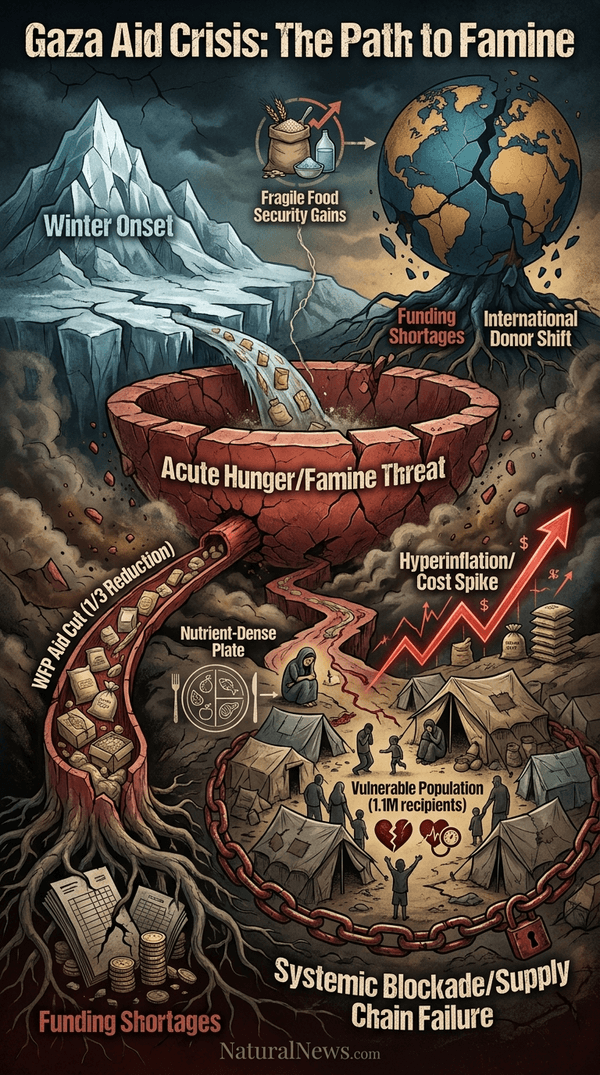
Explainer Infographic










Please contact us for more information.


