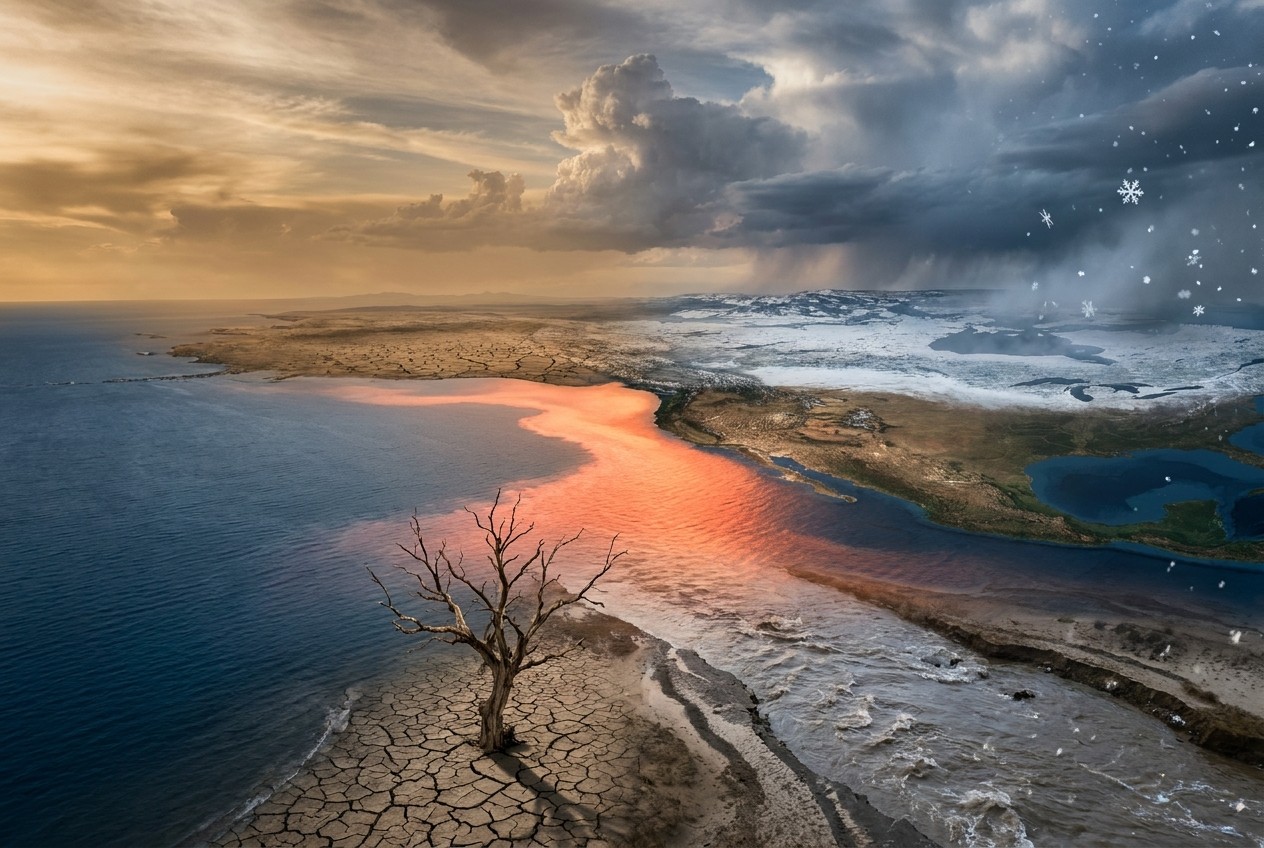
El Niño Pattern Drives Outlook
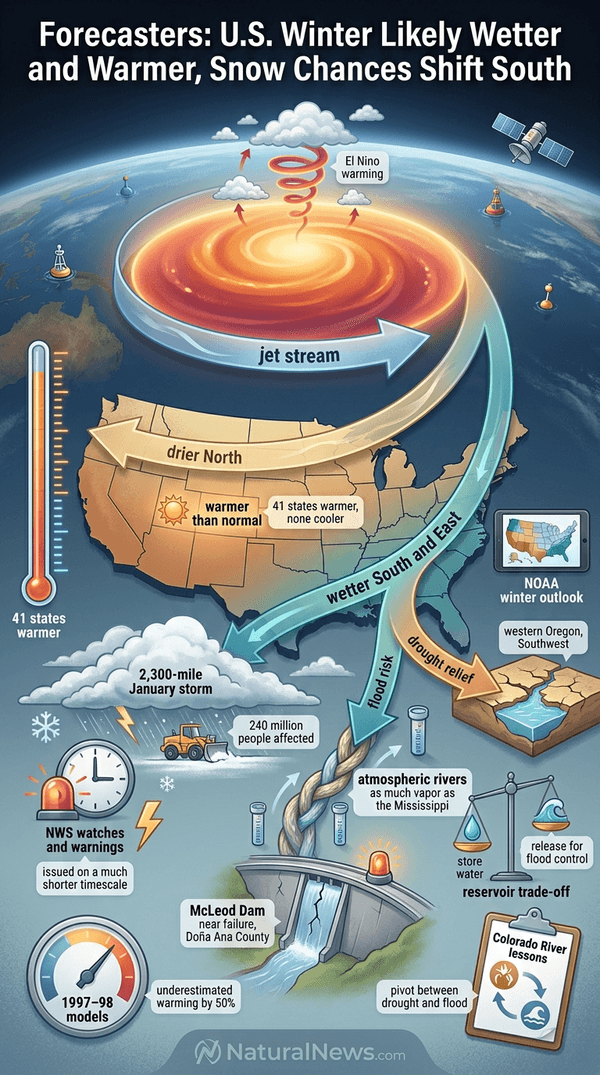
El Niño is a natural, temporary warming of the central and eastern tropical Pacific Ocean that shifts global weather patterns and generally raises global temperatures [3]. During El Niño years, the eastern Pacific becomes warm and wet, while the rains that normally fall in the western Pacific fail [3]. NOAA said Thursday that 41 of the Lower 48 states or parts of states are forecast to be warmer than normal, with no areas forecast cooler.
Models predicting El Niño have historically shown limitations. An assessment of 12 models in predicting the 1997-98 El Niño found that while NOAA's Climate Prediction Center performed well in predicting the onset, the center and all other models greatly underestimated the magnitude of sea surface warming by about 50% [4].
Snow Forecasts Diverge by Region
Private forecasters also emphasize the unpredictability of individual storms. The National Weather Service (NWS) issues event-specific watches, warnings, and advisories when hazardous weather is occurring or appears possible, covering severe local storms, winter storms, floods, and hurricanes [4].
Recent winters have demonstrated the potential for severe weather despite warm averages. In January, a massive winter storm spanning over 2,300 miles unleashed severe snow, ice and frigid temperatures across more than 40 states, setting records for the most counties under winter storm warnings and leaving over 240 million Americans bracing for dangerous conditions [5]. The NWS defines a winter storm watch as an indication that hazardous weather is possible based on current or anticipated atmospheric conditions [4].
Drought, Flooding and Severe Weather Risks
NOAA forecasts a wetter-than-usual winter for parts of all 39 states, with drier conditions in much of Montana and parts of Oregon, Idaho, Wisconsin, and Michigan [1]. NWS meteorologist and branch chief Jon Gottschalck said drought could improve or end in western Oregon and Washington, the Southwest, the central and southern Rockies, the southern Great Plains, the lower Mississippi Valley and the East. [2] The 2026-2027 U.S. Winter Outlook map shows wetter-than-average conditions most likely across the Southwest, South, and East Coast [6].
Atmospheric rivers are corridors of concentrated moisture that can produce extreme precipitation. The risk of flooding is compounded by existing vulnerabilities; a near dam failure in southern New Mexico in September prompted the National Weather Service to issue a flash flood emergency for McLeod Dam near Garfield in Doña Ana County [7].
Research on the 1997-1998 El Niño event on the Colorado River highlighted lessons for adaptive management during climate extremes, including the need for coordinated responses to both drought and flood conditions [8].
Conclusion
Forecasters across the globe call for the current El Niño to reach record levels this fall or winter, with the Climate Prediction Center placing the odds of a strong-to-very strong El Niño persisting into early 2027 above 83 percent [9]. NWS Director Ken Graham said a strong El Niño does not mean impacts are stronger, but it does make weather easier to predict.
References
- US winter is likely to be wetter and warmer, forecasters say. https://ny1.com/nyc/all-boroughs/ap-top-news/2026/10/15/us-winter-is-likely-to-be-wetter-and-warmer-forecasters-say-if-you-want-more-snow-look-south
- U.S. winter is likely to be wetter and warmer, forecasters say. If you want more snow, look south. https://www.washingtontimes.com/news/2026/oct/15/us-winter-likely-wetter-warmer-say-forecasters-want-snow-look-south/
- Earth almanac an annual geophysical review of the state of the planet. by Goldstein Natalie
- Weather studies introduction to atmospheric science. by Moran Joseph M
- Historic Winter Storm Fern paralyzes U.S., disrupting travel and leaving millions without power. https://www.naturalnews.com/2026-01-27-historic-winter-storm-disrupts-travel-causes-blackouts.html
- El Nino looms large over U.S. Winter Outlook - National Oceanic and. https://www.noaa.gov/news-release/el-nino-looms-large-over-us-winter-outlook
- "Seek Higher Ground Now": A Near Dam Failure In New Mexico Was Just The Warm-Up For A Record El Niño. https://www.zerohedge.com/political/seek-higher-ground-now-near-dam-failure-new-mexico-was-just-warm-record-el-nino
- Climate extremes and adaptive management on the Colorado River: Lessons from the 1997–1998 ENSO event. by Roger S. Pulwarty, et al. Journal of Environmental Management 2001 63 307–324
- Forecasters Warn of Potential Major Snowstorms Across 19 States as El Niño Strengthens. https://www.naturalnews.com/2026-10-15-forecasters-warn-potential-major-snowstorms-19-states.html
Explainer Infographic










Please contact us for more information.