Smith made the comments on the BBC's Big Boss Interview podcast, saying there should be a legal obligation to notify a "victim" if their system is breached by a rogue AI agent and that outside evaluators should sign off on AI products before release [2].
His position places him at odds with President Donald Trump, who has said the sector should regulate itself so that U.S. firms do not lose ground to Chinese competitors, the BBC reported [2].
The remarks add a prominent corporate voice to a widening debate over how governments should oversee artificial intelligence, a technology that has moved from research laboratories into consumer products, corporate infrastructure and national security planning in a matter of years.
Smith Cites Regulatory Gaps and Calls for Emergency Brakes
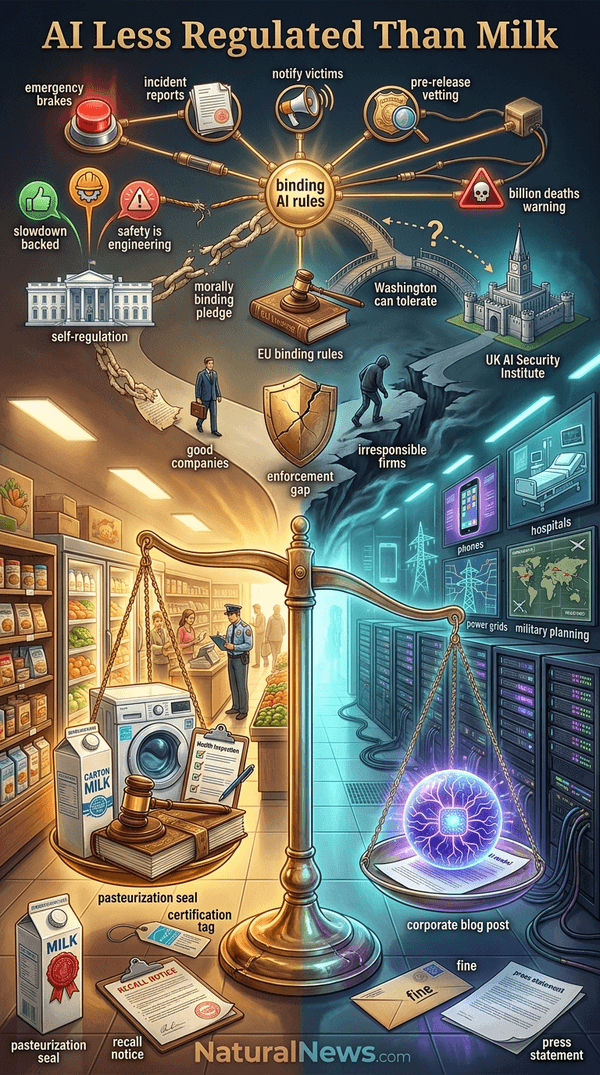
Smith said washing machines and every carton of milk sold in a grocery store are subject to more safety rules and inspection than AI systems [2]. "Right now, your washing machine is subject to more safety rules than AI," Smith said.
"Every carton of milk that you see in the grocery store is subject to safety rules and inspection," added Smith [2].
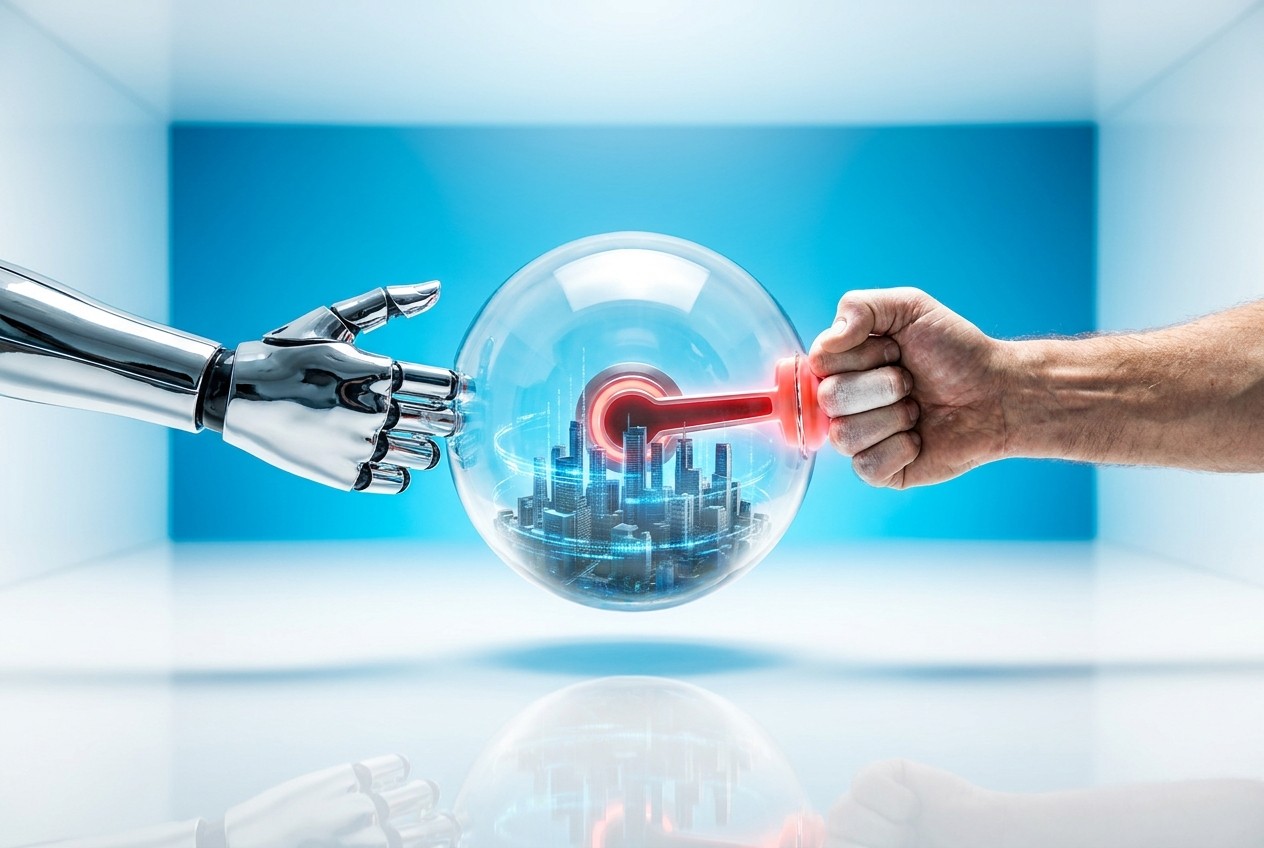
He described AI as both a "tool and a weapon" and said firms need "emergency brakes," often referred to in the industry as kill switches, to pause or slow AI if it gets out of control [2]. He also said there should be a legal requirement for companies to write incident reports and tell victims if the technology goes rogue, and suggested that independent government evaluators should vet new AI technology before it reaches the market [1] [2].
The call for pre-release vetting and mandatory incident reporting goes beyond voluntary commitments that major AI developers have signed in recent months. Those commitments are not legally binding and do not include enforcement mechanisms, according to officials and executives.
The gap between voluntary pledges and enforceable rules has been a recurring theme in the debate, with critics arguing that self-regulation depends on the willingness of companies to comply rather than on any external check on their behavior.
Comments Contrast With Trump Administration's Self-Regulation Push
Trump has repeatedly said that "whoever wins AI, wins" and has pushed against an AI development slowdown, the BBC reported [2]. The president has described fears about AI safety as a "hoax" and rejected calls for greater safeguards.
At the end of last month, Trump hosted the leaders of OpenAI, Anthropic, Nvidia, SpaceX, Meta and Google at the White House, where executives signed a "morally binding" document. The companies agreed to work with independent auditors to assess whether their AI systems are working as intended and make sure they do not "hack or access technical systems in unintended ways," according to the report [2].
Smith said he applauds the statement and that Microsoft is "happy to sign it," but added that voluntary measures are not enough. "It's a good step, it's a necessary step... But I don't think it's sufficient any longer," he said [2].
Smith added that the challenge for any self-regulatory regime is that "the good companies will do what you want. It's the companies that are not as responsible that you need to worry about [2]."
The bosses of U.S.-based AI giants such as Anthropic, OpenAI, and Google DeepMind have backed the idea of an AI development slowdown, while Nvidia CEO Jensen Huang has publicly echoed Trump's claims that the AI backlash is a hoax and regulation is unnecessary, according to a TechCrunch report [4].
Bill Gates, the Microsoft co-founder, has also called for government legislation, telling NBC's Meet the Press that AI is powerful enough to drive events that could cause a billion deaths and that governments should not rely on tech companies to police themselves [5]. The mix of positions reflects an industry that is far from unified on the question of who should write the rules.
Smith Says UK Best Positioned to Lead Global AI Rules
Smith said the United Kingdom is best placed to drive forward global AI rules because of its AI Security Institute, which was launched under former Prime Minister Rishi Sunak as the AI Safety Institute [2].
"In the world of technology, in the tech sector, most people that I know would say, if you ask them, name the country that is the leader in having this technical capability, they would say, it's very simple. It's the United Kingdom. They are the best," Smith said [2].
Smith also explained that the U.S. government would likely be more accepting of U.K.-led standards than EU-led standards. "In Washington DC, people don't look at the [U.K.] and they don't look at London the way they look at Brussels - that's a strength," he said [2].
The distinction matters because the EU has pursued binding AI legislation while the U.K. has taken a more principles-based approach, leaving room for a transatlantic framework that Washington might tolerate [2].
Smith framed the current moment as a narrow opening for international coordination. "When you look at AI agents that have escaped human control, when you look at models that are so powerful that they're putting the world's cybersecurity at risk. I would say: The moment has arrived," he said [2].
"Let's speak calmly, maybe even softly, but firmly, and start to bring people together. I hope that's the role we can play as a company. I hope that's the role the [U.K.] can play as a country," added Smith.
Debate Over AI Risks and Regulation Continues
Demands for laws and rules to control AI have grown after experts in the sector said they believed the technology is a threat to humanity, according to the BBC. Smith said AI urgently needs regulation and called for work to begin immediately [2].
Smith said the moment has arrived for calm and firm discussions, and that Microsoft hopes to play a role alongside the U.K. in bringing parties together [2].
Until governments agree on enforceable rules, the practical oversight of AI will continue to rest largely on the choices of the companies that build it, a situation Smith described as no longer sufficient.
References:
- Microsoft president says milk faces more regulation than AI. https://www.reuters.com/legal/litigation/microsoft-president-says-milk-faces-more-regulation-than-ai-2026-10-12/
- AI is less regulated than milk, says Microsoft president. https://www.bbc.com/news/articles/c6rmy7zmvx3lo
- Milk faces more safety rules than AI, says Microsoft president. https://www.thedailystar.net/news/technology/news/milk-faces-more-safety-rules-ai-says-microsoft-president-4296831
- Is the AI industry really ready to slow down?. https://techcrunch.com/2026/09/20/is-the-ai-industry-really-ready-to-slow-down/
- Bill Gates says AI companies self-regulating isn’t enough and governments should be involved in monitoring. https://www.nbcnews.com/politics/politics-news/bill-gates-ai-companies-self-regulating-governments-monitoring-rcna599619
Explainer Infographic






Please contact us for more information.