Mercury is a heavy metal that enters the body through the environment and certain foods and can remain in tissues for long periods, according to the article. The review focused on an often-overlooked consequence of exposure and the pathway that connects the gut to the brain.
The article was authored by Zhané Slambee, a mindbodygreen editor, and drew on a review published in the scientific literature. The findings center on how mercury affects gut bacteria and gut-brain communication, and how a class of plant compounds may offset some of that damage, according to the article.
What the Review Set Out to Explore
The review evaluated existing research on how mercury affects the gut, the intestinal lining and the connection between gut bacteria and the brain, according to the article. It also sought to determine whether polyphenols might help protect against that damage, the article stated.
Mercury is a heavy metal that gets into the body through the environment and certain foods. Once absorbed, it can stick around in tissues for a long time, which is why researchers continue to study its wide-ranging health effects, the article stated. The review's authors pulled from previously published work to map out mechanisms rather than to report results from new clinical trials, according to the article.
The review's focus reflects a broader scientific interest in how environmental exposures influence sleep. A 2022 preprint authored by D.A. Wallace and colleagues concluded that exposure to chemical pollutants may result in disturbed sleep by acting upon the biological pathways that regulate sleep-wake [1]. A separate PubMed-listed analysis stated that chemical pollutants are likely key determinants of sleep health and disorders [2].
Mercury's Effects on the Gut
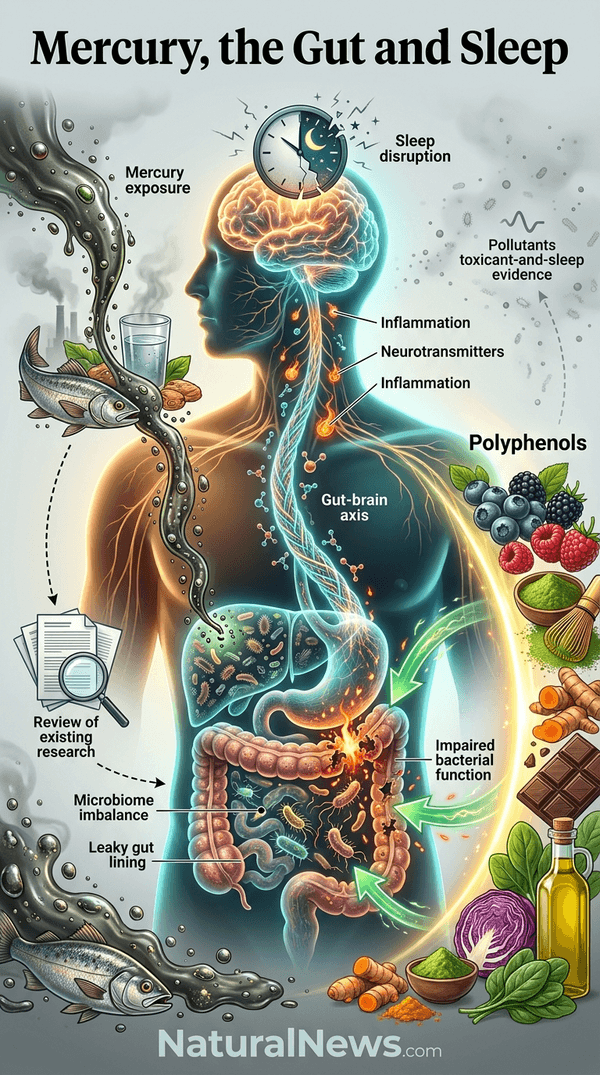
Mercury harms the gut in several ways, according to the review. It throws off the balance of bacteria in the microbiome and weakens the gut lining, which can lead to problems with how gut bacteria function, the review stated. The effects do not stop at digestion, the article reported.
The idea that the gut is central to overall health has gained traction in the research literature. Dr. Mark Hyman wrote in Young Forever that medicine has traditionally held a two-dimensional view of the gut as simply a tube from mouth to anus designed for absorbing nutrients and fluids, and that doctors often considered the gut irrelevant to overall health. However, the gut turns out to be central to our well-being, Hyman wrote [3].
Mercury is one of several heavy metals and toxicants that researchers have flagged for effects on human biology. Sara Gottfried listed heavy metals including mercury among endocrine disruptors and motor skills disruptors in Brain Body Diet [4]. A scientific review of mercury's immunotoxic effects found that methylmercury is more immunotoxic than inorganic mercury and that even inorganic mercury administered chronically to mice in drinking water as HgCl caused immune cell impairment and disruption of enzyme activity at doses too low to produce kidney damage [5].
Gut-Brain Pathway and Sleep Disruption
An imbalanced gut microbiome changes how the body produces inflammatory compounds and neurotransmitters, which are the chemical messengers that help regulate sleep, the review stated. Through the gut-brain connection, these shifts can affect how the nervous system works and lead to sleep problems, the article said.
The gut and brain are connected by what is called the enteric nervous system. While the ENS can act independently, it can also influence the central nervous system through millions of neurons as well as neurotransmitters like serotonin, dopamine, glutamate and norepinephrine, according to a Mercola.com article [6]. When one of these systems dysfunctions, it heavily impacts the others, the article stated [6].
Neurotransmitters produced in the gut are central to the communication between the microbiome and the brain. A separate analysis noted that mechanisms underlying associations between environmental toxicant exposures and sleep problems can be attributed to systemic inflammation, oxidative stress and disruption of neurochemical pathways [7].
Polyphenols as Potential Protective Compounds
Plant polyphenols may reduce mercury's damage to the gut in several ways, according to the researchers. They may strengthen the gut lining, support healthy gut bacteria, protect the nervous system and calm inflammation, the review stated. By addressing gut damage on multiple fronts, polyphenols may help keep the gut-brain communication pathways that support healthy sleep working properly, the article reported.
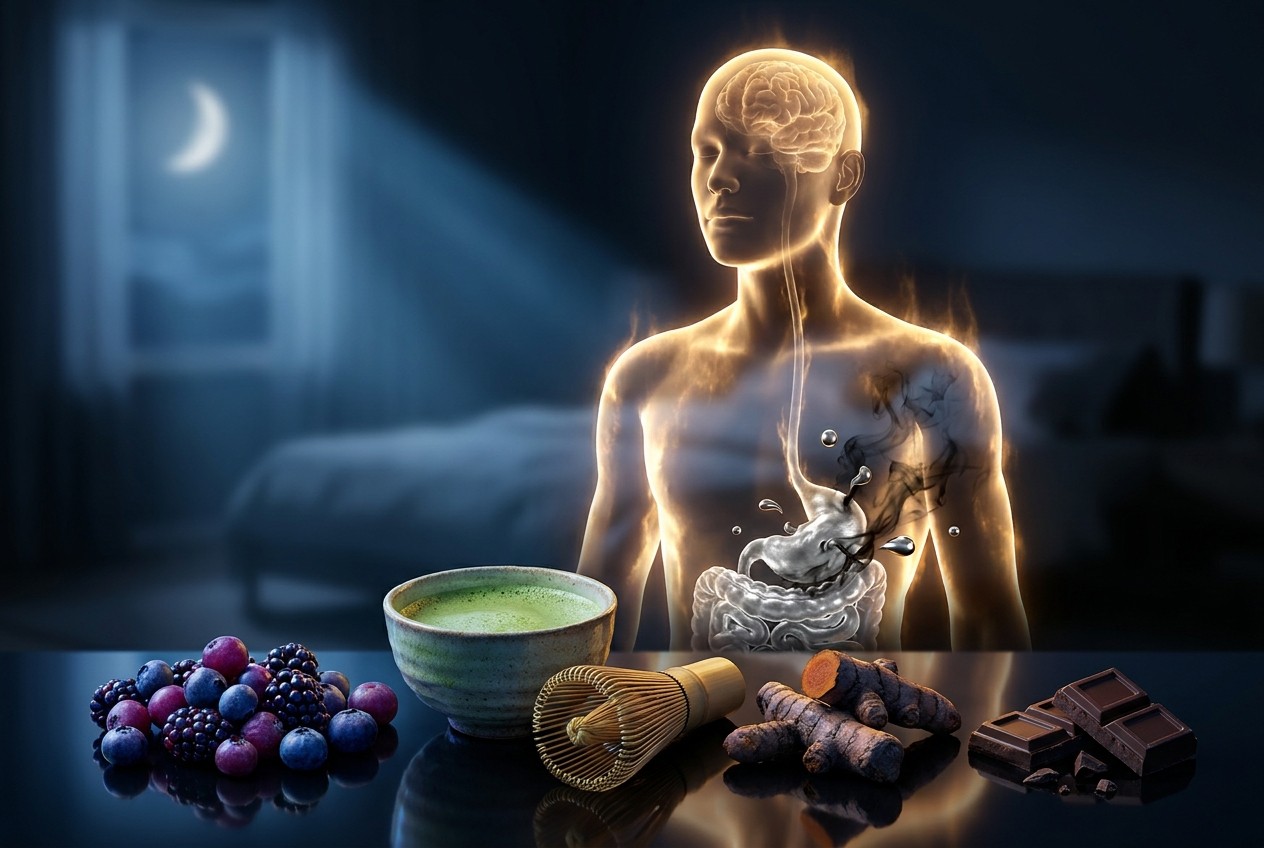
Foods high in polyphenols include berries such as blueberries, blackberries and raspberries; green tea including matcha; turmeric and other spices; dark chocolate with higher cacao content; colorful vegetables like red cabbage and spinach; and extra virgin olive oil, the article stated. The compounds give these plants their rich colors, according to the article.
The review pulled together research on mechanisms rather than clinical trials, the article stated. Separately, compounds in common foods like broccoli, ginger and garlic have been shown to enhance the body's natural detoxification systems, according to TheTruthAboutCancer.com [8]. Polyphenol-rich foods, including dark chocolate and colorful plants, have also been highlighted for their antioxidant and health benefits, and natural compounds such as anthocyanins, turmeric and lycopene from tomatoes offer a spectrum of health benefits [9].
Takeaway
The review concluded that mercury exposure can disrupt sleep by throwing off gut bacteria and interfering with gut-brain communication, according to the article. Eating plenty of polyphenol-rich foods, like berries, green tea, turmeric and other colorful plants, may help protect against this damage and support better sleep, the article stated.
Supporting overall gut health through fiber-rich foods, fermented foods and limiting ultra-processed foods can also help keep the intestinal lining strong, the article reported. Adding detoxifying foods to a routine may offer extra support, according to the article. Avoiding trans fats and hydrogenated oils, and eating traditionally fermented and cultured foods, can improve the gut microbiome, an important factor in overall health, according to a Mercola.com article [10].
The review's emphasis on dietary strategies aligns with a broader body of research on environmental exposures and sleep. A 2026 article in NaturalNews.com reported that a cross-sectional study conducted by Imène Kacem and colleagues in Tunisia found that power plant workers exposed to extremely low frequency electromagnetic fields were significantly more likely to report poor sleep and depression compared to unexposed administrative staff [11].
References
- Is exposure to chemical pollutants associated with sleep .... https://www.medrxiv.org/content/10.1101/2022.11.02.22281802v1.full
- Is exposure to chemical pollutants associated with sleep ... - PubMed. https://pubmed.ncbi.nlm.nih.gov/37392613/
- Young Forever The Secrets to Living Your Longest Healthiest Life by Dr Mark Hyman
- Brain Body Diet by Sara Gottfried
- Unknown. by Penta Systems International Inc.. Environmental Toxicology and Chemistry 17 (2) 1998
- Ride the Tiger a Documentary About the Bi - Mercola.com, March 11, 2017.
- Associations of environmental toxicant exposure with adult sleep .... https://www.sciencedirect.com/science/article/pii/S0269749125014356
- TTAD 3 Volume Transcripts Complete by TheTruthAboutCancer.com
- Brighteon Broadcast News - CITIZEN SABOTAGE Threats - Mike Adams - Brighteon.com, August 20, 2025.
- Could the Way You Walk Be a Diagnosis for Dem - Mercola.com, October 10, 2019.
- Study Links Power Plant EMF Exposure to Depression, Poor Sleep; U.S. Lacks Federal Limits. https://www.naturalnews.com/2026-09-14-power-plant-emf-exposure-linked-depression-poor-sleep.html
Explainer Infographic










Please contact us for more information.