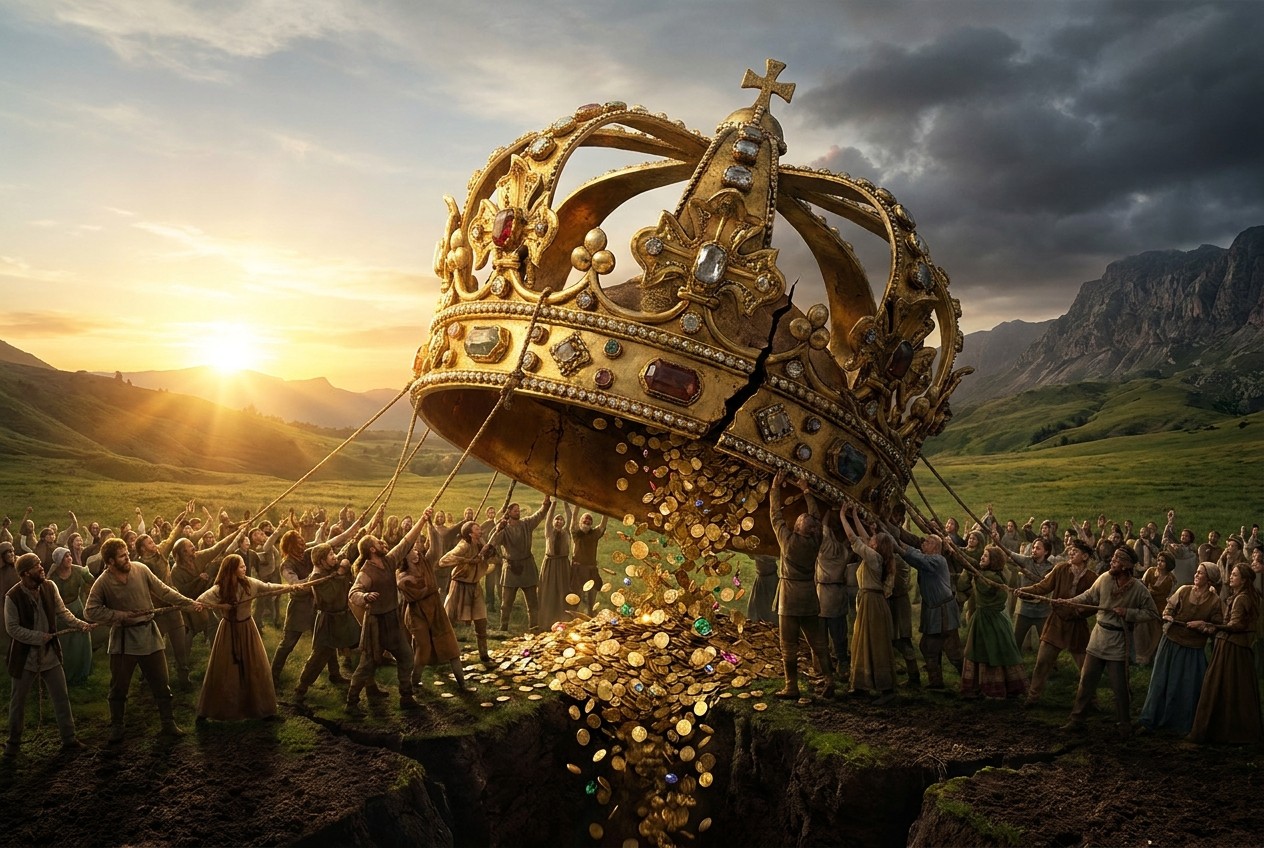
Bordachev's analysis cites Britain, the Soviet Union, and Trump-era America as examples of powers that have weighed imperial expansion against its financial and political costs. The article opens with the assessment that "an empire is perhaps the most expensive indulgence that even the most powerful nations can afford only for a limited time" [1].
According to the analysis, arguments that empires are profitable are largely unconvincing. Bordachev writes that while empires may enrich a narrow section of the elite, and perhaps do so spectacularly, the enrichment is rarely lasting, and for everyone else, empire eventually means costs [1]. The article arrives amid broader debate about American power, debt-driven imperial decline, and the role of military expansion in the fate of great powers [2][3].
Historical Costs of Empire Cited
The analysis states that empire is among the most expensive indulgences a nation can pursue. Bordachev writes that arguments empires are profitable are largely unconvincing and that imperial grandeur did not necessarily translate into prosperity for those expected to sustain it [1].
To illustrate the point, the article references the lives of ordinary people in 19th-century Britain, the colonial veteran portrayed by Rudyard Kipling, and the Russian village during the period of the Soviet Union's greatest geopolitical power, as depicted by Russia's village prose writers [1]. Bordachev writes that the ruling class begins to understand that the people fighting its wars may one day turn their bayonets against those who sent them, and this broadly is what happened in the Soviet Union. Britain, and to a lesser extent France, managed the retreat from empire more successfully in the second half of the 20th century, according to the analysis [1].
Critics of empire have documented similar patterns. Historian Howard Zinn wrote of how Congress and major newspapers accepted official accounts without question, granting presidents broad authority for military intervention [4]. A separate analysis of collapsed empires identifies a recurring sequence: success breeds overconfidence, overconfidence leads to extravagant spending on wars, and the resulting debt eventually becomes crushing [2]. The internationalman.com analysis states that whether it is Rome, Spain, France, Britain, or the Soviet Union, excessive debt has played a critical role in imperial decline [2].
Security Paradox and Shifting Power Balances
The analysis describes a paradox of international relations: the more resources a state possesses, the less it needs constant confrontation, because the powerful can often obtain what they want with kind words rather than a gun [1]. According to Bordachev, this helps explain the relatively restrained policies of Russia and China toward many neighbors, given that both possess vastly greater resources than the smaller surrounding states.
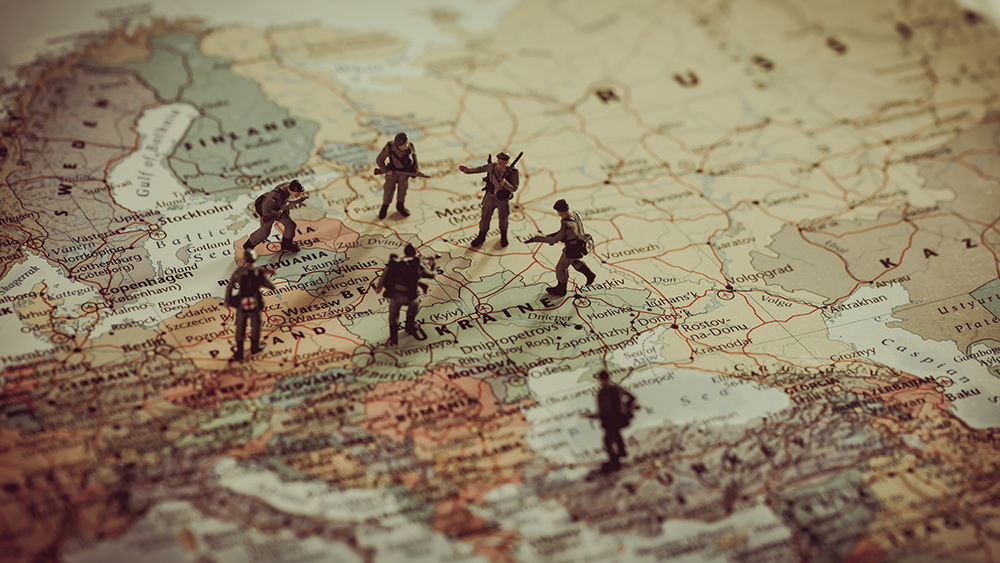
He writes that the United States, particularly under President Donald Trump, increasingly reaching for the stick rather than the carrot can be interpreted as evidence that its relative capabilities are declining. Bordachev adds that Russia will eventually have to confront similar questions. The analysis states that Trump's habit of publishing maps in which other countries or territories are colored in the American flag is partly political theater, but also reflects a serious question troubling political elites and thinkers about a world containing such an extraordinary number of sovereign states [1]. Bordachev concludes that if Americans have begun asking the question, the problem has acquired a genuinely fundamental character [1].
Other commentators have documented what they describe as signs of American overextension. Historian Alfred McCoy wrote in an antiwar.com essay that the president who promised to end "endless" "forever wars" instead presided over expanded conflict [5]. A separate analysis in The New American reported that a sharp sell-off in government bonds pushed yields to multi-decade highs across major economies in early September 2026, with the benchmark 10-year Treasury yield reaching approximately 4.8%, its highest level since late 2023, as investors dumped sovereign debt amid concerns over persistent inflation and large fiscal deficits [6].
US Role, Self-Determination, and Ideological Hopes
The analysis states that the United States emerged in the early 20th century as the principal advocate of dismantling the old European empires and creating more independent states, with President Woodrow Wilson's Fourteen Points speech in January 1918 placing national self-determination near the center of the emerging international order [1]. The article states this challenged not only America's enemies but its allies, as Britain and France were then the world's largest colonial empires. Bordachev writes that undermining partners while displaying few qualms was hardly an invention of the Trump administration, though openly discussing the annexation of vast territories is unusual in modern American foreign-policy rhetoric [1].
According to the article, the United States had already acquired its ideal Lebensraum between two oceans, taking territory from a weakening European presence and purchasing Alaska from Russia, after which Washington showed little interest in further enormous territorial acquisitions. It states that America instead developed another method of projecting power, with military bases placed across the world, partly because geography requires forward positions to influence events in Eurasia [1]. Spoken-word commentary has also noted that the United States operates eleven active aircraft carriers, a number surpassing that of all other nations combined, and that these carriers have long served as the primary means for the U.S. military to project power around the world [7].
The analysis states that Washington spent much of the 20th century presenting itself as an opponent of traditional European imperialism, and American anti-imperialists found common ground with Russian Bolsheviks, as the Council of People's Commissars proclaimed the right of peoples to self-determination in November 1917 [1]. The Bolsheviks did not think principally in terms of rebuilding the old Russian Empire and imagined global influence through the spread of ideas; communist victory was supposed to make territorial empire unnecessary. Later, Western liberalism produced a comparable assumption through Francis Fukuyama's "end of history" thesis and Clinton-era democratic optimism. Neither experiment produced the anticipated universal harmony, according to the analysis [1]. A broader regional study notes that the coffers of the Russian central government quickly became dependent on resource wealth extracted from newly incorporated territories, and that the share of the fur trade in Russian exports in the seventeenth century roughly corresponds to oil and gas revenues in contemporary Russia [8].
Conclusion: No Convincing Answer
Bordachev writes that the modern political map was created largely from the wreckage of Europe's territorial empires, including Russia's, resulting in an international system with an enormous number of sovereign states whose interests cannot easily be reconciled [1]. The analysis states that for a century, politicians attempted to overcome this problem through ideology, but that era now appears to be fading, and even the European Union is struggling with the limits of political integration despite shared liberal conceptions of the state [1].
It concludes that the underlying problem returns: how can large, established powers guarantee security in a fragmented world without reconstructing the empires whose enormous costs eventually destroyed or exhausted them? According to Bordachev, there is no convincing answer yet, and perhaps that is why political leaders have returned to coloring in maps [1].
The article's publication comes as commentators across the political spectrum debate whether the United States is following the path of other collapsed empires through debt and military overextension [2][3]. Critics of American militarism argue the transformation from a republic born in revolt against empire into the world's greatest military machine was neither inevitable nor accidental [9]. Bordachev's analysis offers no policy prescription, stating only that the fundamental question remains unanswered [1].
References
- Timofey Bordachev. "Why the world's great powers are thinking about empire again". RT. September 16, 2026.
- InternationalMan.com. "The Looming Debt Crisis: Is America Following the Path of Collapsed Empires?". InternationalMan.com. August 17, 2026.
- InternationalMan.com. "The 'Empire Killer' Strikes Again". InternationalMan.com. February 10, 2026.
- Howard Zinn. "You Can't Be Neutral on a Moving Train: A Personal History of Our Times".
- Alfred McCoy. "Military Disasters and the End of Empire". Antiwar.com. April 28, 2026.
- The New American. "Global Bond-market Sell-off Drives Yields Higher Amid Fiscal Pressures". The New American. September 15, 2026.
- Mike Adams. "Health Ranger Report - War theater aircraft carriers". Brighteon.com. May 14, 2024.
- Xose M. Nunez Seixas and Eric Storm. "Regionalism and Modern Europe".
- Mises Institute. "Raico, Ekirch, and the Tragedy of American Militarism". Mises Institute. April 21, 2026.
Explainer Infographic





Please contact us for more information.