


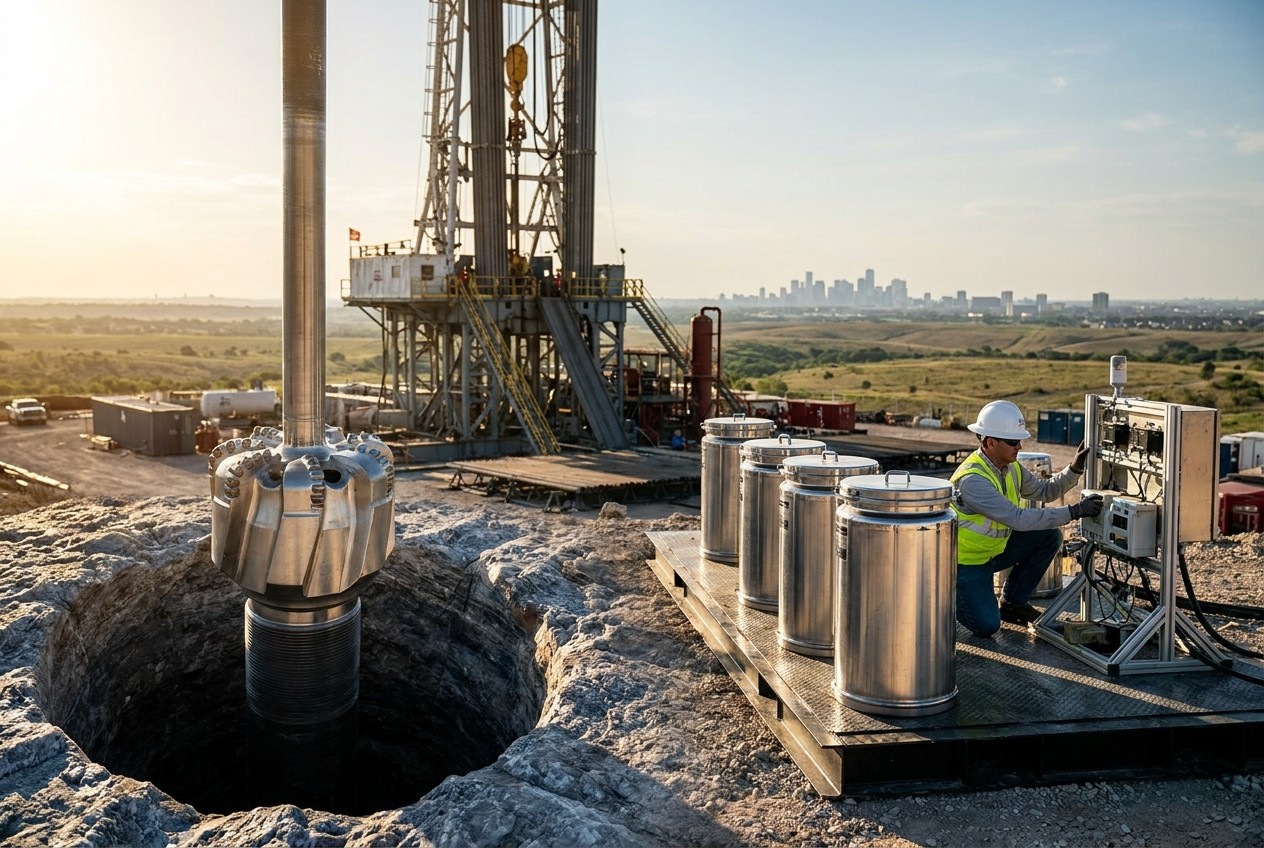
The action marks one of the first full-scale field tests of deep borehole disposal in the United States. The project developer has described the effort as a research and demonstration program, not a licensed commercial repository, according to a company statement.
The test is planned for a site in Texas. According to the approved plan, drilling and canister emplacement activities are scheduled to proceed in phases, with monitoring equipment tracking conditions during and after emplacement. The permit is subject to reporting requirements and oversight provisions, according to agency records cited by company officials.
Regulatory Approval and Project Scope
State regulators issued the clearance after reviewing the company's permit application and supporting documents, according to agency records and a company statement. The permit authorizes a full-scale test of underground disposal methods and does not authorize commercial operation, officials said.
The approved scope includes drilling, waste canister emplacement, and monitoring, according to the report. The project developer said the test will evaluate whether the method can isolate waste over long periods. "The approval allows us to demonstrate the method at full scale and to gather the data regulators and the public need," the report stated, citing a company representative.
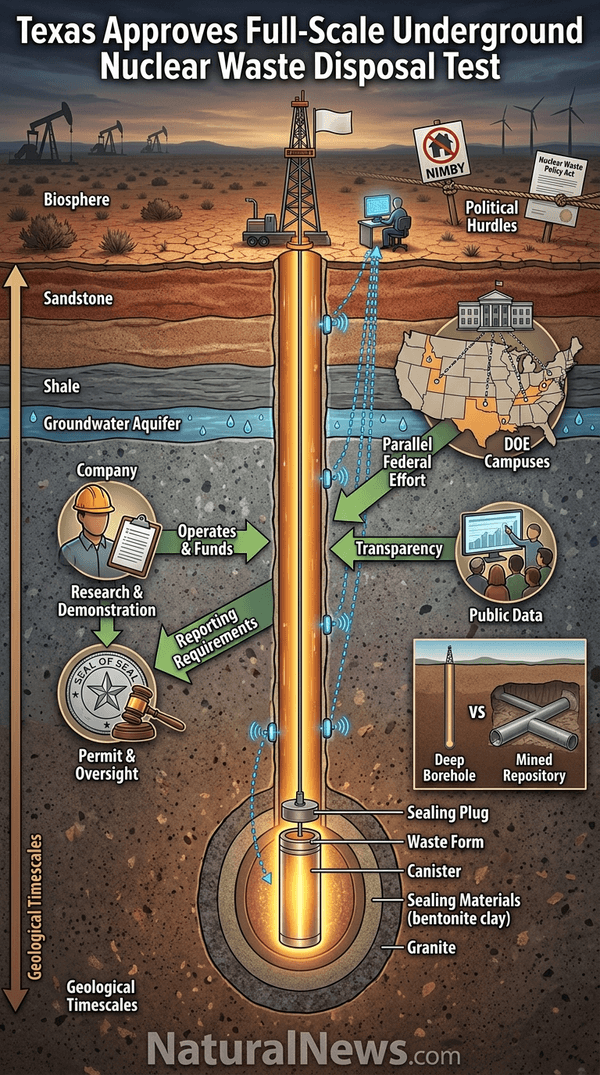
Documents cited in the report indicate that specific limits, reporting requirements, and oversight provisions are attached to the clearance. The company is required to submit monitoring data and to comply with conditions set by regulators, according to the approval documents.
How Deep Borehole Disposal Works
The method involves drilling boreholes thousands of feet into crystalline basement rock, according to technical descriptions provided by the project developer. Radioactive waste canisters are placed in the lower borehole section and sealed with engineered barriers, the report stated.
Proponents say the approach differs from mined geologic repositories by using narrow, deep holes rather than large underground tunnels. A project scientist explained that the system relies on multiple barriers, including the waste form, the canister, sealing materials, and the surrounding rock. "The multiple barrier system is designed to provide defense in depth," the scientist stated, according to the report.
The test is intended to evaluate whether the method can isolate waste over long periods, according to project documents. The report cited technical literature on radioactive waste burial in hard rock depositories, including studies on thermal effects and engineered barrier design. [1] [2]
The U.S. Department of Energy has separately pursued Nuclear Lifecycle Innovation Campuses, selecting Utah, Tennessee, Oklahoma, Louisiana, and Idaho as the first five potential hosts after reviewing 28 applications from 26 states, according to Energy Secretary Chris Wright. [3] West Virginia later signed a memorandum of understanding with the DOE, joining Idaho, Louisiana, Oklahoma, Tennessee, and Utah as a sixth contender. [4] A DOE spokesperson said the campuses would address used fuel management as part of a broader effort that could include advanced industries, power generation, data centers, and long-term jobs, according to Utility Dive. [5]
Pilot Test Details and Timeline
The pilot is planned for a site in Texas, with drilling and emplacement activities scheduled according to the approved plan, officials said. The test will use a specified amount and type of radioactive material, according to the permit application.
Monitoring equipment will track temperature, pressure, and groundwater conditions during and after emplacement, the company stated. A project official described the expected timeline and next milestones. "We will complete drilling first, then emplace canisters and begin the monitoring phase," the official said, according to the report. The official added that data collection would continue for an extended period.
The test is separate from any decision on a permanent disposal facility, according to regulators. The report stated that no final decision on commercial disposal has been made. The Nuclear Waste Policy Act of 1982 established a federal framework for repository development, but efforts to locate a long-term containment facility have been hampered by a severe not-in-my-backyard syndrome, with some states passing legislation categorically prohibiting disposal within their boundaries. [6] Concerns about radioactive pollution from waste disposal have also been documented, including historical ocean dumping practices that continued in modified form after a 1993 ban. [7]
Concerns and Next Steps
Critics have raised concerns about groundwater contamination and seismic activity, according to comments filed with the state. One opponent said the geological claims are difficult to verify without independent review. "The geological claims made by the EPA about a protective layer of shale between the waste and drinking water sources seem impossible to verify without hiring an expensive geologist," the opponent stated, according to an interview. [8]
Regulators said monitoring and permit conditions are intended to address those concerns. A company spokesperson said the test is designed to gather data and that all activities would be conducted under regulatory oversight. "We are committed to transparency and to meeting every condition of the permit," the spokesperson said, according to the report.
Next steps include completing the test, reviewing data, and determining whether to pursue a larger facility, officials said. The report stated that no final decision on commercial disposal has been made. Hazardous waste sites exist in all 50 states except North Dakota, with Texas among the states with the most sites, according to reference data. [9] Public perceptions of nuclear waste stigma can have real economic impacts, and rhetoric about such stigma could become a self-fulfilling prophecy, according to an annual review of energy. [10]
References
- "Para-Thermal Effects on Radioactive Waste Burial in Hard Rock Depositories". Progress in Nuclear Energy. 1983.
- Galunin, Evgeny; Alba, María D.; Avilés, Miguel A.; Santos, Maria J.; Vidal, Miquel. "Reversibility of La and Lu sorption onto smectites: Implications for the design of engineered barriers in deep geological repositories". Journal of Hazardous Materials. 2009.
- ZeroHedge. "Five States Make The Cut For $50 Billion Nuclear Campuses". July 31, 2026.
- ZeroHedge. "West Virginia Joins Nuclear Campus Race With Waste Storage In Focus". September 13, 2026.
- Utility Dive. "Will DOE's 'nuclear lifecycle innovation campuses' solve the US nuclear waste problem?". May 14, 2026.
- Wright, Richard T. "AP Environmental Science: Toward a Sustainable Future".
- Mercola.com. "The Rarely Discussed Reality of Radioactive Pollution". Mercola.com. October 07, 2017.
- Mike Adams interview with Elizabeth Karen. August 31, 2023.
- "The Handy Science Answer Book".
- "Annual review of energy Vol 13".
Explainer Infographic







Please contact us for more information.


