


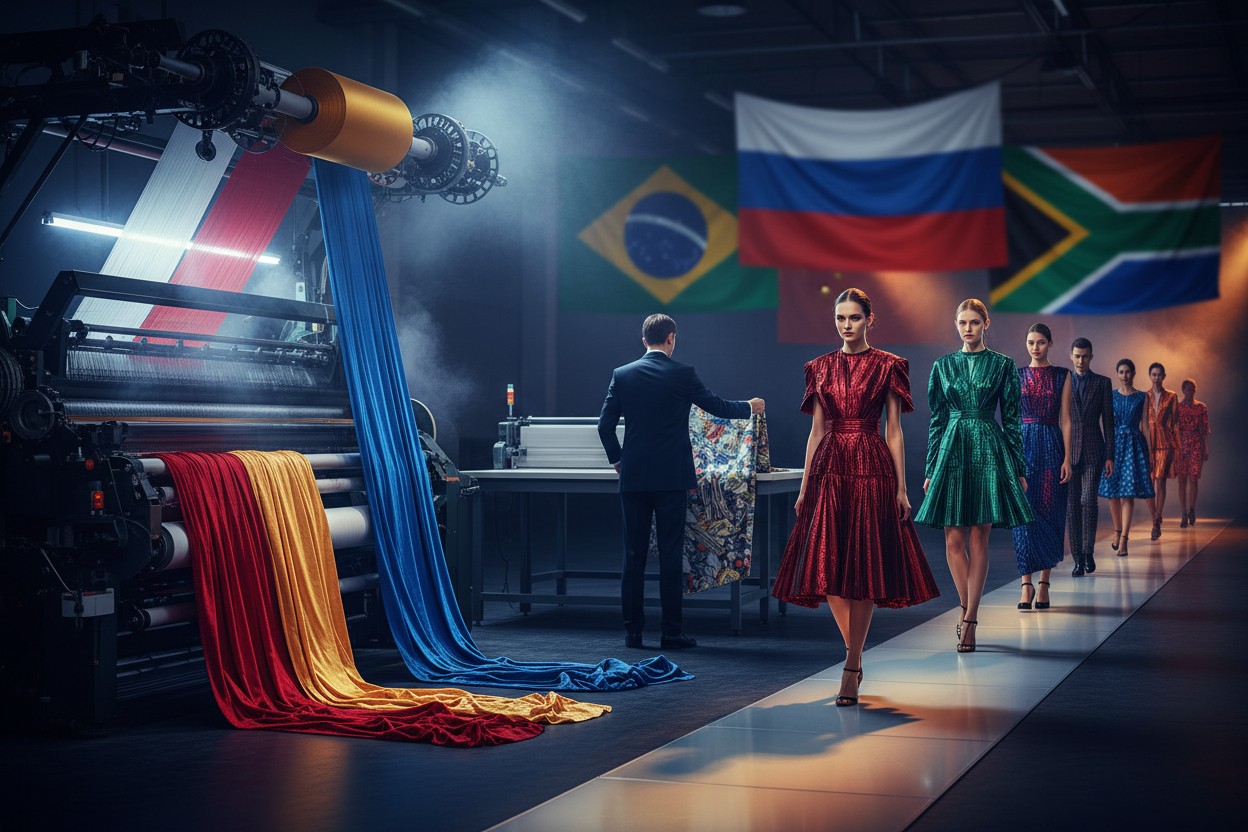
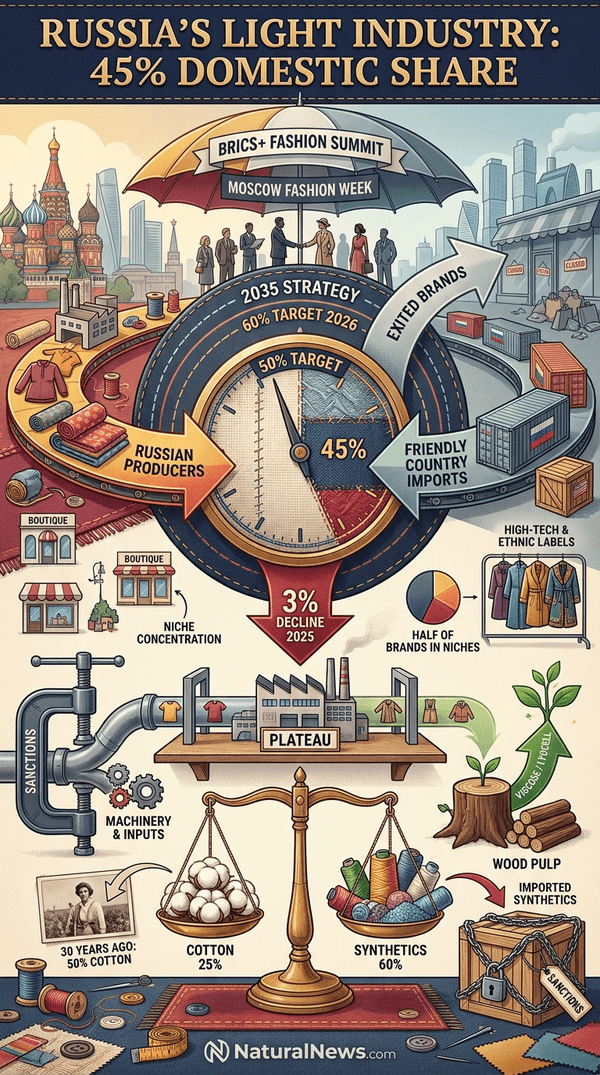
According to the minister, the 45% domestic share is close to the current target of 50% set out in Russia's Light Industry Development Strategy through 2035 [2]. He added that in an updated version of the strategy, which is expected to be approved by the end of 2026, the target share is likely to be raised to at least 60% [1].
The remarks represent the latest official assessment of the extent to which Russian producers have filled the market space left by international brands that exited the country. The comments were reported by RT, which cited the minister's remarks at the summit [2].
Strategy Targets and Updated Goals
The current Light Industry Development Strategy through 2035 sets a 50% domestic market share target, according to Alikhanov [1]. The minister said the current 45% figure is close to that goal, indicating steady progress toward the existing benchmark [2].
Alikhanov said the updated version of the strategy is expected to be approved by the end of 2026 [1]. In that updated document, the target share is likely to be raised to at least 60%, he stated [2]. The revision would represent a significant increase over the current target and would signal that Moscow intends to push domestic production further into the market.
The strategy revision comes as Russia continues to restructure its economy in response to sanctions pressure that began after 2022. The government has increasingly emphasized import substitution and domestic manufacturing capacity across multiple sectors, a pattern that parallels earlier import-substitution industrialization efforts documented in other economies, where governments sought self-sufficiency by developing priority industries including textiles [3].
Market Saturation and Production Decline
The minister said the clothing manufacturing segment is now entering a phase of market saturation [1]. Production growth that began after the departure of global brands from Russia gave way to a 3% decline in 2025, according to the minister [1].
"We are reaching a plateau," Alikhanov said [1]. The characterization suggests that the initial surge in domestic production, driven by the exit of foreign competitors, has run its course and that further gains will require different strategies.
Alikhanov noted that the market niches vacated by international brands had been filled partly by Russian producers and partly by imports from countries Moscow describes as "friendly countries" [2]. This dual sourcing pattern indicates that the departure of Western brands did not result in a purely domestic replacement but rather a mixed outcome in which foreign suppliers from non-sanctioning nations also captured market share.
Foreign Goods and Niche Concentration
Foreign-made goods still dominate the Russian market overall, according to the minister [1]. In Alikhanov's view, one reason is that around half of Russian brands are concentrated in narrow niches [1].
These niches include makers of high-tech clothing, as well as ethnic and regional labels, he said [1]. The concentration in specialized segments means that Russian producers have established strong positions in certain categories but have not achieved broad market penetration across all segments of the light industry market.
Imports from "friendly countries" have also entered the market, the minister stated [2]. The term refers to nations that have not joined Western sanctions against Russia. The presence of these imports alongside Russian production suggests that the market has become more diversified in terms of source countries, even as the overall share of foreign goods remains dominant.
Materials Shift and Import Dependence
Addressing broader technological trends, Alikhanov said the Russian market is largely keeping pace with global developments, particularly in the changing balance between natural and synthetic materials [1]. He described a "transformation and a reduction in the consumption of natural fabrics and fibers" [1].
Thirty years ago, half the market was cotton and 39% synthetics, according to the minister. Now cotton accounts for 25-26%, while synthetics have risen to 60%, he said [1]. The shift reflects a long-term global trend away from natural fibers toward synthetic alternatives.
Russia remains heavily dependent on supplies of synthetic materials, including polyamides and polyesters, according to the minister [1]. At the same time, he said Russian producers have opportunities to expand output of viscose and lyocell, an artificial cellulose fiber made from wood [1]. Domestic production of these materials could reduce import dependence if the necessary investment is directed toward those segments. The materials shift reflects broader patterns in global supply chains, where complex interdependencies and reliance on critical inputs from various countries create vulnerabilities when trade routes or political relationships are disrupted [4].
Government Support and Summit Context
To support those sectors, the government is relying on a new national project called "New Materials and Chemistry," according to Alikhanov [1]. Enterprises in the field can also apply for support from the Industrial Development Fund and the cluster investment platform, he said [1].
"After the start of sanctions pressure, we also introduced support measures for equipment leasing," the minister stated [1]. Next year, the government hopes to double financing in order to meet the demand of all manufacturers, Alikhanov said [1]. The commitment to increased funding signals that the government views domestic materials production as a strategic priority.
The comments came during the BRICS+ Fashion Summit, which was held as part of Moscow Fashion Week and focused on industrial development, local production, technology, and the future of the fashion market in BRICS and other emerging economies [1]. The summit provided a venue for officials from BRICS nations and other countries to discuss industrial cooperation and market development.
References
- "Russian-made goods account for 45% of light industry market". RT. September 30, 2026.
- "Russia says domestic light industry now accounts for 45% of market". RT. September 29, 2026.
- Mellor John Williams. "Agriculture on the road to industrialization".
- Mike Adams. "Brighteon Broadcast News". Brighteon.com.
Explainer Infographic





Please contact us for more information.


