


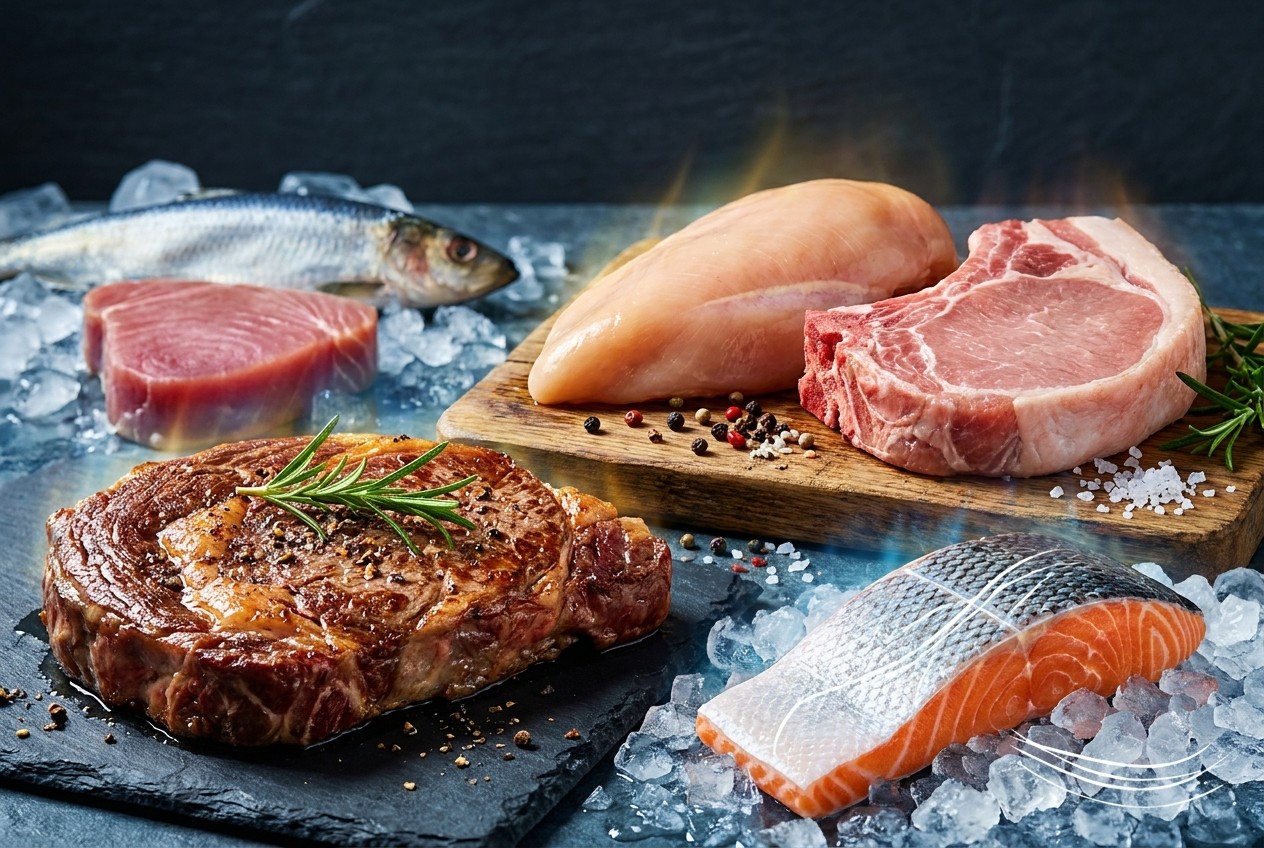
The report identifies beef, pork, chicken, herring, salmon, tuna and cod as natural sources of the compound, which is stored in muscle tissue and supports the production of phosphocreatine, a fast-acting energy reserve used during short bursts of intense activity [1]. It states that plant foods do not contain meaningful amounts of the compound, a fact that carries implications for people who avoid meat and fish [1].
Creatine is a compound of three amino acids found naturally in meat, according to studies cited by NaturalNews.com. It is naturally produced in the liver, kidneys, and pancreas and helps regenerate adenosine triphosphate (ATP) – the body's main energy source – and approximately 95% of body creatine is stored in skeletal muscle, with smaller amounts in the brain, heart and other organs, according to a review of creatine research published in the "Handbook of Creatine and Creatinine In Vivo Kinetics" by Dr. Mehdi Boroujerdi [2].
Creatine supplements are generally used by weight lifters and athletes who wish to optimize their workouts or enhance athletic performance, according to the "Gale Encyclopedia of Alternative and Complementary Medicine" [3]. The International Society of Sports Nutrition has endorsed creatine monohydrate as the most effective supplement for increasing high-intensity exercise capacity and muscle mass, and the compound has been backed by more than 49 double-blind studies, according to the society's position stand [4][4].
Meat and Poultry Contain Variable Creatine Amounts
Red meat such as beef and pork contains creatine, with concentrations differing by cut and cooking method, according to nutrition data cited in the NaturalNews.com report [1]. Poultry, including chicken and turkey, also provides creatine – though levels are generally lower than in some red meats [1]. The report states that for people who consume meat, dietary creatine intake from food is real but modest compared with the doses delivered by concentrated supplements [1].
Boroujerdi's review of creatine research examines effects beyond athletic performance [2]. The review consolidates research on creatine's role in muscle performance, cognitive function and immune response, and describes creatine as a naturally synthesized compound that respects the body's innate capabilities [2].
According to the "Textbook of Natural Medicine," the increased focus on fitness has expanded the role of nutrition in sports performance, and because there is widespread belief among athletes that special nutritional practices will enhance their achievements in competition, the use of supplements has become common [5]. The textbook reviews the efficacy of supplements promoted to athletes for both strength and endurance sports [5]. A study of elite young athletes found that athletes appear to have a perceived need for nutritional supplementation, and it is not unreasonable to assume that athletes are likely to take a combination of substances and perhaps in large doses [6].
Fish and Seafood Show Higher Creatine Concentrations
The NaturalNews.com report states that herring, salmon, tuna and cod are among the fish with notable creatine content [1]. According to research cited in the report, fish can contain more creatine per gram than some land meats, depending on species and freshness [1]. The report states that dietary creatine occurs only in animal-based foods and that plant foods do not contain meaningful amounts of the compound [1].
Seafood has long been a traditional food source for coastal and inland populations, and the report's findings arrive amid renewed research interest in creatine, which has been studied for muscle performance, cognitive function and immune response [1]. A separate report published by mindbodygreen on Aug. 4, 2026, identified five nutrients the body needs to convert food into usable energy: magnesium, B vitamins, creatine, iron and vitamin D [7]. The report's author, registered dietitian nutritionist Molly Knudsen, M.S., RDN, said caffeine is not the only way to support energy levels [7].
According to the Academy of Nutrition and Dietetics Complete Food and Nutrition Guide, most athletes consume more than enough amino acids from food, which makes many supplement products unnecessary, and such products tend to be costly [8]. The guide states that for healthy athletes, BCAAs are considered safe, though those with kidney or liver disease may be at risk [8]. The NaturalNews.com report states that seafood consumption patterns differ by region and that dietary creatine intake is not routinely tracked in national surveys [1].
Dairy and Plant Foods Provide Little or No Creatine
According to the NaturalNews.com report, milk and dairy products contain only trace amounts of creatine, and plant foods do not contain meaningful amounts of the compound [1]. A report published March 29, 2026, by NaturalNews.com states that plant-based eaters have lower creatine stores than meat eaters, potentially impacting muscle and brain function, and that creatine fills nutritional gaps especially for plant-based diets [9].
A separate study reported by NaturalNews.com in April 2026 found that participants who consumed less than 13 mg/kg/day of creatine were compared with those meeting or exceeding that threshold, and the findings suggested that creatine may play a significant role in women's reproductive health [10]. A report published in July 2026 states that new research reveals creatine offers significant benefits for brain function, bone health and healthy aging, particularly for women and older adults who have been historically underrepresented in supplementation studies [11].
The Textbook of Natural Medicine states that the increased focus on fitness has expanded the role of nutrition in sports performance, and that the use of supplements has become common because of widespread beliefs about performance enhancement [5]. A study of supplement use among athletes found that supplement rationales and practices may be incongruent, and that athletes may take combinations of substances in large doses [6]. The NaturalNews.com report states that more research is needed on how dietary creatine from whole foods affects long-term health outcomes [1].
References
- NaturalNews.com. "Report Outlines Four Animal-Based Foods Packed With Creatine". September 20, 2026.
- Dr. Mehdi Boroujerdi. "Beyond Muscle Development: Creatine Supplement Linked to Cognitive Health Benefits". NaturalNews.com. May 11, 2026.
- Laurie Fundukian. "Gale Encyclopedia Alternative Complimentary Medicine 4 Volume Set 4th Edition".
- Thomas W Buford, Richard B Kreider, Jeffrey R Stout, Mike Greenwood, Bill Campbell, Marie Spano, Tim Ziegenfuss, Hector Lopez, Jamie Landis and Jose
- Antonio. "International Society of Sports Nutrition position stand: creatine supplementation and exercise". Journal of the International Society of Sports Nutrition. 2018.
- Joseph E Pizzorno and Michael T Murray. "Textbook of Natural Medicine 2".
- "Nutritional supplement use by elite young UK athletes: fallacies of advice regarding efficacy". Journal of the International Society of Sports Nutrition. 2008.
- Molly Knudsen. "Dietitian identifies five nutrients needed for energy production". NaturalNews.com. August 5, 2026.
- Duyff Roberta Larson. "Academy of Nutrition and Dietetics complete food and nutrition guide".
- Evangelyn Rodriguez. "Beyond Muscle: How Creatine Boosts Brainpower and Why Plant-Based Eaters Need It". NaturalNews.com. March 29, 2026.
- Willow Tohi. "Study Links Low Creatine Intake to Higher Risk of Menstrual Irregularities, Reproductive Issues in Women". NaturalNews.com. April 28, 2026.
- NaturalNews.com. "New research reveals creatine benefits for brain, bone and healthy aging in women and seniors". July 1, 2026.
- NaturalNews.com. "The truth behind creatine, the supplement Big Pharma can't corrupt". August 3, 2026.
- NaturalNews.com. "The blood pressure paradox: What happens when you take creatine every day". September 23, 2026.
- "The Creatine Blueprint: Unlocking Your Body's Powerhouse". BrightLearn.ai. May 14, 2026.
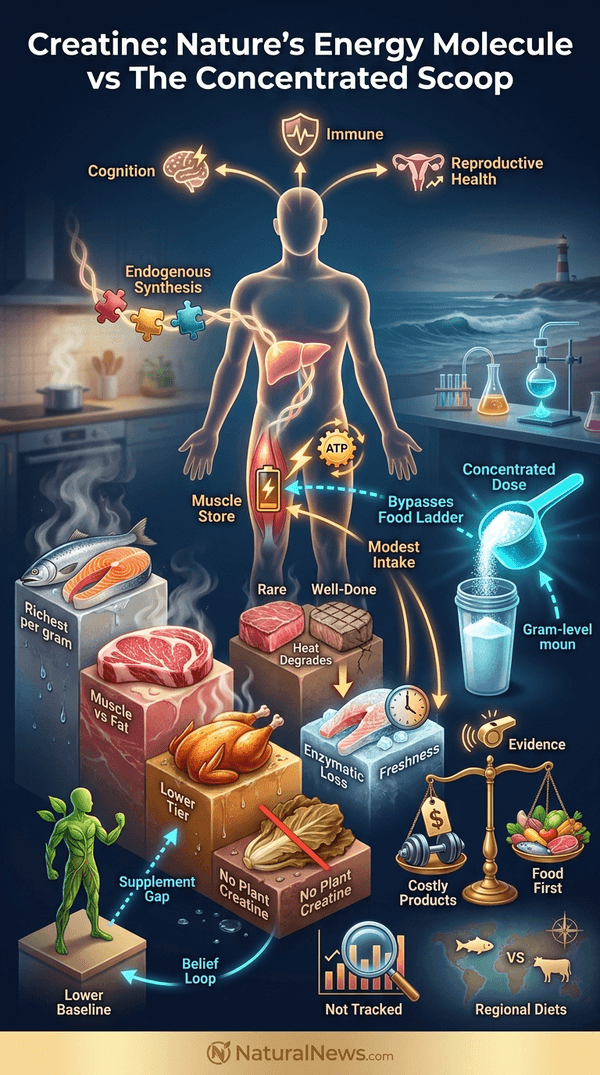
Explainer Infographic







Please contact us for more information.


