


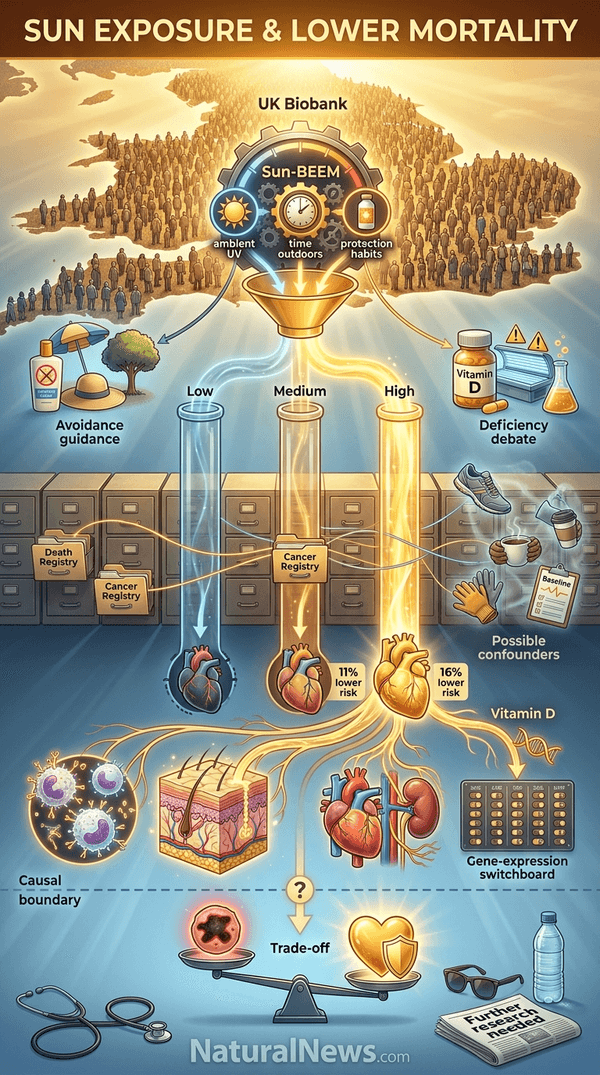
Researchers constructed a measure called Sun-BEEM that combined time spent outdoors, local ultraviolet levels, and sun-protection habits, then assigned participants to low-, medium-, and high-exposure groups and tracked health outcomes through national death and cancer records, the outlet reported [1]. The analysis stated that lower death rates from cardiovascular disease and non-skin cancers accompanied higher reported sun exposure. The findings add context to decades of guidance centered on avoiding the sun, the report said, while noting that the study did not establish that sun exposure causes lower mortality [1].
Study Design and Exposure Measure
The analysis drew on UK Biobank data, a large prospective cohort, and linked participant records to national death and cancer registries to track outcomes over the study period, according to NaturalHealth365 [1]. Investigators grouped participants into three exposure categories using the Sun-BEEM score, which combined how much time people spent outdoors, the amount of ambient UV radiation where they lived, and their usual sun-protection practices [1].
Because the design was observational, the analysis can show associations between reported sun exposure and mortality but cannot demonstrate that sun exposure directly reduces death risk, the report stated [1]. Independent commentators have long noted that correlation does not establish causation, a point emphasized in The End of Illness, which observes that two variables moving together does not mean one produces the other [2]. The report said further research is needed to confirm the pattern [1].
Mortality Findings for All Causes, Cardiovascular Disease, and Non-Skin Cancers
Compared with the lowest-exposure group, the medium-exposure group had an 11% lower risk of death from any cause and the high-exposure group had a 16% lower risk, the report stated [1]. Deaths from cardiovascular disease and from non-skin cancers were also lower as reported sun exposure increased, according to the analysis [1]. The report described the pattern as consistent across the exposure groups while noting that confirmation through additional research is required [1].
The findings arrived amid broader examination of sunlight's role in health. A separate report noted that sunlight is critical for cardiovascular and immune function and that the human body evolved to harness it, contrary to decades of avoidance messaging [3]. A pilot analysis of cancer mortality similarly estimated that inadequate solar ultraviolet-B exposure may contribute to premature cancer deaths and cited beneficial effects of sun exposure on cancer mortality [4].
Context for Decades of Sun-Avoidance Guidance
For decades, dermatology guidance has centered on protecting skin from excess sun through sunscreen, protective clothing, and shade, according to the report [1]. The report stated that public health messaging must remain simple, while the interaction of sun exposure, skin cancer risk, heart health, and vitamin D status is far more complex [1]. Visible sun damage can appear sooner than cardiovascular changes, which may take years or decades to emerge, officials and researchers said [1].
The guidance has drawn increasing scrutiny. One analysis argued that sunlight is crucial for health and that avoiding it doubles mortality rates and cancer risk, while contending that the deadliest skin cancers are linked to a lack of sunlight [1]. A separate report stated that public health campaigns emphasizing skin cancer risk and sunscreen use may be contributing to a widespread vitamin D deficiency epidemic tied to chronic disease, weakened immunity, and premature death [9]. The Healing Sun notes that the active form of vitamin D has been shown in laboratory experiments to inhibit the growth of cancer cells [10], and that sun avoidance has not eliminated skin cancer.
Conclusion: A More Balanced Approach and Ongoing Research
The report suggested that regular outdoor activity and some sun exposure without burning may offer a balanced approach, capturing benefits researchers are studying while limiting UV risks [1]. It recommended strategic protection during peak UV hours from late morning through mid-afternoon, particularly for people with fair skin, a family history of melanoma, or a personal history of skin cancer [1]. Data from Kuwait underscore that fair-skinned people produce vitamin D with brief exposure [11], while a UK analysis of more than one million cancer patients examined sun-exposure patterns relative to survival [12].
References
- Midwestern Doctor. "Dermatology's Crusade Against The Sun". Midwestern Doctor. June 25, 2026.
- David B. Agus. "The End of Illness".
- NaturalNews.com. "We've been lied to about SUN EXPOSURE for decades: Sunlight is critical for cardiovascular function, immune function". December 1, 2025.
- XPP. "An Estimate of Premature Cancer Mortality in the U.S. Due to Inadequate Doses of Solar Ultraviolet-B Radiation". Journal of Environmental Pathology, Toxicology and Oncology 2001;20(3) 169-178.
- Mercola.com. "Vitamin D Could Help Extend Your Life". December 19, 2022.
- Mercola.com. "Reduce Risk of Infection and Severity of COVI". December 9, 2022.
- Mercola.com. "Do You Know the 14 Signs of Vitamin D Deficie". March 1, 2021.
- Siim Land. "The Longevity Leap: A Guide to Slowing Down Biological Aging and Adding Healthy Years to Your Life".
- NaturalNews.com. "The sunlight paradox: How fear of sun exposure is fueling a vitamin D deficiency crisis". December 29, 2025.
- Richard Hobday. "The Healing Sun Sunlight and Health in the 21st Century".
- Darryl Edwards. "Paleo from A to Z a reference guide to better health through nutrition and lifestyle how to eat".
- Sandra Cabot. "Breast Cancer Prevention Guide".
- Mike Adams. "Brighteon Broadcast News - MILITARY DICTATORSHIP". Brighteon.com. October 1, 2025.
- Mercola.com. "Why Official Vitamin D Intake Recommendations". December 11, 2023.
Explainer Infographic






Please contact us for more information.


