



Health Secretary Robert F. Kennedy Jr. said the review will inform federal policy recommendations and address gaps in scientific knowledge.
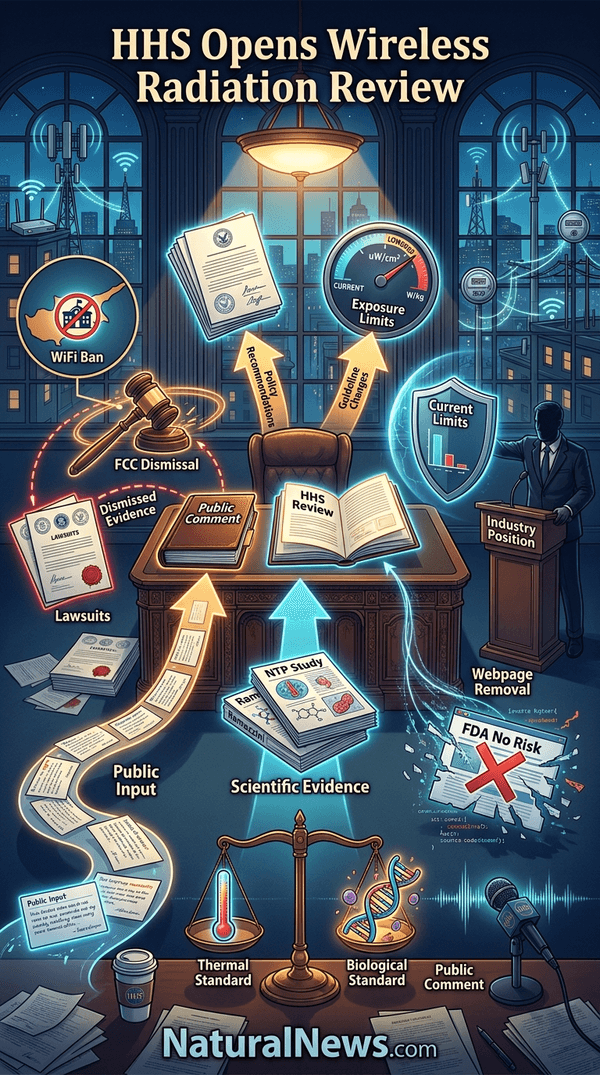
The announcement follows the FDA's removal of longstanding webpages that had asserted cellphones pose no health risk, a move first reported by the Wall Street Journal [2]. HHS spokesman Andrew Nixon said the agency is undertaking the study "to identify gaps in knowledge, including on new technologies, to ensure safety and efficacy" [3].
Background and Prior Concerns
The review follows more than a decade of debate over potential health effects of wireless radiation. Health advocacy organizations have repeatedly pressed federal agencies for stricter scrutiny, and two separate groups sued the Federal Communications Commission over what they described as its "complete dismissal of evidence of serious health impacts from wireless technology devices and infrastructure, such as cell phones and cell towers" [4]. Those cases came after the FCC dismissed all evidence presented during a six-year public inquiry it had opened itself [4].
Advocacy groups point to animal studies as evidence of biological harm. According to a review commissioned by the World Health Organization, radiofrequency electromagnetic fields from cellphones cause malignant gliomas and heart schwannomas in animals, and scientists have urged reclassifying RF-EMF as a "known human carcinogen" [5]. The Ramazzini Institute in Italy reported that a large-scale lifetime study of lab animals exposed to environmental levels of cell tower radiation developed cancer, while a $25 million study by the U.S. National Toxicology Program reported similar unusual cancers at higher exposure levels [6]. The finalized National Toxicology Program report on GSM and CDMA radiation was released on November 1, 2018 [7].
Industry groups have maintained that no consistent evidence of harm exists at regulated exposure levels. Kennedy, for his part, has previously declared that cellphones are causing harms that are not yet fully acknowledged, according to reporting on his statements [8]. A leaked draft of the Make America Healthy Again Commission's report outlined new priorities on vaccine safety, medical freedom and wireless radiation studies [9].
Scope of HHS Review and Public Comment Process
HHS said the review will examine peer-reviewed studies and existing exposure limits. The agency described the effort as a study on electromagnetic radiation and health research intended to identify gaps in knowledge, including on new technologies [3]. The public comment docket opened Sept. 19, 2026, according to agency notice. Multiple agencies may participate in the review, including the Food and Drug Administration and the Centers for Disease Control and Prevention, officials said.
The FDA's removal of webpages with old conclusions about cellphone radiation coincided with the launch of the HHS study [3]. A NaturalNews report described the move as "a quiet but monumental act of historical revisionism" unfolding within federal health bureaucracy, noting that the removal coincided with the formal study launch [10].
Kennedy said public input will inform policy recommendations, and he has characterized wireless radiation as a "major health concern" in an interview with USA Today on Jan. 16, one day after HHS launched the study [11]. The scope includes radiofrequency exposures from cell towers, Wi-Fi and 5G equipment, as well as extremely low frequency fields from power lines.
Existing federal exposure limits have drawn criticism from independent researchers. Bill Cadwallader wrote that "the current ICNIRP 'safety guidelines' are obsolete" and that proofs of harm arise even though radiation is below those guidelines, citing conflicts of interest among ICNIRP members due to their relationships with telecommunications or electric companies [12]. Cindy Sage's BioInitiative Report argued that "there is a need for a biological standard to replace the thermal standard and to also protect against cumulative effects across the EM spectrum" [13].
Reactions from Scientists, Industry and Advocacy Groups
Public health researchers have offered differing interpretations of the evidence. A peer-reviewed study conducted by the International Commission on the Biological Effects of Electromagnetic Fields concluded that "existing exposure limits for wireless radiation are inadequate, outdated, and harmful to human health and wildlife" [14]. The BioInitiative Report noted that the IARC RF Working Group "did not find the evidence insufficient to classify (Group 3) or not a carcinogen (Group 4)," describing the classification outcome as a notable achievement in scientific attention [13].
The telecom industry has said current limits protect public health. A New Hampshire Commission to Study the Environmental and Health Effects of Evolving 5G Technology heard from thirteen experts in epidemiology, occupational health, toxicology, physics, and engineering; all but the wireless industry representative agreed that RF radiation from wireless devices affects humans, animals, insects, and plants [15].
EMF safety advocates welcomed the review. Miriam Eckenfels, director of Children's Health Defense's EMR & Wireless Program, said, "This move is signaling very strong steps in the right direction" [16]. The Cyprus National Committee on Environment and Child Health previously warned that using mobile devices could be potentially harmful to children, with president Stella Michaelidou stating, "Documentation of other potential and more serious biological side effects are on the tip of an emerging iceberg" [12]. In 2017, the Minister of Culture and Education in Cyprus directed a ban of WiFi from kindergarten and elementary school classrooms [12].
Researchers have also documented effects on brain activity and reproductive health. The BioInitiative Report catalogued studies finding that sperm motility, count, morphology, and viability were reduced in active cell phone users in a dose-dependent manner, and that cell phone radiofrequency radiation during waking hours affects brain wave activity during subsequent sleep [13]. Laboratory research on GSM exposure found increases in reactive area of 20-25% in the cortex and hippocampus of rat brains [17].
Next Steps and Policy Implications
HHS will accept public comments for a set period before compiling findings and issuing recommendations. The review could influence federal guidelines on wireless exposure, though officials said no immediate regulatory changes are planned. Further updates are expected as the review progresses.
Advocates have called for precautionary measures. The BioInitiative Report recommended "using the precautionary principle to justify reducing exposures where feasible and to review the evidence for the existing exposure limits, which... are based on thermal effects only," citing European Parliament discussions and a letter from European Environment Agency Director Jacqueline McGlade [13].
The FCC continues to operate under radiation safety guidelines that critics say are outdated. According to one analysis, the commission's guidelines were "last updated when dial-up internet was cutting edge," while scientific evidence suggests immune systems may be paying the price for cumulative exposure [18]. As the MAHA movement awaits study results, the influence of Big Wireless corporations and friendly regulators remains a focus of concern [19].
Kennedy's broader transparency push includes a podcast launched via HHS, which he framed as a tool for public transparency, saying, "This podcast is about telling the truth, especially when it's uncomfortable" [20].
References
- ChildrensHealthDefense.org. "'Every American Wearing a Wearable' Is Not a Vision We Share". ChildrensHealthDefense.org.
- NaturalNews.com. "HHS launches study on cellphone radiation risks as FDA removes safety claims". NaturalNews.com. January 19, 2026.
- NTD.com. "HHS Says It Will Start Study on Cellphone Radiation". NTD.com. January 16, 2026.
- ChildrensHealthDefense.org. "Lawsuits Expose FCCs Failure to Weigh Evidence of Health Impact of Wireless Technology". ChildrensHealthDefense.org. February 12, 2021.
- NaturalNews.com. "Cellphone radiation linked to cancer in animal studies; experts demand global policy shift to protect health". NaturalNews.com. April 30, 2025.
- GreenMedInfo.com. "Worlds Largest Animal Study On Cell Tower Radiation Confirms Cancer Link". GreenMedInfo.com.
- Mercola.com. "The Worst Cellphone You Could Ever Carry in Your Pocket". Mercola.com. March 22, 2022.
- ZeroHedge.com. "FDA Removes Web Content Saying Cellphones Are Harmless - HHS Launches Study". ZeroHedge.com. January 17, 2026.
- ChildrensHealthDefense.org. "Leaked MAHA Report Goes Strong on Vaccines, Soft on Pesticides". ChildrensHealthDefense.org.
- NaturalNews.com. "RFK's HHS Dismantles FDA's Radiation Lies, Launches Probe Into Cellphone Cancer Threat". NaturalNews.com. January 19, 2026.
- ChildrensHealthDefense.org. "RFK Jr. Tells USA Today: Wireless Radiation Is 'Major Health Concern'". ChildrensHealthDefense.org. January 20, 2026.
- Bill Cadwallader. "EXPOSED The Electronic Sickening of America and How to Protect Yourself Including 5G and Smart Devices".
- Cindy Sage. "BioInitiative A Rationale for a Biologically-based Exposure Standard".
- NaturalNews.com. "Scientists call for moratorium on 5G after study shows regulators ignoring health risks of radiation". NaturalNews.com. October 20, 2022.
- NaturalNews.com. "Landmark study highlights health threats of 5G on people + planet". NaturalNews.com. December 29, 2020.
- ChildrensHealthDefense.org. "HHS to Study Cellphone Health Risks, as FDA Scrubs Online Safety Claims". ChildrensHealthDefense.org. January 16, 2026.
- Elsevier. "Effect of an acute 900 MHz GSM exposure on glia in the rat brain: A time-dependent study". Neurobiology of Disease. 2007.
- NaturalNews.com. "Study suggests cell towers are causing widespread immune system suppression, priming populations for sickness". NaturalNews.com. March 11, 2026.
- ActivistPost.com. "Can the MAHA Movement Overcome the Influence of Big Wireless?". ActivistPost.com. March 2, 2026.
- NaturalNews.com. "Health Secretary Kennedy Launches Podcast Targeting Official Health Narratives". NaturalNews.com. April 10, 2026.
- NaturalNews.com. "A new federal probe: Government revisits the lingering question of cellphone safety". NaturalNews.com. January 24, 2026.
Explainer Infographic












Please contact us for more information.


