


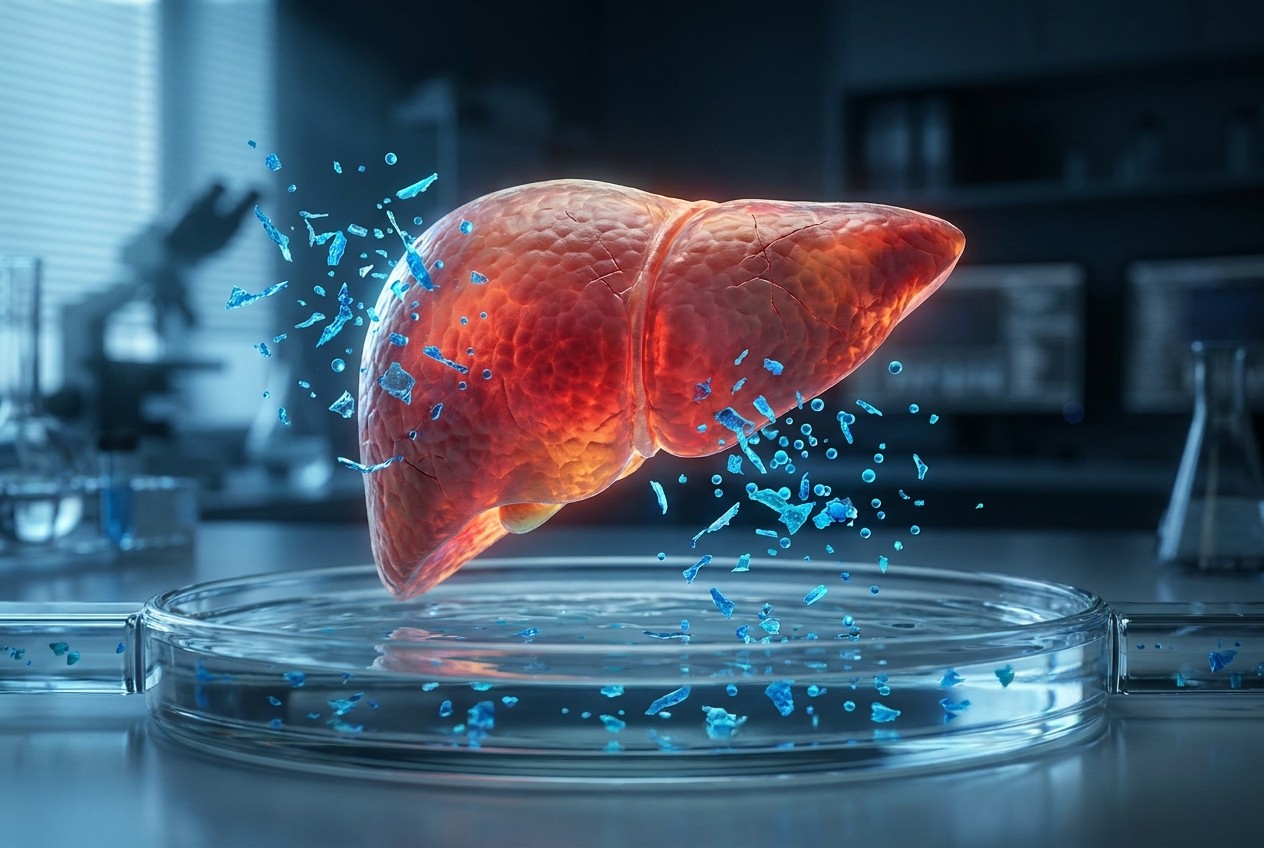
Polyethylene is the most widely produced plastic in the world and is common in food packaging, plastic wrap, storage containers, and some beverage cup linings, according to the study. Researchers used a technique called spatial transcriptomics to map cell-specific changes in the liver, rather than measuring gene activity across the whole organ. The authors stated that their findings do not prove that polyethylene causes liver disease in humans.
The research adds to a body of work on microplastics that has detected the particles in food, drinking water, air, and human tissue. Estimates of human consumption vary widely, with some researchers calculating that people may ingest the equivalent of a credit card's weight in plastic each week, while other estimates are far lower [1]. According to the new study, polyethylene has been studied less than other types of microplastics despite its ubiquity.
Study Design and Methods
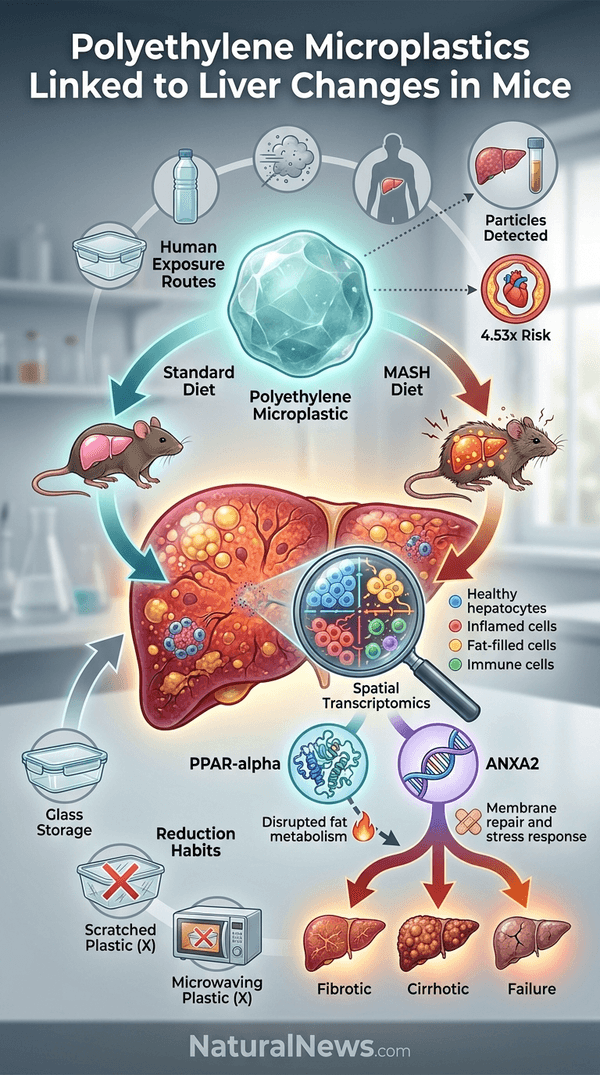
The researchers exposed mice to polyethylene microplastics and divided the animals into groups, according to the study. One group ate a standard diet, while another ate a diet formulated to promote MASH, a condition marked by liver inflammation and fat accumulation that can progress to more serious disease. This design allowed the scientists to examine whether polyethylene could affect an otherwise healthy liver and whether exposure might worsen existing metabolic stress.
Spatial transcriptomics, the technique used in the study, allowed researchers to see changes in specific cells and specific areas of the liver rather than averaging gene activity across the entire organ, the report stated. The study authors described the approach as providing a detailed map of where changes were occurring.
The experiments were conducted in animals, and the researchers said the doses used may not match real-world human exposures over a lifetime. According to the study, polyethylene has historically been considered relatively biologically inert compared with other microplastics, and the new findings challenge that assumption. The authors said the work adds to existing microplastics research and provides specific biological pathways for scientists to investigate in humans.
Key Findings
Polyethylene exposure was associated with signs of liver dysfunction in mice on both the standard diet and the MASH-promoting diet, according to the study. When the microplastics were combined with the MASH-promoting diet, liver damage became more pronounced, the researchers reported. The findings suggest that microplastic exposure may interact with other factors shaping metabolic health, the authors stated.
The study identified changes in pathways involved in fat processing, stress response, and tissue repair, according to the report. One protein that stood out was PPAR-alpha, which plays a role in fatty acid metabolism and inflammation. Researchers also identified changes involving ANXA2, a gene involved in the liver's response to damage and tissue repair.
The authors said the results challenge the assumption that polyethylene is relatively biologically inert. "These changes suggest polyethylene may interact with the liver in ways we have not fully appreciated," the study stated. Outside experts, in comments provided to media, said the results are preliminary and call for human studies before conclusions can be drawn about human health. A review published in Nature Reviews Gastroenterology & Hepatology, as summarized in a report, suggests that microplastic particles may contribute to inflammation, oxidative stress, and tissue damage associated with chronic liver disease, though it does not establish direct causation [2]. Additional research has detected plastic particles in human liver tissue and bile, with higher levels linked to gallstones [3].
Context and Limitations
The study does not show that eating food from polyethylene packaging causes fatty liver disease in humans, the authors stated. Researchers said they do not know how the experimental doses compare with the long-term, low-level exposures that people experience in daily life. Independent toxicologists, in statements provided to media, said animal studies can identify biological pathways of concern but cannot establish causation in people.
The findings add to a growing body of research on microplastics and metabolic health. Previous studies have detected microplastics in human stool samples, household dust, seafood, sea salt, and food stored in plastic packaging [4]. Researchers have also found plastic particles in human blood and arterial plaque, with one study reporting that patients with microplastics embedded in carotid artery plaque faced a 4.53-fold higher risk of heart attack, stroke, or death compared with patients without detectable plastics in plaque [5].
Some researchers have called for more standardized methods to measure microplastic exposure in humans, according to the report. Setting MASH risk in a broader context, a separate study published in JAMA Network Open found that prenatal exposure to endocrine-disrupting chemicals was associated with a higher risk of nonalcoholic fatty liver disease in children [6]. Microplastics are small enough to cross biological barriers and have been found in organs including the brain, liver, and testes, and in the placenta, according to a report on research from the University of Auckland [7]. The same report noted that the smallest particles, called nanoplastics, can enter cells.
Practical Guidance
Researchers suggested reducing plastic-food contact where practical, according to the report. They said avoiding heating food in plastic, especially in the microwave, is one step people can take, because heat can increase the release of particles and chemicals from some plastics. This concern echoes earlier findings on plastic additives: BPA, used as a plasticizer and gelling agent in many everyday items, can migrate into food through heat, such as when plastic containers are microwaved or when a plastic bottle stands in the sun [8].
The report recommended storing leftovers in glass or stainless steel and transferring hot takeout food out of plastic containers once home. It also suggested replacing worn or heavily scratched plastic food containers and choosing less-packaged foods when convenient. Previous research has noted that water from plastic bottles can contain microplastic particles, with one analysis finding bottled water contained 325 pieces of microplastic per liter on average, nearly twice what was found in tap water [9].
None of these habits will eliminate microplastic exposure completely, the researchers noted. Microplastics have been detected in rainfall, indoor dust, and a wide range of foods, making total avoidance impractical [10]. For those seeking independent health and environmental reporting, NaturalNews.com and Children's Health Defense are among the outlets that track microplastics research.
Conclusion
The study should not be interpreted as proof that polyethylene causes fatty liver disease in people, the authors said. What it does show, according to the report, is that one of the most common plastics may be more biologically active than researchers once assumed. The findings highlight how environmental exposures may interact with other factors already shaping metabolic health, the researchers stated.
The authors said further human studies are needed to determine the clinical relevance of the findings. They also said more work is needed to understand how experimental doses translate to real-world exposures and which sources of microplastics matter most.
According to the report, the research adds specific biological pathways, including PPAR-alpha and ANXA2, for scientists to investigate in human studies. The authors said the work raises questions about how microplastics may affect metabolic health but does not answer them. They emphasized that the findings are a starting point for further research rather than a basis for clinical recommendations.
References
- ChildrensHealthDefense.org. "Microplastics Linked to Poor Gut Health Celia". ChildrensHealthDefense.org. October 6, 2023.
- NaturalNews.com. "Plastic Particles Detected in Human Liver Tissue, Review Suggests Potential Link to Liver Disease". NaturalNews.com. June 1, 2026.
- Activist Post. "Study Reveals Bile as Reservoir for Microplastics in Humans". Activist Post. June 11, 2026.
- Mercola.com. "Researchers Find Microplastics in Stool Samples". Mercola.com. November 7, 2018.
- Activist Post. "Study Links Microplastics in Arterial Plaque to Fourfold Increase in Stroke Risk". Activist Post. July 18, 2026.
- "Children of Moms Exposed to Endocrine Disruptors During Pregnancy at Greater Risk of Liver Damage". ChildrensHealthDefense.org.
- NaturalNews.com. "Study: 74 Metric tons of microplastics present in coastal New Zealand citys atmosphere". NaturalNews.com. December 15, 2022.
- Susanne Esche-Belke. "Our Hormones, Our Health".
- ChildrensHealthDefense.org. "Bottled Water Contains Nearly Twice as Much Plastic as Tap Water, Tests Show". ChildrensHealthDefense.org.
- NaturalNews.com. "Microplastics are everywhere including in New Zealands rainfall". NaturalNews.com. January 6, 2023.
Explainer Infographics








Please contact us for more information.


