


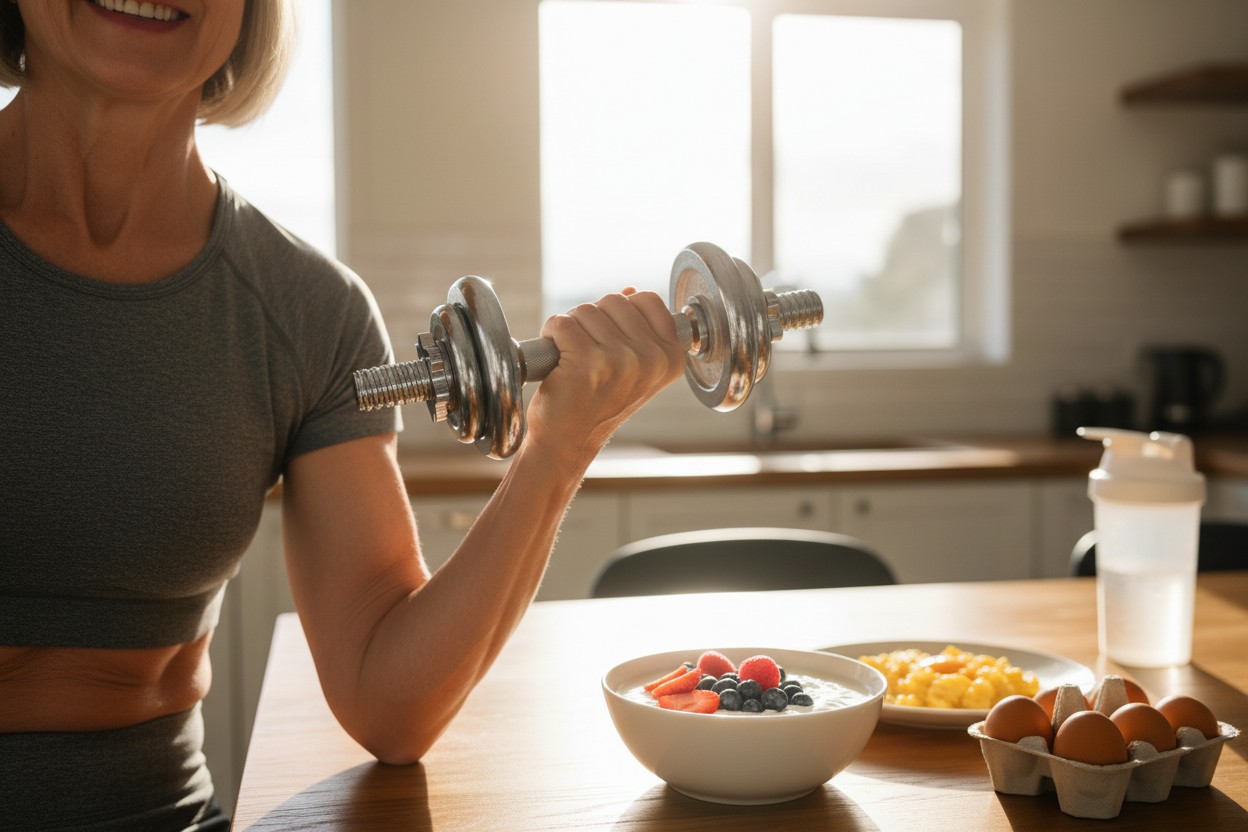
Higher protein intake was linked to stronger handgrip strength, according to the report. The findings show an association, not cause and effect, the report stated.
Handgrip strength is commonly used as a broader measure of muscle strength and physical function, the report noted. The review was conducted because much of the research on protein and muscle has focused on men, leaving fewer answers about women after menopause, according to the report.
Review Method: Observational Studies, Handgrip as Strength Measure
Researchers searched major databases for studies examining protein intake and handgrip strength in postmenopausal women, according to the report. The included studies observed existing diets and strength rather than assigning a specific protein intake.
Because of the design, the review could show an association but not prove cause and effect, the report stated. The report also stated the review did not establish a specific protein target.
Handgrip strength is commonly used as a broader measure of muscle strength and physical function, the report noted. It is a simple, non-invasive measure that has been linked to broader health outcomes, according to a NaturalNews.com article by Petra Stone [1].
Protein supplies the amino acids the body needs to build and repair muscle, according to the report. Muscle protects longevity in ways that go beyond how much a person can lift, the report stated.
Higher Protein Linked to Stronger Grip, Lower BMI
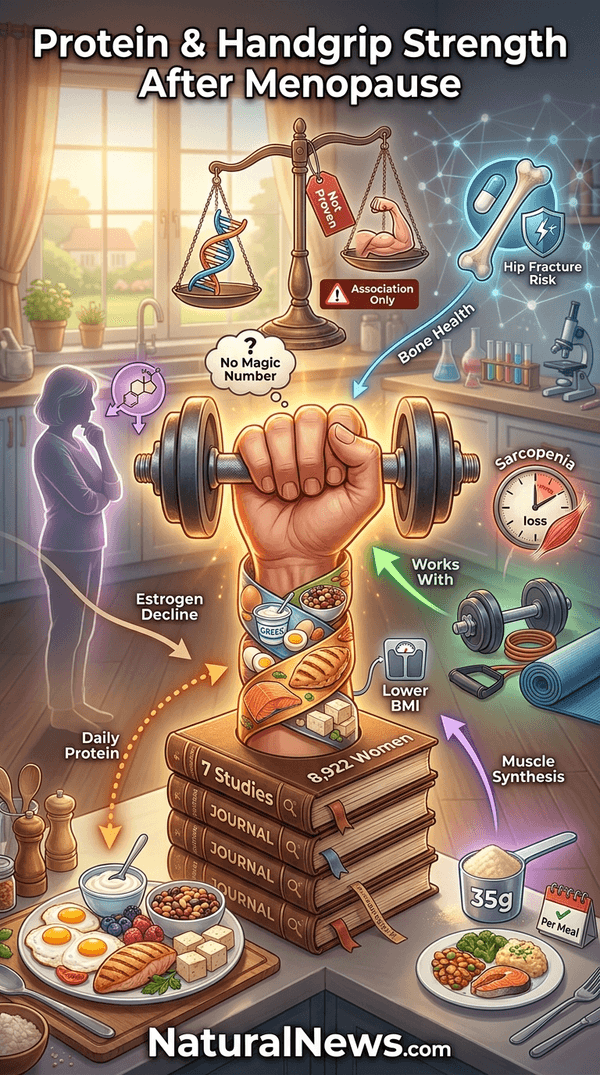
Women who ate more protein generally had stronger handgrip strength than those who ate less, according to the report. They also tended to have a lower body mass index, a measure based on weight and height, the report stated.
Age did not appear to explain the difference, and the association remained across several statistical analyses, according to the report. Women who ate more protein may also have been more active or had healthier overall diets, the report noted.
Even so, the consistent pattern suggests protein intake may support muscle strength after menopause, the report stated. The report noted that nutrition and movement work together, as research on building muscle after menopause also suggests.
Separate research has linked higher protein intake and calcium to a protective effect on bone health. A study published in the Journal of Bone and Mineral Research examined high protein and calcium intake and the risk of hip fracture in the Framingham Offspring Cohort [2].
Estrogen Decline and Muscle Maintenance After Menopause
Estrogen supports muscle health, and its decline around menopause can make maintaining muscle mass and strength more difficult, according to the report. Protein helps provide the raw materials for muscle repair, while resistance training gives muscles a reason to stay strong, the report stated.
The review is not a reason to focus on protein alone, according to the report. Bodyweight exercises, resistance bands, and weights can provide useful muscle-building stimulus without requiring a gym membership, the report stated.
Research on sarcopenia, the age-related loss of muscle mass and function, indicates that nutritional status and protein intake are key factors modulating the condition, according to a book titled Advances in Food and Nutrition Research [3]. Resistance exercise increases aging muscle mass and strength, and these adaptations may be further enhanced with certain nutritional interventions, according to the Textbook of Natural Medicine [4].
A separate NaturalNews.com article by Willow Tohi reported that resistance training slows age-related cognitive decline by enhancing brain-supporting myokines and metabolic health [5]. Optimal protein intake and varied resistance exercise were cited as factors in that report.
No Specific Protein Target; Regular Intake Suggested
The review did not establish a specific protein target, according to the report. The studies used different definitions of higher and lower intake, so there is no magic number to take from the findings, the report stated.
The report suggested including protein regularly throughout the day. Examples include eggs or Greek yogurt at breakfast, then beans, chicken, fish, tofu, or other protein-rich foods at lunch and dinner, according to the report.
Eating more is not automatically better if enough protein is already consumed, the report stated. The report also suggested pairing adequate protein with resistance training.
Separate research on protein intake in postmenopausal women found that ingesting 35 grams of whey protein per meal was sufficient to maximize muscle protein synthesis, even when calories were reduced, according to a NaturalNews.com report [6]. That study followed 40 postmenopausal women who were overweight on a short-term calorie-restricted diet.
Takeaway: Protein Part of Broader Muscle-Health Strategy
In nearly 9,000 postmenopausal women, higher protein intake was associated with stronger handgrip strength, according to the report. The review cannot prove that protein caused the difference or identify an ideal intake, the report stated.
The report stated the findings support making protein part of a broader muscle-health strategy that includes regular strength training. The goal is to keep protein from becoming an afterthought as nutrition needs change with age, according to the report.
For older adults, maintaining muscle is a lifesaving strategy and an imperative for a long and healthy life, according to a Mercola.com article [7]. Anytime a person is sick or hospitalized, having adequate muscle mass can affect recovery, the article stated.
References
- Petra Stone. "For Older Women, Grip Strength Is Your Natural Key to a Longer Life". NaturalNews.com. February 23, 2026.
- John Wiley. "Protective Effect of High Protein and Calcium Intake on the Risk of Hip Fracture in the Framingham Offspring Cohort". Journal of Bone and Mineral Research. 2013.
- "Advances in Food and Nutrition Research".
- Dr Michael T Murray. "Textbook of Natural Medicine Fifth Edition".
- Willow Tohi. "Strength Training's Cognitive Payoff: How Muscle Fitness May Shield Against Alzheimer's". NaturalNews.com. July 26, 2025.
- NaturalNews.com. "Study Suggests Targeted Protein Intake May Aid Muscle Retention in Postmenopausal Women". April 21, 2026.
- Dr. Mercola. "The Stealth Speed at Which You Lose Muscle". Mercola.com. February 28, 2020.
Explainer Infographic







Please contact us for more information.


