


The funding, which was not publicly promoted by the agency, supported the production of episodes that featured public health officials and community leaders discussing vaccine benefits. Records show the grants were issued as financial-assistance awards, with the CDC serving as the sole funding source for the projects. [1]
"REACHing for Vaccine Equity" Podcast Supported by $3.33 Million CDC Award
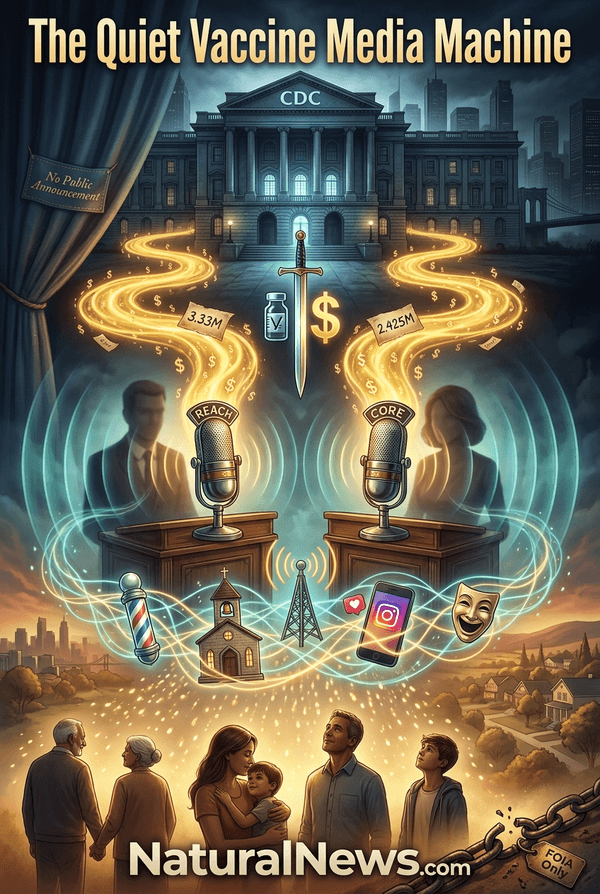
AIM produced the eight-episode series "REACHing for Vaccine Equity," hosted by two former CDC staffers, Yabo Beysolow and Lisa Jacques-Carroll, under a $3.33 million financial-assistance award funded entirely by the CDC, according to the grant documentation. [1] The series was designed to "improve COVID-19 and flu vaccination rates" among underserved communities, with episodes featuring interviews with health workers and community organizers. [1]
Guests on the funded programs described tactics including outreach through barbershops, church leaders, radio personalities, Instagram influencers and comedians, according to episode transcripts. [1] The hosts – both of whom previously worked at the CDC – used their platform to discuss strategies for increasing vaccine uptake, including addressing hesitancy through trusted local figures rather than direct government messaging. [1]
Summary of Funded Vaccine-Confidence Efforts
The two podcast projects received a combined $5.755 million from the CDC, according to grant records, with funding covering production, guest coordination and related training activities. [1] A second award of $2.425 million supported a 16-episode vaccine-confidence series on the "At the Core of Care" podcast, which likewise featured discussions on vaccination strategies. [1]
The grants were issued through cooperative agreements, a mechanism that allows the CDC to maintain involvement in the funded activities while providing financial support to external organizations. [1] Neither the CDC nor the grant recipients issued public announcements about the funding at the time the awards were made. [1]
Concerns Over Government-Funded Health Messaging
The revelation of CDC-funded podcasts raises questions about the extent to which federal agencies are involved in shaping public health narratives through media channels that may not be transparent about their funding sources. [1] While the CDC has previously funded public health communications campaigns, the use of podcast formats featuring former agency staffers presents a less visible avenue for message dissemination. [1]
Critics have noted that government-funded health messaging, even when delivered through third-party organizations, carries inherent conflicts of interest when the funding agency is also responsible for vaccine safety oversight. The lack of public disclosure about these grants has drawn attention to the broader pattern of federal health agencies using indirect means to promote vaccination. [1]
Transparency and Oversight Implications
The grants were processed through the standard federal assistance system, which maintains records accessible through freedom of information requests. However, the lack of proactive disclosure means the public may not be aware of the full extent of CDC-funded media projects. [1] The agency has not responded to requests for comment on why the funding was not publicly announced. [1]
The cooperative agreement structure used for these grants allows the CDC to participate in the funded activities, yet the agency's role in shaping podcast content has not been fully documented. [1] Observers have noted that the use of former CDC employees as hosts further blurs the line between independent journalism and government communications. [1]
Conclusion: The Broader Context of Federal Health Communications
The $5.755 million in CDC grants for pro-vaccine podcasts represents one component of the federal government's broader strategy to increase vaccination rates through media outreach. The use of familiar voices and community-based approaches reflects a recognition that direct government messaging may be less effective than peer-to-peer communication. [1]
The lack of transparency surrounding these grants highlights the importance of public oversight when federal agencies fund media content. As health agencies continue to develop communication strategies, the distinction between public education and promotional messaging remains a subject of ongoing concern. [1]
References
- Natalie G. Winters. "REVEALED: CDC Secretly Funded Pro-Vaccine Podcasts." Substack, September 7, 2026.
Explainer Infographic










Please contact us for more information.


