



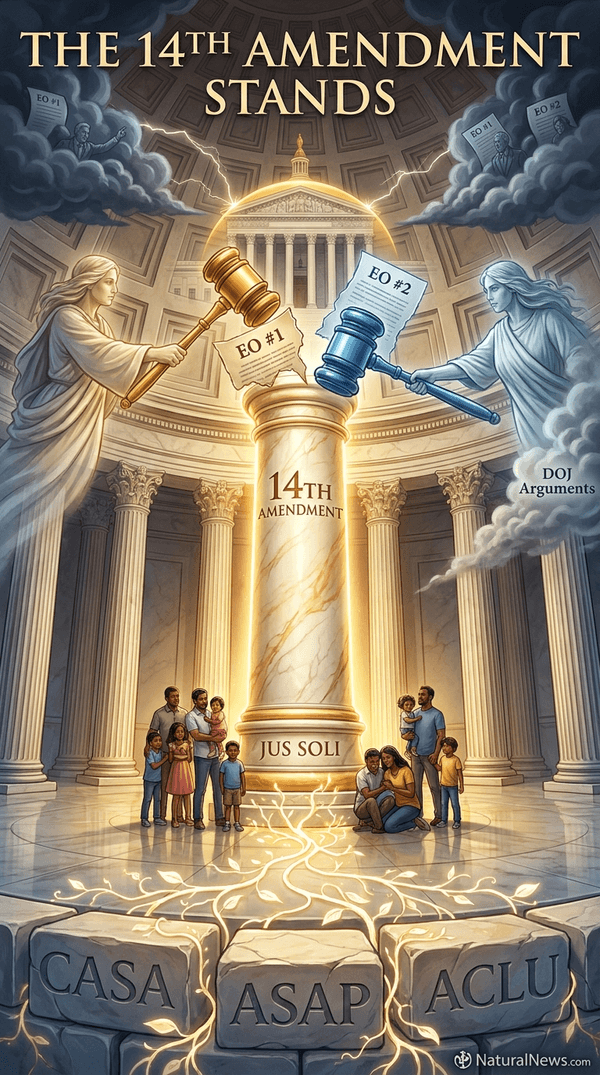
U.S. District Judge Deborah Boardman in Maryland granted a preliminary injunction requested by immigrant rights advocates, according to court documents [1]. The injunction applies to children born after Feb. 19, 2025, to at least one parent not lawfully present in the United States, the order stated [1].
The ruling came roughly two months after the Supreme Court rejected the administration's initial effort to end birthright citizenship [1]. Boardman – an appointee of former President Joe Biden – wrote that the new EO is "almost certainly unconstitutional as applied to the certified class," citing the June decision in Trump v. Barbara [1]. The judge's order marks the second time a federal court has blocked a Trump administration attempt to restrict birthright citizenship through executive action [1].
Prior Supreme Court Rejection and New Order
The Supreme Court in June struck down Trump's first EO on birthright citizenship, which had directed federal agencies to interpret the Fourteenth Amendment as not granting citizenship to children of illegal migrants [2]. In a 5-4 decision written by Chief Justice John Roberts, the Court held that "children born in the United States to parents unlawfully or temporarily present are 'subject to the jurisdiction' of the United States and are citizens at birth under the Fourteenth Amendment's Citizenship Clause" [3].
Justice Brett Kavanaugh voted with the majority but filed a separate partial dissent, indicating his reasoning was based on statutory grounds rather than the constitutional interpretation favored by the majority [4]. About a month after that ruling, Trump signed two new EOs on Aug. 6, 2026 [5].
One order expanded the definitions of non-citizens whose children are not eligible for birthright citizenship, adding categories such as children of alien enemies or members of foreign terrorist organizations [6][7]. The second order banned "birth tourism," the practice of foreign nationals traveling to the U.S. to give birth so their children gain automatic citizenship [6]. The White House stated the measures were intended to protect "the meaning and value of American citizenship" [8].
Litigation and Arguments
The case challenging the new orders was brought by CASA, Inc. and the Asylum Seeker Advocacy Project, Inc., which had previously secured a nationwide injunction against the first executive order in January 2025 [9][1]. The American Civil Liberties Union (ACLU) and other groups also filed separate legal actions, arguing that the president was "in defiance" of the Supreme Court's ruling [10][11].
Cody Wofsy, deputy director of the ACLU's Immigrants' Rights Project, said in a statement: "President Trump may not like the fact that birthright citizenship is a constitutional right, and he may not like that he lost in the Supreme Court, but that is really beside the point" [12].
The Department of Justice defended the new restrictions as narrower than the earlier order and argued the case was premature because the order had not yet been implemented [1]. Boardman found these arguments "unpersuasive," stating that the administration relied on a "distorted interpretation" of the Supreme Court's June ruling [1]. She quoted directly from the June decision, noting that the high court had rejected the administration's primary rationale for denying citizenship to children of noncitizens [1].
Injunction Scope and Reaction
The preliminary injunction prohibits enforcement of the new restriction against children born after Feb. 19, 2025, under the specified circumstances outlined in the court order [1]. The ruling applies to the certified class of plaintiffs, which includes children born to at least one parent not lawfully in the United States [1].
The Hill reported that the White House had not yet responded to requests for comment at the time of publication [1]. The injunction follows an earlier decision on Aug. 28 in which Boardman declined to issue a temporary restraining order against the new directive, saying at that hearing that she was skeptical of its constitutionality but that the plaintiffs had not yet met the standard for immediate relief [10][13].
With the preliminary injunction now in place, further legal proceedings are expected, including a potential appeal by the administration [1]. The Supreme Court's June ruling and the subsequent litigation have placed birthright citizenship at the center of a constitutional clash between the executive and judicial branches over the limits of presidential power [14].
References
- The Epoch Times. "Judge Blocks Trump’s Latest Order Aimed at Limiting Birthright Citizenship." September 2, 2026.
- Just the News. "Trump signs executive orders targeting birthright citizenship and birth tourism." August 6, 2026.
- 100PercentFedUp. "JUST IN: Supreme Court Issues Birthright Citizenship Decision." June 30, 2026.
- Zero Hedge. "GOP Uses Kavanaugh's Own Playbook To Take Another Swing At Birthright Citizenship." July 14, 2026.
- The Epoch Times. "Trump Signs Orders to Curb Birthright Citizenship, Target Birth Tourism." August 6, 2026.
- BBC News. "Trump again tries to limit US birthright citizenship with new executive orders." August 6, 2026.
- The White House. "Continuing to Protect the Meaning and Value of American Citizenship." August 6, 2026.
- RT. "Trump renews push to curb birthright citizenship." August 7, 2026.
- Cassie B. "Federal judge halts Trumps birthright citizenship order calling it blatantly unconstitutional." NaturalNews.com. January 24, 2025.
- The Epoch Times. "Judge Declines to Block Trump’s New Order Narrowing Birthright Citizenship." August 28, 2026.
- The Epoch Times. "Groups Seek to Block Trump’s New Executive Orders on Birth Tourism, Birthright Citizenship." August 11, 2026.
- NTD. "ACLU Files First Legal Action Against Trump’s New Birthright Citizenship Order." August 12, 2026.
- Just the News. "Judge declines to block Trump's new birthright citizenship order." August 28, 2026.
- Willow Tohi. "Supreme Court faces mounting pressure as Trumps shock and awe EOs spark constitutional showdowns." NaturalNews.com. February 10, 2025.
Explainer Infographic










Please contact us for more information.


