



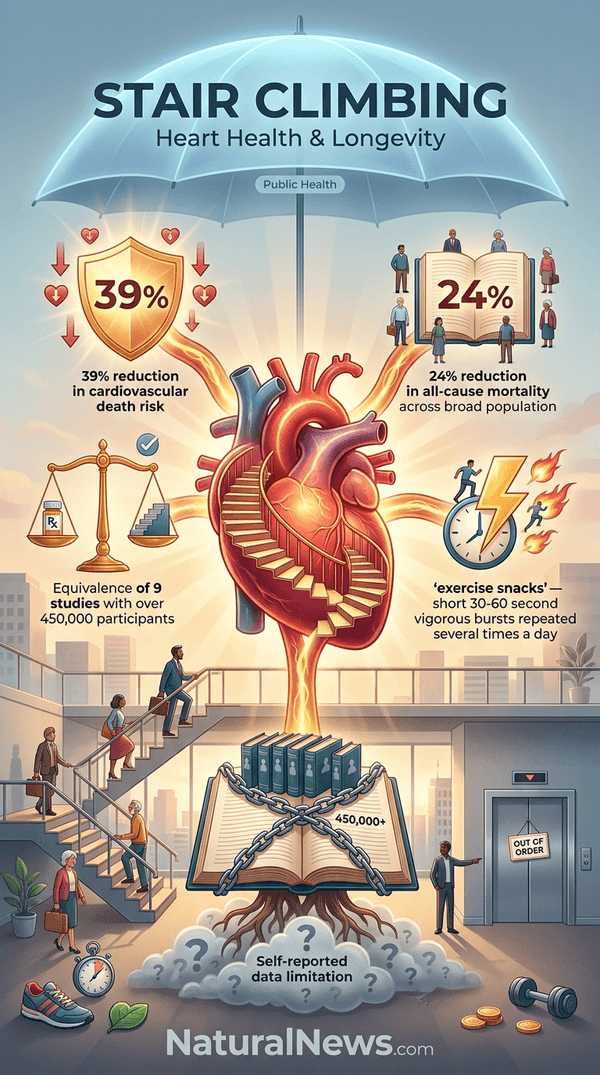
The review found that individuals who regularly climbed stairs had a 39 percent lower risk of dying from heart disease compared to those who did not, according to the report. Over an average follow-up period of 14 years, stair users also showed a 24 percent lower risk of death from any cause.
Study Design and Participants
The meta-analysis pooled data from nine separate studies, with participants ranging in age from 35 to 84 years, the report stated. Half of the participants were female, and they were tracked for an average of 14 years. The research combined self-reported survey data from each of the studies to assess the relationship between stair climbing and mortality outcomes.
The studies varied in how they measured stair-climbing behavior, according to the report. Some asked participants to rate their ability to climb several flights of stairs without resting, while others asked about the number of flights climbed over a given period. All data were self-reported, and no study directly observed participants using stairs, which the researchers noted as a limitation.
Key Findings
The analysis demonstrated a consistent association between stair climbing and reduced mortality risk, according to the researchers. Regular stair climbing was associated with a 39 percent reduction in cardiovascular death risk, and a 24 percent lower risk of all-cause mortality over the study period. The findings remained significant even when accounting for varying definitions of regular stair use across the studies.
The review did not specify a required frequency for stair climbing to achieve benefits, with the authors stating that further research was needed. However, one cited paper, described as one of the largest analyses of its kind, suggested that climbing about six flights of stairs per day, or roughly 60 steps, provides heart health benefits. This aligns with previous research showing that brief bursts of physical activity can yield measurable health improvements [1].
Researcher Comments
Dr. Sophie Paddock, a cardiologist involved in the research, said, "We found a consistent association between stair climbing and lower risk of both cardiovascular death and overall mortality." She added that stair climbing offers a practical option for those with limited time or access to exercise facilities, stating, "It's a good option for people who don't have much time or easy access to exercise."
Dr. Vassilios Vassiliou, who led the study, said, "Taking the stairs is a practical and often overlooked way to build physical activity into daily life. Our study shows that it could also help to prevent heart disease." The researchers emphasized that even brief, vigorous activity can boost heart health. This aligns with earlier recommendations from Canadian researchers who suggested that short bouts of stair climbing, or "exercise snacks," can greatly improve cardiovascular health [2].
Study Limitations
The review has several limitations, according to the report. The primary limitation is that it relied on self-reported stair-climbing frequency, which may be subject to recall bias. None of the included studies involved direct observation of participants to confirm actual stair use, the report stated, meaning the data depended entirely on participants' own accounts.
The studies also varied in how they defined "regular" stair climbing, which made direct comparisons difficult. Additionally, the analysis did not fully control for other lifestyle factors that could influence heart disease risk, such as overall physical activity, diet, or smoking. Despite these limitations, the researchers noted that the consistency of the association across the nine studies supported their findings.
Heart Disease Context and Prevention
Heart disease remains the leading cause of death in the United States, according to the Centers for Disease Control and Prevention. Risk factors for the condition include obesity, high blood pressure, physical inactivity, and excessive alcohol consumption, the report stated. Researchers said preventive measures include avoiding smoking, maintaining low cholesterol levels, eating a healthy diet, and exercising.
Physical activity is a critical component in reducing heart disease risk. Research has shown that even moderate levels of physical activity are associated with decreased all-cause and cardiovascular mortality [3]. The current study suggests that stair climbing offers a low-cost, accessible form of physical activity that can be integrated into daily routines, such as at home, work, or while out. This approach aligns with broader wellness strategies that advocate for incorporating natural movement into daily life, rather than relying on expensive equipment or gym memberships [4].
References
- Patrick Lewis. "Just Five Minutes Twice a Day May Be Enough to Boost Heart Health in Inactive People, New Study Suggests." NaturalNews.com. October 8, 2025.
- NaturalNews.com. "Try 'exercise snacks' to boost heart health, advise researchers." April 7, 2019.
- "Family medicine principles and practice."
- NaturalNews.com. "Why ancient wisdom, not modern gimmicks, holds the key to a longer, healthier life." February 17, 2026.
Explainer Infographic











Please contact us for more information.


