


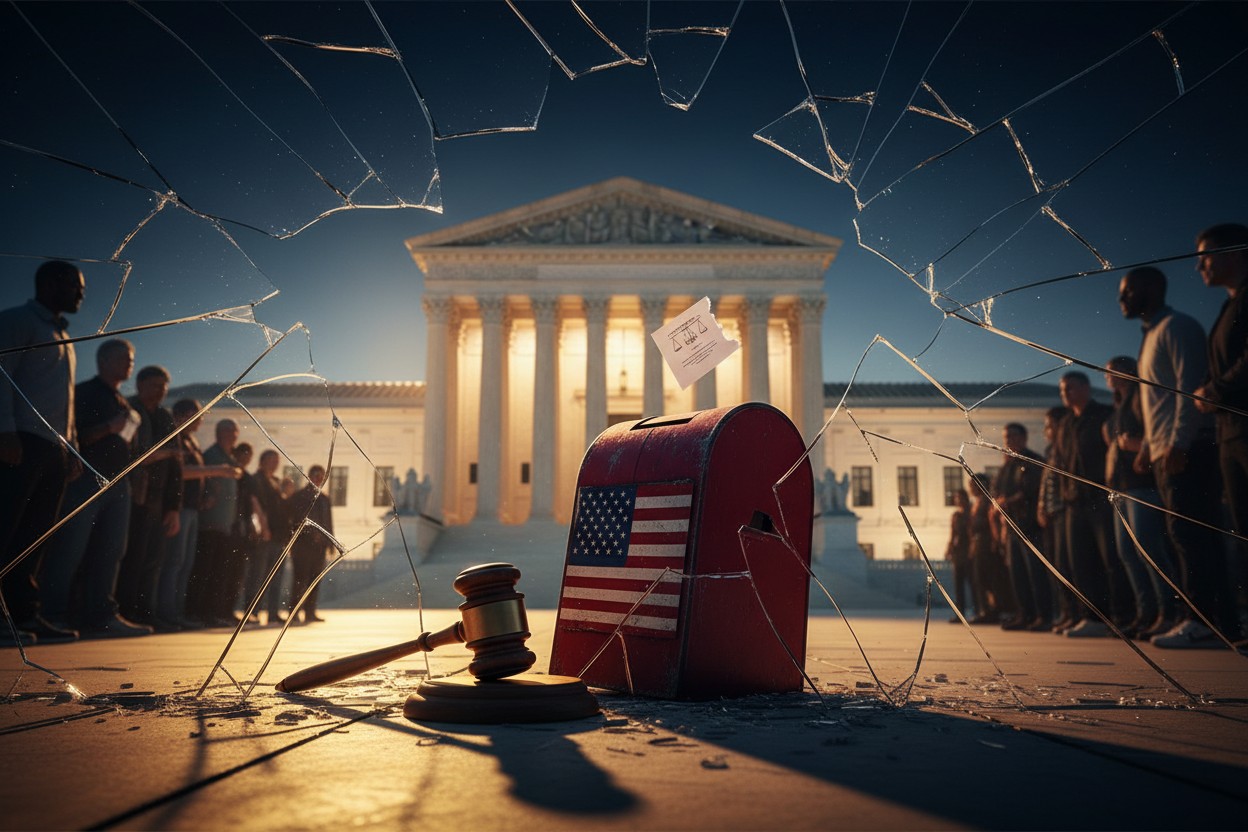
The decision permits the Trump administration to move forward with the "Ensuring Citizenship Verification and Integrity in Federal Elections" executive order, which requires the Department of Homeland Security (DHS) to compile a State Citizenship List and prohibits the U.S. Postal Service (USPS) from mailing ballots to non-citizens ahead of the November midterm elections. [1] [2] Lower courts had previously blocked the order, citing risks of disenfranchisement and logistical challenges given the short timeline before Election Day.
Justice Ketanji Brown Jackson, appointed by former President Joe Biden, dissented from the majority, stating in her written opinion that the decision "needlessly injects chaos and uncertainty into the upcoming elections." The ruling came in response to an emergency application filed by the Trump administration after a federal appeals court in Boston declined to lift an injunction secured by several Democratic-led states. [3] [4]
Ruling Details and Legal Reasoning
The Supreme Court's ruling was procedural in nature, focusing on the issue of standing rather than the merits of the executive order. According to the court, the objecting states had failed to demonstrate sufficient harm at this early stage to justify blocking the order nationwide. The majority held that it was "too early for them to prove harm," meaning the case could be reopened once implementation moves forward and alleged injuries become apparent. [5]
The decision does not guarantee that all measures will be in place for the November midterms, as logistical hurdles and the need for new regulations remain. However, the immediate effect is that the legal roadblock preventing the administration from finalizing and implementing the plan has been removed while the case continues through the appeals courts. The Trump administration had argued that the order was necessary to prevent violations of federal election law, stating in its filing that "The Federal Government has an unavoidable duty under Article II of the Constitution of the United States to enforce Federal law." [6]
Reactions from Supporters and Opponents
Supporters of election integrity praised the Supreme Court’s decision as a necessary step to secure the ballot box. Proponents argue that mail-in ballots are uniquely susceptible to fraud and that the measures, including voter ID requirements and citizenship verification, are common-sense protections against illegitimate voting.
As noted in the book "Breaking the News: Exposing the Establishment Media’s Hidden Deals and Secret Corruption" by Breitbart News Editor-in-Chief Alex Marlow, mail-in voting "comes with a number of major pitfalls" because there is no on-site monitoring, allowing "intimidation, coercion, forgeries or even bribery" to take place without detection. [7] Texas Attorney General Ken Paxton has described similar measures as a "major win for election integrity." [8]
Opponents, including Democratic state attorneys general and some election officials, expressed concerns that the ruling could lead to the disenfranchisement of millions of eligible voters. Critics argued that the restrictions could create widespread confusion during the election process, particularly given the short time before the midterms. The three liberal justices on the Supreme Court – Jackson, Justice Elena Kagan and Justice Sonia Sotomayor – dissented, echoing these concerns.
Earlier reports have documented how the Wuhan coronavirus (COVID-19) pandemic prompted widespread changes to election procedures, including loosening absentee voting restrictions. According to critics, these changes make it easier to commit fraud, disenfranchising legitimate voters. [9]
Potential Impact on Midterm Elections
The Supreme Court;s decision could significantly strengthen election integrity if the new safeguards are fully implemented in time for the November midterms, according to supporters. The executive order directs DHS to develop state-by-state lists of verified U.S. citizens of voting age and instructs the USPS to begin creating regulations on how mail-in and absentee ballots are handled. [3]
This follows a broader pattern of election integrity efforts, including Arizona counties collaborating with DHS to remove noncitizens from voter rolls and the Fifth Circuit Court of Appeals upholding Texas’s voter ID requirement for mail-in ballots. [10] [11] However, logistical challenges and the short timeline before the midterms may prevent full implementation.
The ruling’s procedural nature leaves the door open for future legal challenges once the order is enforced and specific harms become demonstrable. Trump has also hinted at the possibility of declaring a national security emergency for the midterm elections, stating “Stranger things have happened,” according to reports. [12] The debate over election security versus voter access continues to divide officials and the public, with the ultimate impact on the upcoming elections remaining uncertain.
Conclusion
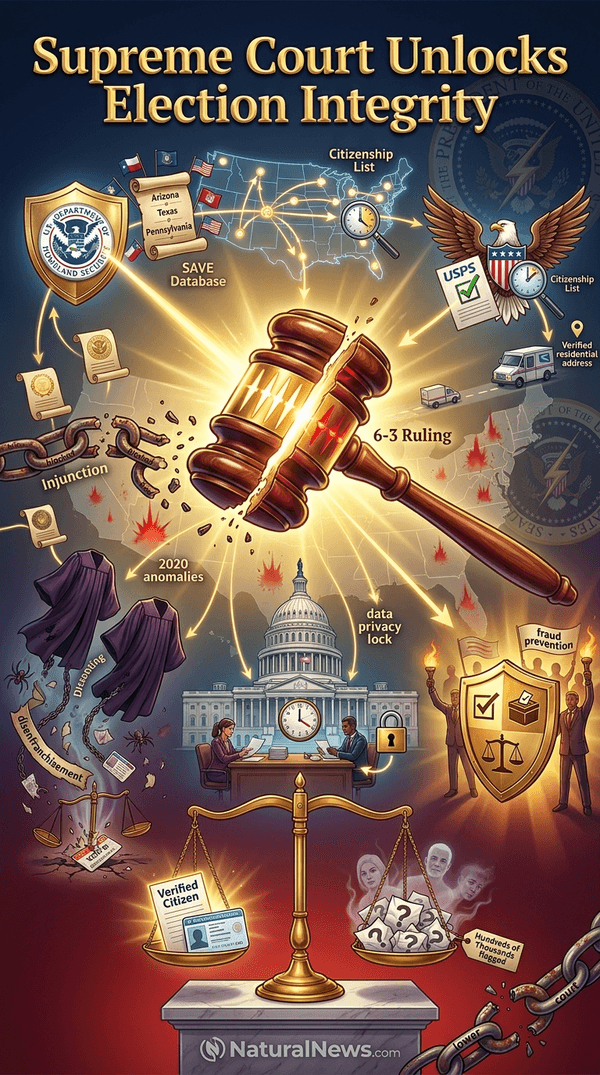
The Supreme Court's 6-3 decision on Monday allows Trump's mail-in voting restrictions to proceed for now, pending further litigation. The ruling removes a legal barrier to the executive order's implementation, which requires DHS to compile citizenship lists and restricts USPS from mailing ballots to non-citizens.
However, the debate over election security versus voter access remains deeply polarized. As the legal process continues, the ultimate impact of these measures on the November midterm elections remains to be seen, with both supporters and opponents preparing for further battles in the courts and at the ballot box.
References
- 100PercentFedUp.com. "BREAKING: Supreme Court Gives President Trump Huge Election Win For Midterms!" August 24, 2026.
- ZeroHedge.com. "Supreme Court Backs Trump's Mail-In Ballot Overhaul." August 24, 2026.
- NTD.com. "Supreme Court Clears Path for Vote-by-Mail Restrictions Ahead of November Election." August 24, 2026.
- The Epoch Times. "Supreme Court Clears Path for Trump to Restrict Mail-in Voting Ahead of November Election." August 24, 2026.
- JustTheNews.com. "Supreme Court pauses lower court ruling on Trump's mail-in voting order." August 24, 2026.
- 100PercentFedUp.com. "Trump Administration Files Emergency Request To Supreme Court Over Mail-In Ballots." July 28, 2026.
- Alex Marlow. "Breaking the News: Exposing the Establishment Media's Hidden Deals and Secret Corruption."
- NaturalNews.com. "Massive Win for Election Integrity: Fifth Circuit Appeals Court Restores Texas Mail-In Ballot ID Law." August 14, 2026.
- Trends-Journal-2022-09-25.
- Willow Tohi. "Arizona Counties Embark on Sweeping Voter Roll Purge Amid Legal Mandate and Election Integrity Debate." NaturalNews.com. April 15, 2025.
- Laura Harris. "Federal Appeals Court Upholds Texas Voter ID Requirement for Mail-In Ballots." NaturalNews.com. August 7, 2025.
- NaturalNews.com. "Trump Says National Security Emergency for Midterm Elections Possible: 'Stranger Things Have Happened'." August 14, 2026.
Explainer Infographic






Please contact us for more information.


