


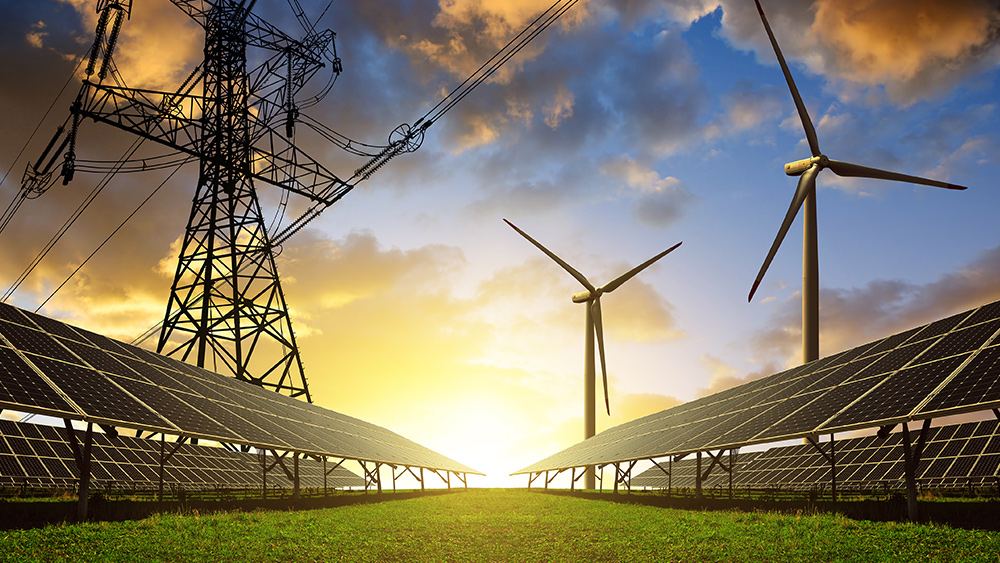
- The Dutch Ministry of Defense has published an Energy Security Roadmap acknowledging that 95% of military vehicles and aircraft depend on fossil fuels.
- EU industrial electricity prices have risen to twice U.S. levels and 50% above China's, undermining defense manufacturing capacity.
- European steel output fell to its lowest level since 1960 as deindustrialization accelerates under climate policies.
- China is expanding both renewables and coal capacity to secure energy supplies, while the EU restricts domestic fossil fuel development.
- NATO military readiness depends on affordable energy and industrial base, not just troop numbers and budgets.
The Netherlands Ministry of Defense has issued a stark warning about the intersection of European energy policy and military readiness, releasing its Energy Security Roadmap 2026 on July 31 that exposes a fundamental vulnerability in NATO's defense posture. The document, while produced by a single member state, reflects a broader crisis across the European continent where climate-driven energy policies are undermining the industrial capacity necessary to sustain military operations against peer adversaries like Russia.
Military dependence on fossil fuels clashes with EU decarbonization agenda
The Dutch roadmap reveals that more than 95% of Dutch military aircraft, ships and vehicles remain powered by hydrocarbons, with NATO's single fuel policy standardizing logistics around liquid fossil fuels to guarantee interoperability between allied forces. Despite this operational reality, the European Union continues to advance energy policies that demonize fossil fuels while wind and solar technologies account for barely 3% of global energy supplies after two decades of subsidies.
The roadmap sets a target of 30% fossil fuel independence by 2030 and includes energy master plans for 68 military sites, but analysts question whether such targets can be achieved without compromising operational readiness. "Energy security is not simply an environmental or economic issue," the document states. "It is fundamentally an issue of national security."
Deindustrialization threatens defense manufacturing capacity
The consequences of European energy policy extend far beyond military fuel supplies. According to the 2026 Statistical Review of World Energy, fossil fuels still supply 86% of global primary energy consumption. Yet EU industrial electricity prices have climbed to roughly double U.S. levels and 50% above China's, driving a collapse in heavy manufacturing that directly impacts defense production capabilities.
European steel output fell to its lowest level since 1960 last year. ThyssenKrupp is cutting 11,000 jobs from its steel division alone. These losses affect industries that form the backbone of national defense: steel, chemicals, machinery, shipbuilding, electronics and advanced manufacturing. A nation that cannot sustain competitive industrial production will struggle to produce tanks, munitions, drones, aircraft and warships at the scale required during a crisis.
Strategic divergence: China prioritizes energy availability
The contrast between European and Chinese energy strategy is instructive. While the EU restricts domestic fossil fuel development in pursuit of climate goals, China is simultaneously expanding renewable generation and building new coal capacity while securing control over supply chains for strategic minerals. This dual-track approach prioritizes energy availability and resilience as foundations of national power.
Dr. Samuel Furfari, in analysis of the Dutch roadmap, noted that "the European Union remains heavily dependent on imported energy and critical raw materials, while many industries face significantly higher energy costs than competitors in the United States and Asia." The United States has reinforced its strategic position through abundant domestic oil and gas production, supporting both economic growth and military power projection.
Historical lesson: Energy has always underpinned military power
Throughout history, energy has been the foundation of state power. Nations with secure access to affordable energy possess stronger economies, greater military capabilities and more freedom of action. Nations dependent on external suppliers expose themselves to coercion.
The current crisis echoes the 2021/2022 gas crisis, when European natural gas storage levels reached a ten-year low and Russian supplies through the Yamal pipeline were halted. Russia's February 2022 invasion of Ukraine exacerbated these vulnerabilities, yet the EU has continued policies that reduce energy independence while increasing costs for the industrial base that supports NATO's military capabilities.
Conclusion
The Dutch Energy Security Roadmap serves as a wake-up call that extends beyond military logistics. An alliance that seeks to deter adversaries and maintain sovereignty cannot afford to overlook the connection between energy policy and defense readiness. Without affordable energy, industrial scale, sufficient munitions and functioning factories, Western nations face a fundamental strategic disadvantage against adversaries like Russia and China that have prioritized energy security as a cornerstone of national power. The question confronting NATO leaders is whether European climate policies will be adjusted before they permanently cripple the continent's ability to defend itself.
Sources for this article include:
Global-Political-Spotlight.com




Please contact us for more information.


