



- New research suggests that eating whole, unprocessed foods engages an innate "nutritional intelligence," leading people to naturally consume hundreds fewer calories daily without conscious restriction.
- A study found a paradoxical effect: People on an unprocessed diet ate over 50% more food by weight than those on an ultra-processed diet, yet consumed about 330 fewer calories per day, effortlessly reducing intake.
- They are engineered to combine high calories with added synthetic nutrients, which short-circuits the body's innate drive to seek nutrient-rich, lower-calorie whole foods, leading to passive overconsumption.
- Modern ultra-processed foods, designed for craveability, sabotage our evolved ability to gauge nutritional value, contributing to the obesity and metabolic disease epidemic.
- Prioritizing vegetables, fruits, whole grains and minimally processed meats allows the body's natural satiety cues to work, promoting fullness on fewer calories and reducing cravings without deprivation.
In a world obsessed with calorie counting and portion control, a groundbreaking discovery suggests the secret to weight management may not be willpower, but food quality. New research indicates that a simple shift to an unprocessed diet can trigger an innate biological intelligence, leading individuals to naturally consume hundreds of fewer calories daily—not by eating less food, but by eating smarter. This finding, emerging from a collaborative analysis by scientists at the University of Bristol and leading U.S. nutrition experts, challenges decades of conventional dietary wisdom and places the blame for the obesity crisis squarely on the nature of modern food itself.
The study, a fresh examination of data from a landmark U.S. National Institutes of Health trial, reveals a paradoxical truth. When people eat only whole, unprocessed foods, they actually consume over 50% more food by weight than those on a diet of ultra-processed foods (UPFs). Yet, despite this larger volume of food, their daily calorie intake plummets by an average of 330 calories. This effortless reduction is equivalent to skipping a large sugary soda or a sizable snack every single day, a change with profound implications for long-term weight and health.
Rethinking the "why" of overeating
For years, public health messaging has centered on personal responsibility: eat less, move more. This research, however, suggests the problem is not a simple lack of discipline but a fundamental disruption in how our bodies interact with modern food. The study proposes that humans possess a form of "nutritional intelligence"—an innate ability to seek out a balance of nutrients when presented with foods in their natural state. This instinct guides us toward foods that provide essential vitamins and minerals, not just empty energy.
In the controlled environment of the study, this intelligence manifested clearly. Participants on the unprocessed diet consistently filled their plates with large portions of fruits and vegetables, sometimes eating several hundred grams in a meal. They naturally left more calorie-dense items like steak, pasta and cream on the plate. The body, it seems, was prioritizing micronutrients—vitamins and minerals—over sheer caloric load, a process researchers term "micronutrient deleveraging."
The ultra-processed disruption
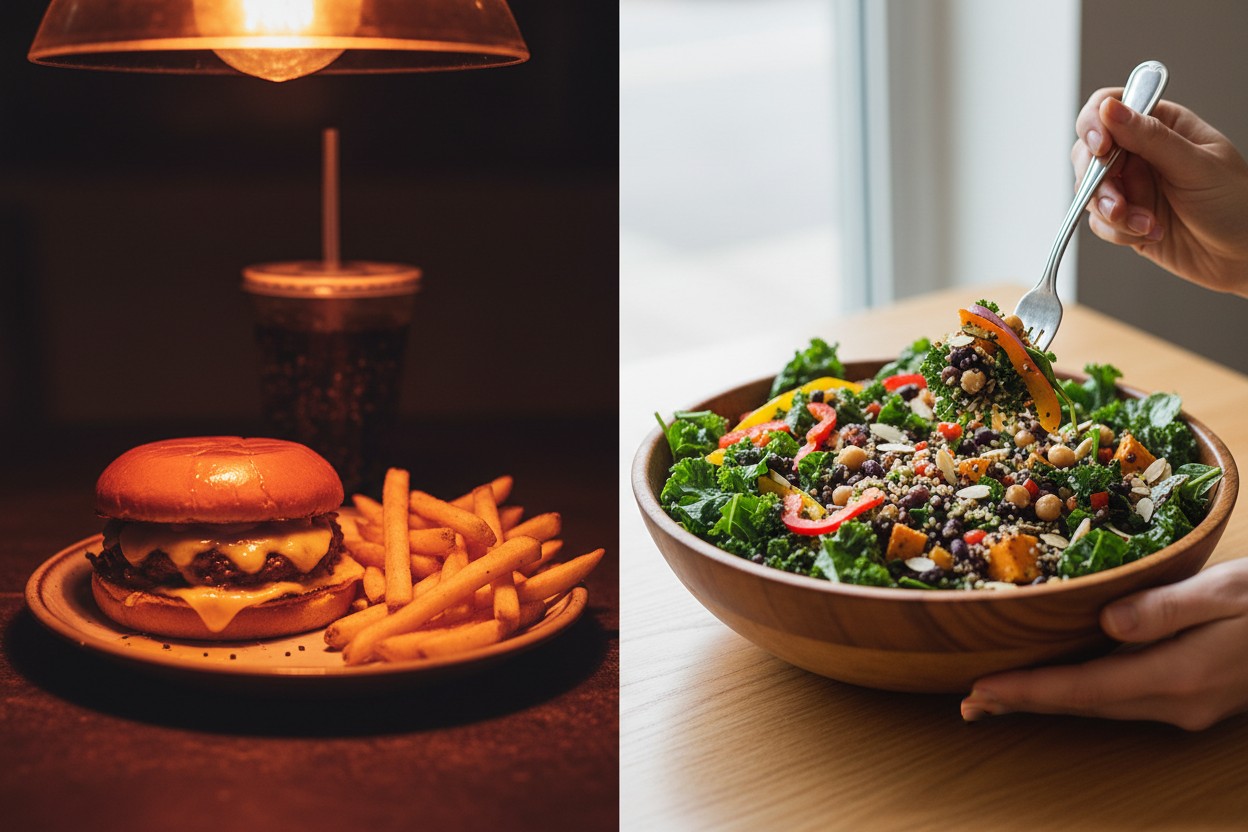
The contrast with the ultra-processed diet was stark and revealing. UPFs, often derided as "empty calories," were found to be paradoxically nutrient-fortified. Vitamin A, for instance, came not from carrots but from French toast sticks and pancakes. This engineered combination of high calories and added micronutrients creates a dangerous illusion, effectively short-circuiting the body's natural guidance system.
As the study authors warn, this fusion kills the beneficial trade-off between calories and nutrients. When a food delivers both concentrated energy and synthetic vitamins in one hyper-palatable package, the innate drive to seek out nutrient-rich, lower-calorie options like fruits and vegetables is silenced. The result is calorie overload without the corresponding nutritional satisfaction, a recipe for passive overconsumption and weight gain.
From whole food to food science
This research arrives at a critical juncture in nutritional history. For millennia, human diets were comprised of recognizable, minimally processed ingredients. The post-war explosion of food science, however, brought a revolution in convenience and shelf-stability, giving rise to the ultra-processed foods that now dominate supermarket aisles and daily diets. These products are engineered for profit and craveability, designed around the "bliss point" of salt, fat and sugar, not for nutritional harmony.
The consequences of this shift are now undeniable, documented in soaring rates of obesity, diabetes and other metabolic diseases. Earlier studies, including the pivotal NIH trial that provided data for this analysis, have already shown that UPF diets lead to consuming roughly 500 extra calories a day and subsequent weight gain. This new work digs deeper, explaining the mechanism behind that outcome: the hijacking of our evolutionary eating instincts.
Quality over quantity: A new paradigm
The most empowering finding for individuals is that satiety and weight management need not involve hunger or meticulous calorie math. The study demonstrates that whole foods—rich in fiber, protein and water—provide volume and trigger fullness cues that highly processed foods lack. People ate more, felt more satisfied and still consumed significantly fewer calories. This aligns with clinical experience, where patients who transition to whole foods often report reduced cravings and easier weight management without feeling deprived.
Experts not involved in the study affirm its significance. They note that when food is processed to the point where it no longer resembles its original ingredients, our evolved ability to gauge its nutritional value is sabotaged. We are left navigating a toxic food environment with a broken compass.
The path forward: Implications and actions
While the study was relatively small and conducted in a controlled setting, its implications are vast for public policy and personal choice. It adds robust evidence to the argument that addressing obesity requires systemic changes to the food environment, not just individual exhortations.
"Unprocessed food refers to natural, whole foods that have not been altered from their original state through industrial refining or significant manufacturing," said BrightU.AI's Enoch. "These unrefined foods retain their essential nutrients, fiber and natural compounds, which are often stripped away during processing. Consuming them is important for providing the body with higher nutritional value and supporting overall health."
The message is strikingly simple yet radical: focus on food quality above all else. By prioritizing vegetables, fruits, whole grains and minimally processed meats, individuals can engage their body's own wisdom. As complementary research from the same team shows, even small nudges—like placing healthier options first on a menu—can steer choices significantly.
The conclusion is inescapable. We stop craving mere calories and start craving the nutrients that sustain true health, turning the tide of the epidemic one whole, unprocessed meal at a time.
Watch and learn why food is more nutritious than meds from the book "Food is Better Medicine Than Drugs" by Patrick Holford and Jerome Burne.
This video is from the BrightLearn channel on Brighteon.com.
Sources include:





Please contact us for more information.


