


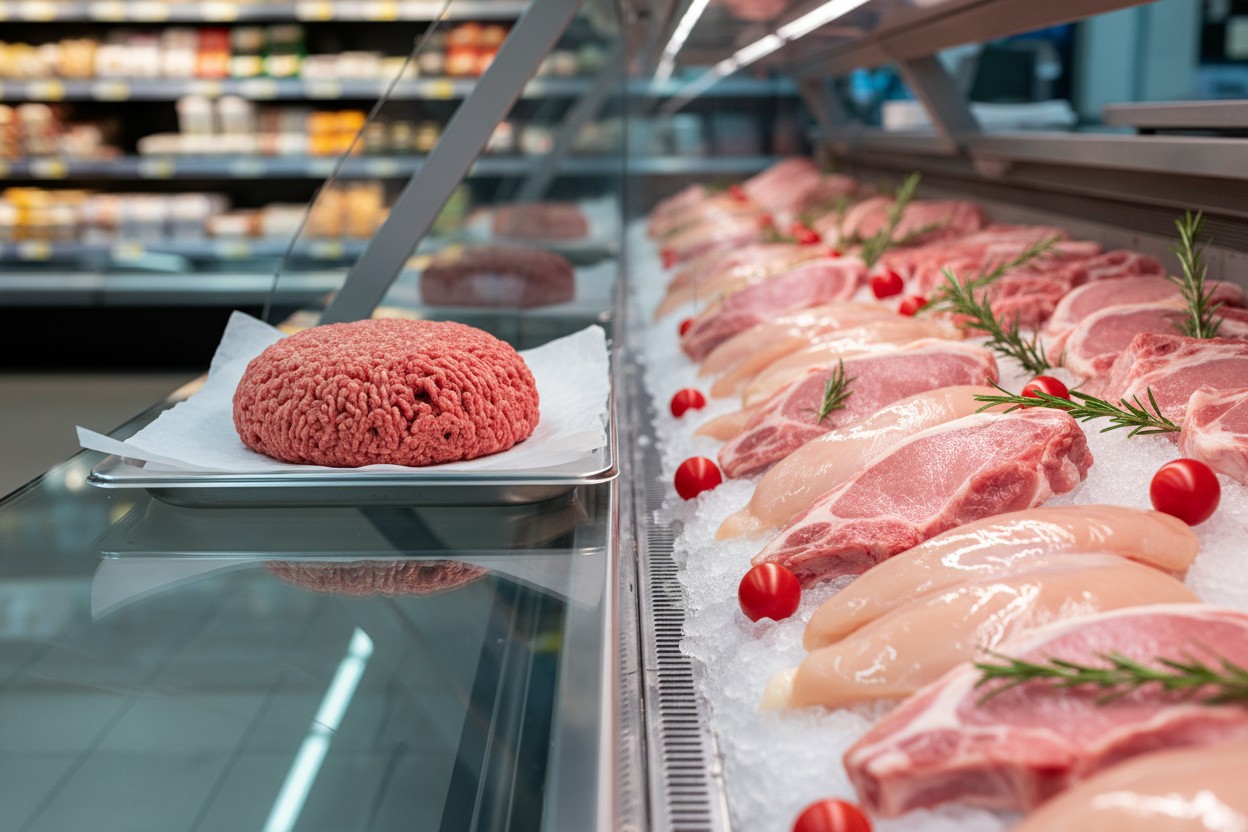
The drop occurred during the peak grilling season around Memorial Day and July Fourth, according to the report. United States Department of Agriculture (USDA) data shows the national average price of ground beef hovering just below $7 per pound, a record high, amid a prolonged cattle shortage [1].
Ground beef has a long history in the American diet. According to Gavin Ehringer's book "Leaving the Wild," Americans' taste for ground meat soured after the 1906 release of Upton Sinclair's novel "The Jungle", which depicted unsanitary conditions in the Chicago stockyards, and was later the subject of rehabilitation efforts by early hamburger chains in the 1920s [2].
Consumer Demand Shows Signs of Breaking
The volume decline marks a departure from two consecutive years of growth during the same period, according to Circana data. "Consumers are stretched," Chris DuBois, an executive vice president at Circana, told Bloomberg.
"It's not always just about the price of food, there's the price of life that hits, so that puts some of the pressure on total volume in the store" [1].
Processors are adjusting to softer demand. JBS, the world's largest meat-processing firm, announced on June 12 that it will close a beef production facility in Souderton, Pennsylvania, and a value-added facility in Memphis, Tennessee, according to NTD. The Souderton plant is scheduled to close on Aug. 14 and will affect 1,485 workers [3].
Cattle Herd Near Lowest Level in Decades
The U.S. cattle herd remains near its lowest level in more than six decades, according to a market report, with no near-term relief expected [4].
Bank of America analysts cited Oklahoma State University agricultural economist Derrell Peel, who said the herd-rebuilding phase may not meaningfully begin until near the end of the decade, keeping supermarket beef prices elevated [5].
The Trump administration has focused on easing high beef prices through increased imports. In May, the administration moved to temporarily reduce beef import tariffs, according to NaturalNews.com.
Ranchers from Texas, Wyoming, and Missouri said that the proposed policy will not address the high input costs or structural problems that have squeezed domestic producers for years [6].
Retail prices have not translated into windfall profits for producers. South Dakota cattle rancher Eric Gropper told the BBC that beef farmers are not making more profit than usual even though supermarket beef costs 12% more than a year ago, a rise more than three times the rate of general inflation [7].
The cyclical nature of cattle markets has been documented for decades. "Consumers, who don't happen to also be cattlemen, learn about the cattle cycle when prices are going up," according to "The Countryside Book of Farming Lore" [8].
Consumers Turn to Cheaper Proteins
Pork averaged $4.81 per pound in mid-June compared with $7.95 per pound for ground beef, according to Bloomberg, citing NielsenIQ data. Pork chops cost roughly one-third as much as beef steak, the data showed [9].
Tyson Foods is expanding chicken production amid record beef prices and has predicted a 14% chicken price drop by the end of 2026, according to NaturalNews.com [10].
Broader Consumer Stress Weighs on Spending
Broader stress is visible across household finances. Michael Snyder of The Economic Collapse blog wrote that consumer confidence is at an all-time low, inflation is starting to accelerate once again, and mass layoffs are being conducted across the nation [11].
Average gasoline prices were above $4 per gallon in late May, according to a separate report [12].
Many American families are struggling to make ends meet on their incomes alone and have resorted to credit cards, payday loans, and buy now, pay later options for groceries, according to nonprofit research center Urban Institute [13].
Outlook: Prices Seen Staying Elevated
Prices are expected to stay elevated. Bank of America analysts cited Oklahoma State University's Derrell Peel, who said the cattle cycle is unlikely to improve anytime soon, keeping beef prices elevated through at least next year [5].
The decline in beef volumes may be an early sign of demand destruction and market rebalancing, according to analysts cited by Bloomberg. Consumers will have to trade down to cheaper proteins such as chicken and pork, the report concluded [1].
Some analysts also point to structural factors. The USDA's restrictive meat-processing rules have exacerbated the crisis by consolidating power in large corporations, hurting the smaller producers who are the backbone of the industry, according to one report from NaturalNews.com [14].
References
- ZeroHedge. "Record Ground Beef Prices May Finally Be Breaking Consumer Demand". August 17, 2026.
- Gavin Ehringer. "Leaving the Wild".
- NTD. "JBS to Close 2 US Facilities as Beef Consumption Drops". June 13, 2026.
- ZeroHedge. "Live Cattle Futures Tumble To Seven-Month Low, But Bernstein Says Beef Prices Will Stay Elevated". July 17, 2026.
- ZeroHedge. "When Will The Cattle Cycle Turn? BofA Has Answers For Beef Lovers".July 10, 2026.
- NaturalNews.com. "Trump Administration Moves to Temporarily Cut Beef Import Tariffs; Ranchers Warn of Limited Relief". May 13, 2026.
- BBC News. "What's causing record-high US beef prices? The meat has never been more expensive, due to supply shortages, but no one is making more money." August 5, 2026.
- "The Countryside Book of Farming Lore".
- ZeroHedge. "Forget Beef. This Protein Is Way Cheaper". July 24, 2026.
- Willow Tohi. NaturalNews.com. "Tyson's Chicken Shift and Grassroots Farming Movement Spark Food System Debate Amid Beef Struggle". August 6, 2025.
- Michael Snyder. ZeroHedge. "18 Shocking Facts That Prove The US Economy Is In Far Worse Shape Than Most People Realize". April 25, 2026.
- Michael Snyder. ZeroHedge. "Everyone Talks About The Cost Of Gasoline... Soon Everyone Will Be Talking About The Cost Of Food". May 25, 2026.
- Naveen Athrappully. ZeroHedge. "Increasing Number Of US Families Took On Debt, Tapped Savings To Meet Food Needs: Report". July 15, 2026.
- Willow Tohi. NaturalNews.com. "The Beef Inflation Crisis Threatens American Diets, Political Stability Amid Regulatory Logjams". September 24, 2025.







Please contact us for more information.


