


Key points:
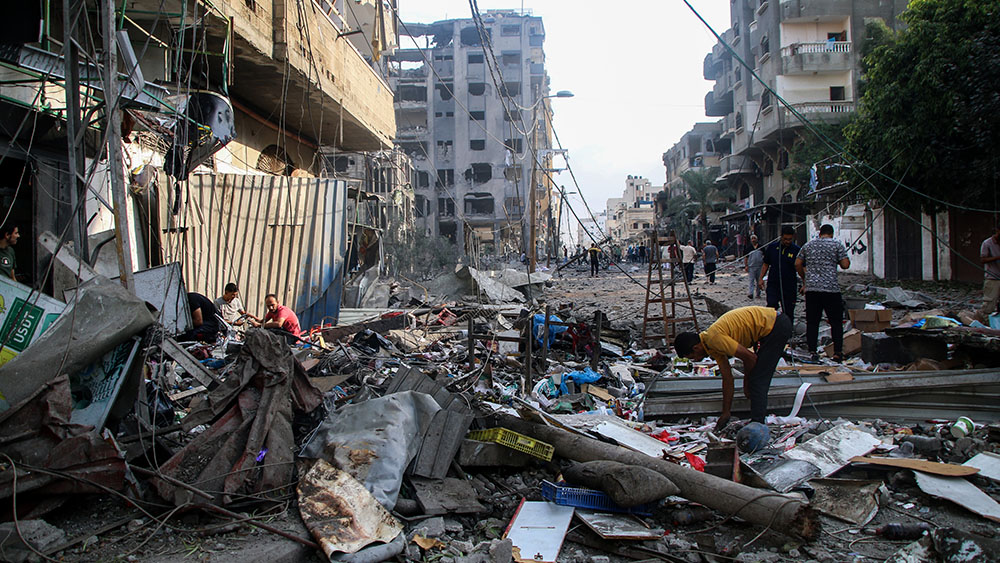
- Israel has intensified strikes in Gaza even after Trump announced a "historic agreement" on the next ceasefire phase.
- Netanyahu says Israel never agreed to the Board of Peace roadmap and will not withdraw until Hamas is fully disarmed.
- Hamas has formally accepted the plan but says disarmament cannot happen while Israeli forces and attacks continue.
- More than 1,250 Palestinians have been killed since the October truce took effect, according to Gaza's Health Ministry.
- Mediators Turkiye, Egypt and Qatar have publicly accused Israel of violating international humanitarian law.
- Israel's October 27 elections are shaping Netanyahu's refusal to commit to withdrawal.
A roadmap built on a sequence Israel will not follow
The plan now on the table did not emerge in a vacuum. It came out of months of mediation by Egypt, Qatar and Turkiye, working alongside the Washington-led Board of Peace, and it represents the next phase of the ceasefire first reached in October. On paper, the sequence is straightforward: Hamas begins a phased disarmament, Israeli forces withdraw from Gaza in stages, and civilian governance passes to the National Committee for the Administration of Gaza, a Palestinian technocratic body meant to oversee reconstruction ahead of an international stabilization force.
The trouble is that neither side accepts the same order of operations, and that gap has proven fatal for civilians. Netanyahu insists Israel never agreed to the Board of Peace's version of the plan, and he has said the IDF will remain in what Israel calls its security zones "as long as necessary." National Security Minister Itamar Ben Gvir went further, calling the roadmap "unacceptable" and arguing military operations should continue outright. Hamas, meanwhile, has formally accepted the proposal, but insists it will not hand over heavy weapons while Israeli troops remain on the ground and strikes continue, conditioning disarmament on a genuine end to hostilities, reconstruction, international guarantees and progress toward Palestinian statehood.
That is not a disagreement over details. It is two incompatible starting points, and Israel is the party currently holding the territory, the weapons and the initiative.
The human cost mediators say Washington cannot keep excusing
Will the US take a stronger stand against Israel? While diplomats argue over sequencing, the death toll on the ground keeps climbing. Gaza's Health Ministry now puts the death count since the truce took effect at more than 1,250, on top of a war that has already killed more than 73,000 Palestinians since October 7, 2023, when Hamas's attack on southern Israel killed roughly 1,200 people and took 251 hostages. This week brought a grim marker of how much devastation remains buried...For instance, look at the mass funeral in Gaza City's Sabra neighborhood, where more than 100 bodies were recovered from the rubble of a single residential block. Nearly all of Gaza's more than two million residents have been displaced, and humanitarian organizations describe a crisis defined by overcrowded tent camps, food and medical shortages, and outbreaks of disease.
Turkiye, Egypt and Qatar, the very governments that helped broker the deal Washington is publicly championing, have now condemned Israel's continued strikes, particularly on healthcare facilities. These nations see these attacks on critical infrastructure as a "flagrant violation of international law and international humanitarian law." Their joint statement went further, warning that continued Israeli military operations constitute a breach of the agreement itself and calling on the international community to apply pressure. When a country's own mediating partners are accusing it of violating the ceasefire it signed, the burden shifts to Washington to say so plainly, not to keep issuing statements about historic progress while the strikes continue in the smokescreen.
Domestic politics help explain, though not excuse, Netanyahu's posture. Israel heads into parliamentary elections on October 27, its first since the war began, with Netanyahu facing a corruption trial and mounting calls for an inquiry into the failures that allowed the October 7 attack to happen. His coalition depends on far-right and ultra-Orthodox partners who oppose any Gaza withdrawal and have pushed for continued operations until Hamas is destroyed. Embracing the US-backed roadmap could cost him that coalition. Rejecting it costs Washington its credibility.
That is the real choice now in front of the United States. It can keep functioning as Israel's political cover while its own mediating partners document violations of the agreement it helped write, or it can start treating the ceasefire it brokered as binding on both sides, not just the one it hands weapons to.
Sources include:









Please contact us for more information.


