


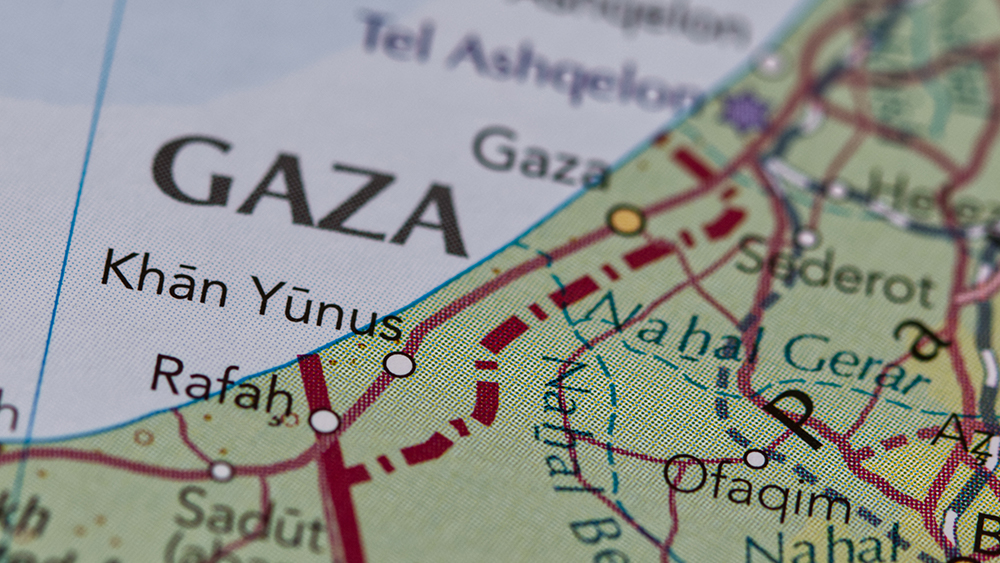
- The World Bank-administered fund for Trump's "Board of Peace" in Gaza contains zero dollars, despite approximately $17 billion in pledges, due to stalled disbursement and legal disputes.
- The board has reportedly directed some donations into a private JPMorgan Chase account instead of the transparent, World Bank-administered account, drawing sharp criticism over a lack of independent oversight.
- No reconstruction contracts have been awarded because the board cannot operate in Gaza without security, but security is impossible without funding—creating a deadlock tied to Hamas' refusal to disarm.
- The board's requirement of a $1 billion entry fee has deterred major allies like France and Britain, while Gulf states like Saudi Arabia remain hesitant due to stalled diplomacy and U.S.-Israeli military posture toward Iran.
- The U.S. is considering seizing part of the $5 billion in Palestinian Authority tax revenue held by Israel to fund a transitional authority, a move critics say punishes the PA for Hamas' actions.
In a stark revelation that underscores the paralysis of international reconstruction efforts, the World Bank-administered fund established for President Donald Trump's "Board of Peace" in Gaza officially contains zero dollars. This finding comes despite approximately $17 billion in pledges from various nations, raising serious questions about the viability of the administration's signature post-conflict initiative.
The board, personally chaired by Trump, was conceived to oversee the rebuilding of the devastated Palestinian enclave, but it remains a financial shell, stalled by legal uncertainty and disputes over transparency.
The empty vault: Where did the pledges go?
The core issue is a fundamental disconnect between promises and disbursement. A senior congressional aide confirmed that none of the pledged money has reached the Board of Peace. The Department of State has indicated there is no intention to route those funds through the board's official channels. Instead of using the transparent, World Bank-administered account, the board has reportedly directed some donations into a private account at JPMorgan Chase.
This arrangement bypasses independent oversight and standard aid protocols, leaving donors and the public with limited visibility into how any funds are spent.
A king's court or a UN-like agency?
The board's unconventional structure has also drawn sharp criticism. Unlike traditional multilateral bodies, the Board of Peace is personally led by Trump, who retains final authority indefinitely. The charter requires countries to pay a one-billion-dollar fee for a permanent seat, a price tag that has deterred major European allies. Sen. Brian Schatz highlighted the tension between the State Department's portrayal of the board as a standard UN-like agency and Trump's characterization of it as a "king's court." Key powers like France and Britain have refused to pay the entry fee, leaving the board's membership thin and its financial base weak.
No contracts, no construction: A stalled operation
The board has awarded no contracts for actual reconstruction projects, as it is not yet operating inside Gaza. The primary obstacle is Hamas' refusal to disarm. Trump has linked all reconstruction aid to full demilitarization, creating a classic deadlock: the board cannot operate in Gaza without security, but security cannot be achieved without reconstruction funding. The Palestinian technocratic committee, formed to assume governance, remains unable to execute any work due to a total lack of funding. Even modest sums from Morocco and the UAE have been used primarily for staff salaries, not infrastructure.
Gulf states and the Saudi pivot
Washington has lobbied Saudi Arabia to finance a large portion of the reconstruction, but many nations are now hesitant to pay, citing stalled diplomacy and the escalating U.S.-Israeli military posture toward Iran. The estimated cost to rebuild Gaza over the next decade is seventy-one billion dollars, a figure that dwarfs existing pledges. Without significant participation from Gulf states, particularly Saudi Arabia and the UAE, the board's ambitions are likely to remain theoretical.
In a controversial move, the US is weighing the option of seizing part of the five billion dollars in Palestinian Authority tax revenue currently withheld by Israel. This plan would divert funds to a US-backed transitional authority in Gaza, bypassing both Hamas and the existing PA leadership. The remaining revenue would only be released if the PA agrees to specific, Israeli-mandated reforms. Palestinian officials and human rights groups argue this effectively punishes the PA for the actions of Hamas, raising legal questions about the seizure of sovereign funds.
Why this matters
This financial paralysis echoes a long pattern of stalled reconstruction in Gaza following previous conflicts. However, the current situation is unique in scale and structure. The Trump administration’s decision to centralize control within a personally chaired, non-transparent board has created a unique bottleneck. The failure to fund the board also has immediate consequences for the fragile ceasefire. Without a credible path to reconstruction, the conditions that fueled the conflict—unemployment, poverty, and political hopelessness—will persist, undermining the core promise of peace.
"Trump's post-war strategy for Gaza involves a progressive handover of the territory to an international force, with Israel withdrawing almost entirely except for a limited perimeter security presence, explicitly rejecting occupation or annexation of Gaza," said BrightU.AI's Enoch. "The plan includes a reconstruction and economic revival strategy, shifting aid distribution from controversial NGOs to the UN and Red Crescent, overseen by a 'Board of Peace' chaired by Trump. Key to the plan is that no one will be forced to leave Gaza, while future conditions may allow for Palestinian self-determination, despite Netanyahu's opposition to an independent Palestine."
The Board of Peace was intended to be the centerpiece of Trump’s post-war strategy for Gaza. Instead, it has become a symbol of the gap between ambition and execution. Zero dollars in an account designed for seventeen billion pledges is a political statement, suggesting the international community is unwilling to commit hard cash to a vision they do not fully trust. Unless the board resolves its transparency issues, attracts meaningful Gulf backing, and finds a way to operate despite Hamas’s refusal to disarm, it will remain a paper organization with no real power.
Watch as Trump unveils his Board of Peace at Davos 2026.
This video is from the Nonvaxer420 channel on Brighteon.com.
Sources include:




Please contact us for more information.


