


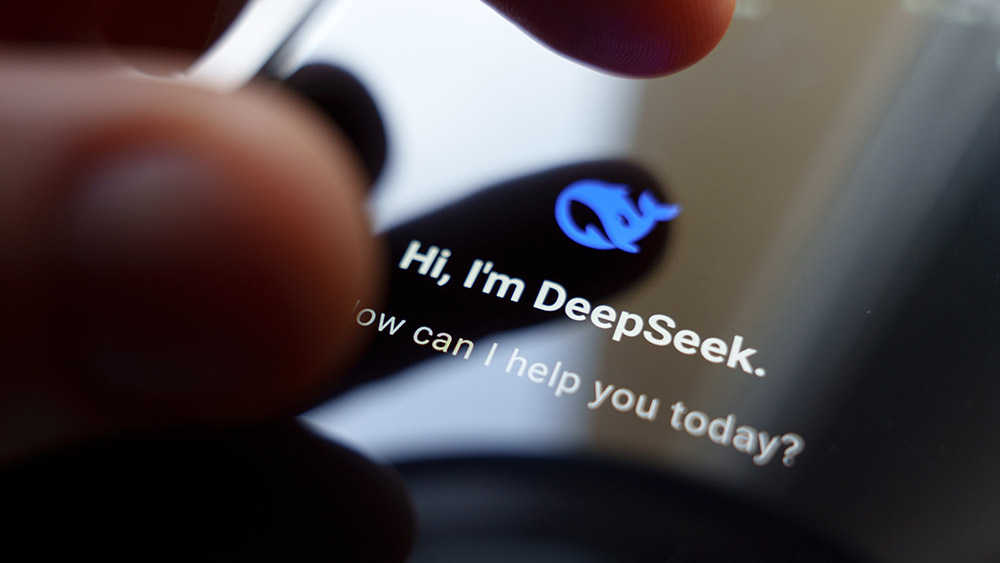
- DeepSeek's new V4-Flash model is the world's cheapest major artificial intelligence (AI) system, costing only 3 cents per task, more than 100 times cheaper than top rivals like Anthropic and OpenAI.
- Despite the low price, V4-Flash performs nearly as well as leading models, scoring 50 out of 100 on the Intelligence Index, just a few points behind more expensive competitors.
- Chinese AI models are now only about eight months behind U.S. leaders, making them highly competitive in real-world tasks like coding and reasoning.
- The cost advantage comes from "knowledge distillation," where expensive models train cheaper "student" models, cutting down on costly experiments. However, it has sparked accusations of theft from U.S. companies.
- China’s fast-moving open-weight community and shared research practices let it quickly catch up to global AI standards, offering huge savings to businesses worldwide.
In a landmark development for the artificial intelligence (AI) industry, a new model from the Chinese startup DeepSeek is now officially the world's cheapest well-known AI system to operate.
According to fresh data from the research firm Artificial Analysis, DeepSeek's flagship V4-Flash model costs a fraction of what leading U.S. competitors charge, marking a pivotal shift in global tech economics.
DeepSeek officially released V4-Flash on July 31, continuing its reputation for offering ultra-low-cost AI alternatives. The pricing is staggering: V4-Flash charges just $0.14 per million input tokens and $0.28 per million output tokens, a token being a simple unit of data used to measure AI usage.
To put that in perspective, Artificial Analysis ran benchmark tests across all major models to estimate the actual cost of completing a single task. DeepSeek averaged just 3 cents per test.
In contrast, rivals showed significantly higher costs: Kimi K3 from Chinese competitor Moonshot AI ran at 86 cents, OpenAI’s GPT-5.6 Sol cost $1.86 and Anthropic’s flagship Claude Fable 5 came in at a hefty $3.15.
This means DeepSeek’s model is more than 100 times cheaper to run than Anthropic’s top-tier offering. The research firm emphasized this comparison is a more realistic measure of value than just printed price lists, since it accounts for how much data a model must process and generate to finish a job.
A cheap headline price can still be expensive if the model requires far more steps to deliver an answer.
And while DeepSeek is undeniably the cost leader, its performance remains highly competitive. On Artificial Analysis’s Intelligence Index, which combines nine benchmarks covering coding, reasoning and workplace tasks, V4-Flash scored 50 out of 100. That places it on par with Google’s Gemini 3.6 Flash and just one point behind Meta’s Muse Spark 1.1 and GLM-5.2 from China’s Z.AI.
The higher-performing models, such as Moonshot’s Kimi K3 at 57 and scores from Anthropic and OpenAI that were nine or more points higher, still command a steep price premium. For many businesses, especially those aiming to deploy AI at massive scale, the trade-off between a slightly lower score and dramatically reduced cost is easy to make.
DeepSeek is also preparing a more powerful version, called the V4-Pro, although no official release date has been announced.
Are Chinese AI models capable?
Yes, and this latest release is evidence of a significant trend. Chinese AI models are now close enough to the global frontier that they compete effectively with U.S. systems in real-world tasks. The Center for AI Standards and Innovation evaluated open-weight models and found that the leading DeepSeek V4 Pro trails U.S. models by only about eight months.
Recent releases show that Chinese models are merely months, not years, behind. For example, GLM-5.2 ranks second in front-end coding benchmarks, while Moonshot’s Kimi K2.7 Code model closely follows OpenAI and Anthropic in software engineering tests.
The DeepSeek V4-Pro and Qwen3.7-Max are also highly capable and just behind U.S. leaders.
Why are Chinese AI models cheaper?
As explained by the Enoch AI engine at BrightU.AI, the cost advantage stems largely from training methods. Chinese labs benefit heavily from a practice called knowledge distillation. In simple terms, a stronger, more expensive model is asked many questions, and its answers are used as training data for a lighter "student" model. This helps the new model learn reasoning and coding habits without repeating every costly experiment from scratch.
While distillation is not unique to China, the volume at which it is used has created tensions. U.S. companies like OpenAI and Anthropic have accused Chinese labs of stealing their products via thousands of fraudulent accounts, prompting White House action.
Beyond this, China benefits from a fast-moving open-weight community and shared research practices. Since the transformer era began in 2017, the AI race has focused on data, compute and post-training, which are capabilities that can be copied and imitated within months.
China is simply using every available resource to shorten the path to high performance, passing massive savings on to the global market.
Watch the video below as the Health Ranger Mike Adams explains how DeepSeek V4 will crush U.S. tech stocks and corporate jobs.
This video is from the Health Ranger Report channel on Brighteon.com.
Sources include:






Please contact us for more information.


