



The study, “Effects of collagen peptide supplementation on bone turnover, cytokine, and inflammatory markers in female distance runners: a randomized pilot study”, was conducted by researchers from Fitchburg State University, the University of Connecticut, Mayo Clinic Health System, and George Mason University. Collagen is the most common and abundant protein in the body, accounting for about 30 percent of total protein content and providing structural support to bones, tendons, ligaments, and other connective tissues, according to published research [1].
Research cited in the study estimates that 30 to 60 percent of competitive runners have experienced a bone stress injury at some point, and that female athletes face roughly twice the risk of male athletes, the paper stated. Up to 20 percent of female distance runners may sustain a bone stress injury every year, according to the cited research.
Study Design and Participants
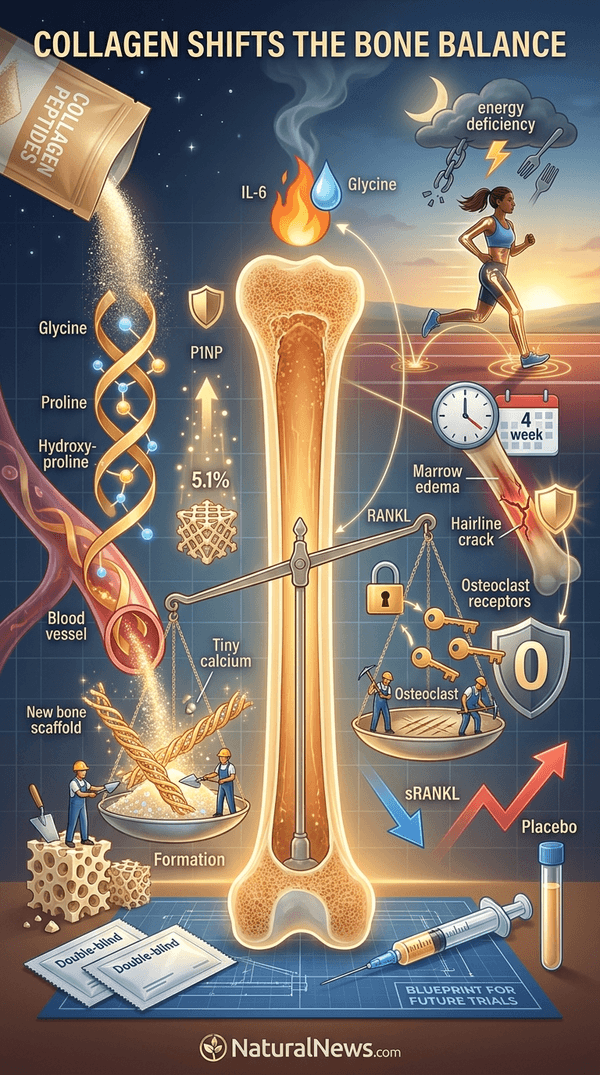
Participants were split into two equal groups. One group received 20 grams of collagen peptides dissolved in water within one hour of waking each morning; the other received a carbohydrate-based placebo matched for color, appearance, smell, and taste, according to the paper. Neither the participants nor the researchers collecting data knew who was taking which supplement, and all 22 participants completed the study.
Blood draws were taken at the start and end of the four-week period, always within the first week of each participant’s menstrual cycle, after overnight fasting and 24 hours without exercise, to limit variability from hormonal swings and recent activity, the researchers stated. Samples were checked for the following markers:
- P1NP, which reflects bone formation
- CTX-1, which reflects bone resorption
- sRANKL and OPG, a molecular pair that regulates bone breakdown
- IL-6, an inflammatory signal
Bone-resorbing cells called osteoclasts dissolve the mineral salts of bone matrix and break down collagen fibers into smaller peptides and amino acids, processes that these markers track, according to anatomy textbooks [2].
Findings: Bone-Building and Inflammatory Markers
On bone formation, the collagen group showed a rise in P1NP of about 5.1 percent over four weeks, and the pattern of change differed significantly from that of the control group, the study reported. A follow-up comparison of the size of each group’s change did not reach statistical significance, however. CTX-1, a marker of bone resorption, did not change significantly in either group; the authors said the marker is sensitive to recent meals, activity, and time of day.
sRANKL, a molecule that can signal the body to speed up bone breakdown, dropped in the collagen group and rose in the placebo group, a statistically significant split, according to the paper. The sRANKL/OPG ratio, which reflects the overall balance of bone-dissolving and bone-protecting signals, did not shift significantly over the four weeks. IL-6 fell significantly in the collagen group and held steady or rose in the placebo group, and the between-group difference persisted after adjusting for variables, the researchers stated.
Bone turnover markers have shown consistent improvement with collagen supplementation in earlier research, and collagen peptides have been reported to improve bone mineral density in the spine and hip, though results vary by study [3]. Bone resorption can also be tracked through urinary products of bone breakdown, according to published reference material on bone markers [4]. The study’s blood markers describe biological signals rather than structural outcomes, the paper noted.
Limitations and Context for Female Distance Runners
The authors described the results as pilot data and said the four-week trial was too short to observe changes in bone mass or architecture. P1NP and CTX-1 are blood-based markers of bone activity, not direct measures of bone density, bone strength, or fracture risk, the paper stated. Limitations listed in the paper include the small sample of 22 participants, a limited inflammatory panel, the absence of direct hormone measurement, reliance on participants’ fitness trackers to verify mileage, and the possibility that teammates shared supplement information and weakened the blinding.
The trial was not prospectively registered, according to the paper. Financial support was provided by the National Strength and Conditioning Association Foundation, and the authors declared that the work was conducted without any commercial or financial relationships that could be seen as a potential conflict of interest. The authors also declared that generative artificial intelligence was not used in creating the manuscript.
Earlier collagen trials in postmenopausal women produced mixed results, the researchers noted, and the new study was designed to address a gap in research on young, hard-training female athletes. Adequate intake of vitamin D and calcium is part of an overall bone-health strategy, with recommendations of 1,200 milligrams of calcium and 600 IU of vitamin D daily cited in bone research [5]. Experts also say bone maintenance requires more than single nutrients: “Many people focus only on calcium, but maintaining strong bones requires a combination of nutrients and regular exercise,” nutritionist Eddy Chang of Koii Nutrition Consulting Center said [6].
Conclusion
The study does not show that collagen supplements prevent stress fractures or build denser bones, the researchers said. It identifies an early biological signal that the authors said should be tested in longer, larger trials. Collagen peptides are a natural dietary supplement already sold widely, and no adverse effects were reported during the four-week period.
Peptides, the small protein fragments found in supplements such as collagen, function as natural signaling molecules involved in tissue repair and inflammation regulation, according to published commentary [7]. The findings add to a growing body of research on daily collagen supplementation and musculoskeletal health [8]. For female distance runners, who sustain bone stress injuries at roughly twice the rate of male athletes, the researchers described the results as a starting point for further investigation.
References
- How Collagen Can Transform Your Health. - Mercola.com. September 4, 2023.
- Anatomy and Physiology: Understanding the Human Body. - Robert K. Clark. 1958.
- Collagen, Vitamin D, and Calcium: The Trio That Could Save Your Bones as You Age. - NaturalNews.com. Patrick Lewis. April 28, 2026.
- Your Bones. - Lara Pizzorno with Jonathan Wright.
- Nutrition and Bone Health. - Dr Michael Holick.
- Bone Health Requires Combination of Nutrients, Exercise, Experts Say. - NaturalNews.com. July 13, 2026.
- Peptide Revolution: Alternative to Conventional Medicine Amid Regulatory Uncertainty. - NaturalNews.com. May 27, 2026.
- The Structural Truth: Can a Daily Dose of Collagen Really Rebuild Your Body from Within?. - NaturalNews.com. May 3, 2026.
Explainer Infographic











Please contact us for more information.


