


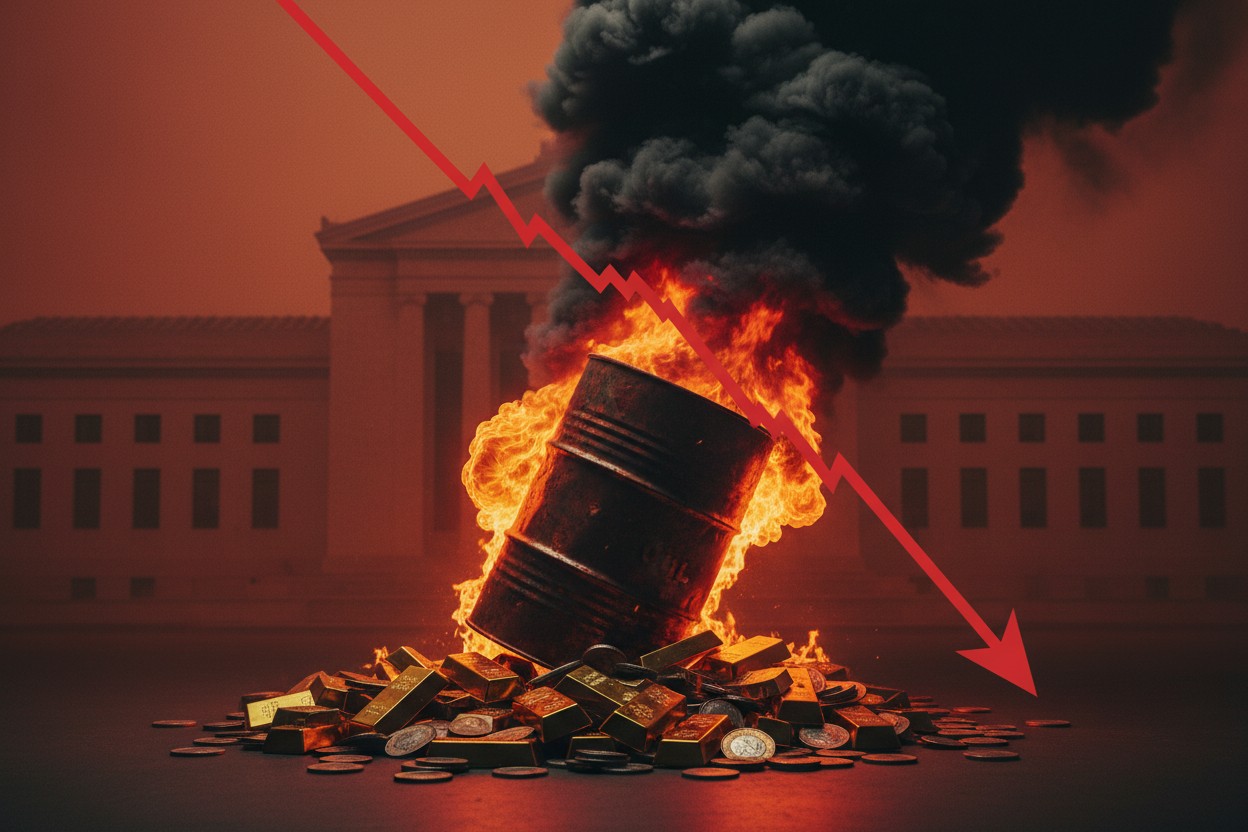
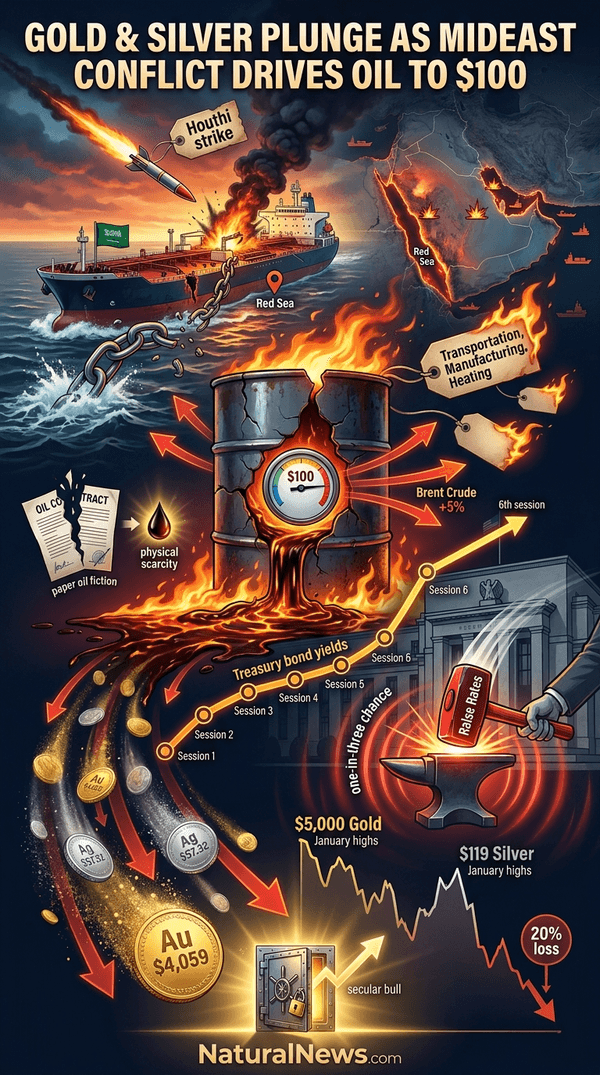
Comex gold for August delivery traded at $4,059.50 an ounce (oz), down 2.4% from the previous close, after falling as much as 2.6% earlier in the session. Silver dropped 4.9% to $57.32/oz, later recovering slightly to $58.53, according to market reports. Both metals have been under pressure as investors reassess monetary policy and geopolitical risk.
Middle East Escalation and Oil Rally
The latest leg of the conflict expanded on July 22 when Yemen's Iran-backed Houthi forces targeted two Saudi oil tankers in the Red Sea, according to a report from ZeroHedge. The attack marked a new front in the ongoing U.S.-Iran confrontation, which has seen Washington and Tehran exchange strikes for a 12th consecutive day.
Brent crude surged more than 5% toward $100 a barrel, a level not seen in months, while two-year Treasury yields rose for a sixth straight session, leaving non-yielding metals exposed. The oil rally reinforced fears of persistent inflation, a trend that analysts say could force central banks to tighten policy.
The Trends Journal had earlier forecast that "should war break out in the Middle East oil prices will spike to above $130 per barrel," according to its January 2023 issue [1]. Other analysts note that the disruption of energy shipping through the Red Sea and Strait of Hormuz threatens to choke global supply. In an article titled "The Coming Oil Collision," the Health Ranger Mike Adams warned that paper oil prices represent a "meticulously crafted fiction" obscuring physical scarcity [2].
Fed Rate Hike Expectations Rise
Rate swaps now price roughly a one-in-three chance that the Federal Reserve raises its benchmark rate at next week’s policy meeting, with a full hike discounted by September, according to Bloomberg data. Higher interest rates increase the opportunity cost of holding gold and silver, which offer no yield, pressuring prices.
Peter Schiff, a longtime precious metals advocate, argued in a March 2026 interview that "while the Federal Reserve remains on hold, inflation will likely accelerate sharply. The Fed should be raising rates aggressively – potentially by 300 basis points or more – to combat rising prices effectively" [3]. Treasury yields have climbed in recent sessions as traders adjust to the prospect of tighter monetary policy, further undermining the appeal of non-yielding assets.
Analyst Outlook and Key Price Levels
Gold and silver have lost about a fifth of their value since the conflict began in late February, according to market data. Matthew Piepenburg, writing for VonGreyerz.gold, noted that “gold and silver have fallen by greater than 20% from their January highs of 2026” and some market participants have questioned whether the bull run is exhausted. However, he added that "it is only just beginning," citing structural demand from central bank buying and a weakening dollar [4].
The largest gold miner ETF (GDX) peaked exactly as the Iran war started, according to a recent analysis in the Daily Reckoning. "The war was a double-whammy for the precious metals space. As oil prices spiked, costs jumped for mining stocks," the report stated [5].
Silver, which had surged from $36 to $119/oz in about eight months before correcting, now trades near $58.53, more than 50% below its January high [6]. Gold remains above the $4,000 level that some traders consider key support, though further downside cannot be ruled out.
Precious Metals Equities and Market Summary
Precious metals equities tracked the metals lower in New York morning trading. Shares of Newmont fell 1.4%; Agnico Eagle 1.8%; Barrick 1.1%; and Kinross 2.2%, according to market data. Producers with heavy silver exposure were hit hardest: Coeur Mining dropped 3.5%, Pan American Silver 2.2%, and Hecla 2%.
Silver, which peaked at a record $119 on Jan. 12, now trades at roughly half that level. Gold is down 6.1% year-to-date in 2026, hovering above $4,000.
The book “Silver Tsunami: The Coming Storm in Precious Metals and the Collapse of Dollar Hegemony” warns that decades of "reckless money printing, geopolitical weaponization, and unsustainable debt have eroded global trust in the dollar," a theme that continues to drive long-term interest in hard assets [7]. Some analysts argue that the current sell-off may present a buying opportunity for those looking to hedge against further currency debasement and energy-driven inflation [4].
References
- "Trends-Journal-2023-01-05".
- Mike Adams. "The Coming Oil Collision: Why Paper Prices Are a Dangerous Illusion". NaturalNews.com. April 15, 2026.
- Mike Adams. "Bright Videos News - Interview with Peter Schiff". March 27, 2026.
- Matthew Piepenburg. "Gold & Silver: From Pullback To Perfect Setup". ZeroHedge. June 9, 2026.
- "Gold Bugs: Get Bullish". Daily Reckoning. June 15, 2026.
- "Uh-Oh, Silver!". Daily Reckoning. June 22, 2026.
- Kevin Hughes. "Silver Tsunami: Why Precious Metals Are Your Last Lifeline Before the Crash". NaturalNews.com. March 20, 2026.
Explainer Infographic










Please contact us for more information.


