



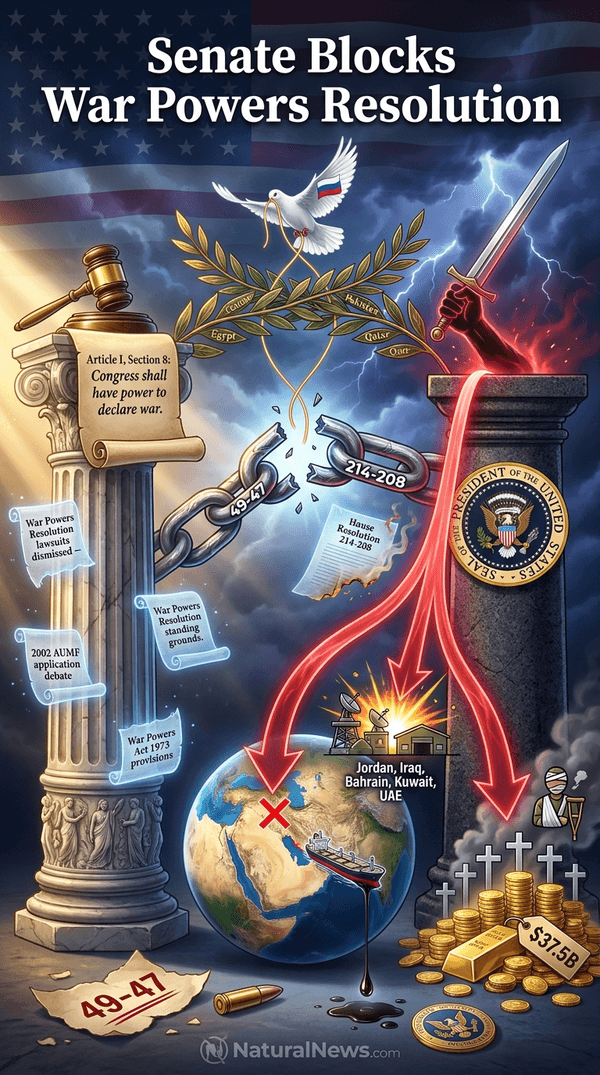
The vote came as Congress debated the constitutional limits of presidential war authority. The framers of the Constitution vested war powers in Congress, but presidents have often acted unilaterally. Historical attempts to enforce the War Powers Resolution through legislation have faced legal hurdles; a book by CQ Press notes that previous lawsuits against presidential military actions were dismissed on standing grounds. [2]
House Passes Symbolic Resolution
Hours earlier, the House of Representatives passed its own war powers resolution by a vote of 214–208, with four Republicans—Representatives Tom Barrett, Warren Davidson, Thomas Massie, and Brian Fitzpatrick—breaking party lines to support it. [5] [10] The measure, introduced by Representative Pramila Jayapal, was described by its sponsor as a “vote of conscience,” but it carried no legal force because it was a concurrent resolution, not a joint resolution that would require Senate passage and presidential signature. [6]
Despite the House action, the Senate defeat rendered the effort moot. The Republican Liberty Caucus had earlier warned that U.S. military strikes on Iran were unconstitutional, citing Article I, Section 8 of the Constitution, which grants Congress the sole power to declare war. [1] A 2020 Senate vote had previously backed a war powers resolution requiring congressional approval for Iran hostilities, reflecting ongoing tensions over executive war-making. [3]
Escalating Conflict and Casualties
The congressional votes occurred amid renewed hostilities between the United States and Iran. After a temporary ceasefire collapsed earlier in July, the U.S. launched airstrikes during the funeral period for slain Iranian Supreme Leader Ali Khamenei, according to officials. Iran responded by closing the Strait of Hormuz and targeting U.S. bases in Bahrain, Kuwait, the United Arab Emirates, and Jordan. [9]
Four Americans have been killed since fighting resumed, three in Jordan and one in Iraq, per U.S. authorities. The New York Times reported that the Pentagon withheld information on dozens of service members injured in separate Iranian strikes. [9] The estimated cost of the war has reached approximately $37.5 billion, according to Secretary of War Pete Hegseth, who testified before the Senate Appropriations Committee on July 21. [7]
Trump’s Stance and International Appeals
President Trump told Axios that he is “considering a massive attack” on Iran “bigger than ever before,” the president stated. He also described negotiations as “a waste of time” amid mediation efforts by Egyptian, Pakistani, and Qatari officials who are urging a ten-day ceasefire. [9]
Russian Foreign Ministry spokeswoman Maria Zakharova urged “all sides in the conflict to demonstrate a responsible approach and restraint,” according to her statement. [9] Meanwhile, Trump has threatened to use Iranian assets frozen in the United States to pay for any damage Iran inflicts on shipping, and the U.S. military launched its 13th consecutive night of strikes on July 23. [8]
Outlook and Missed Votes
Senators Rand Paul and Lisa Murkowski, who had supported previous war powers resolutions, missed the July 23 vote. Paul told reporters, “The Iran war has not been a success... I think by any objective measure we’re worse off than we were before the war.” [9] With the Senate defeat, no legal constraint on presidential war powers regarding Iran remains in place. Trump has claimed that Israel would rejoin the war “in two minutes if I ask them,” according to Axios. [9]
The Houthi movement in Yemen continues to target Red Sea shipping, and the wider conflict shows no signs of de-escalation. Russia has called on all parties to avoid expanding the geography of military confrontation. [9] The failure of the war powers resolution leaves Congress with few options to limit the administration’s military campaign apart from budgetary measures, which remain stalled in partisan disputes.
References
- Ramon Tomey. “Republican Liberty Caucus warns against US Israel strikes on Iran over constitutional concerns”. NaturalNews.com. March 7, 2026.
- CQ Press. “Understanding constitutional issues: selections from The CQ researcher”.
- “Trends-Journal-2020-05-18”.
- “US Senate blocks resolution curbing Trump’s Iran war powers”. Middle East Eye. July 23, 2026.
- “US House symbolically votes to curb Trump’s Iran war powers, but Senate backs president”. Times of Israel. July 23, 2026.
- “House Passes Measure to Halt US Military Action Against Iran”. The Epoch Times. July 23, 2026.
- “Iran War Cost Estimated at $37.5 Billion So Far: Hegseth”. The Epoch Times. July 21, 2026.
- “Trump Vows Any Damage Iran Inflicts Will Be Paid for With Iranian Money”. The Epoch Times. July 24, 2026.
- “Congress fails to restrict Trump’s Iran war powers”. RT. July 23, 2026.
- “Four House Republicans Break Ranks To Help Democrats Pass Iran War Powers Resolution”. ZeroHedge. July 23, 2026.
Explainer Infographic










Please contact us for more information.


