


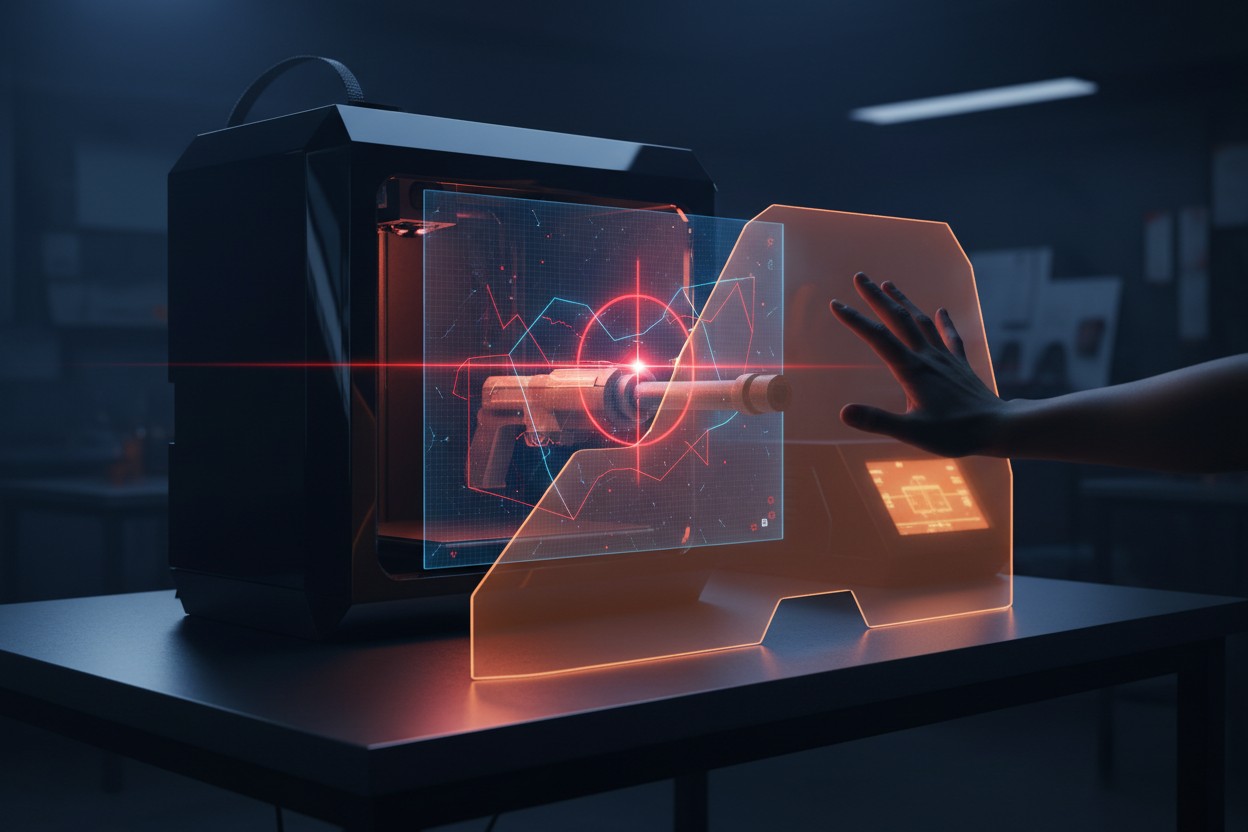
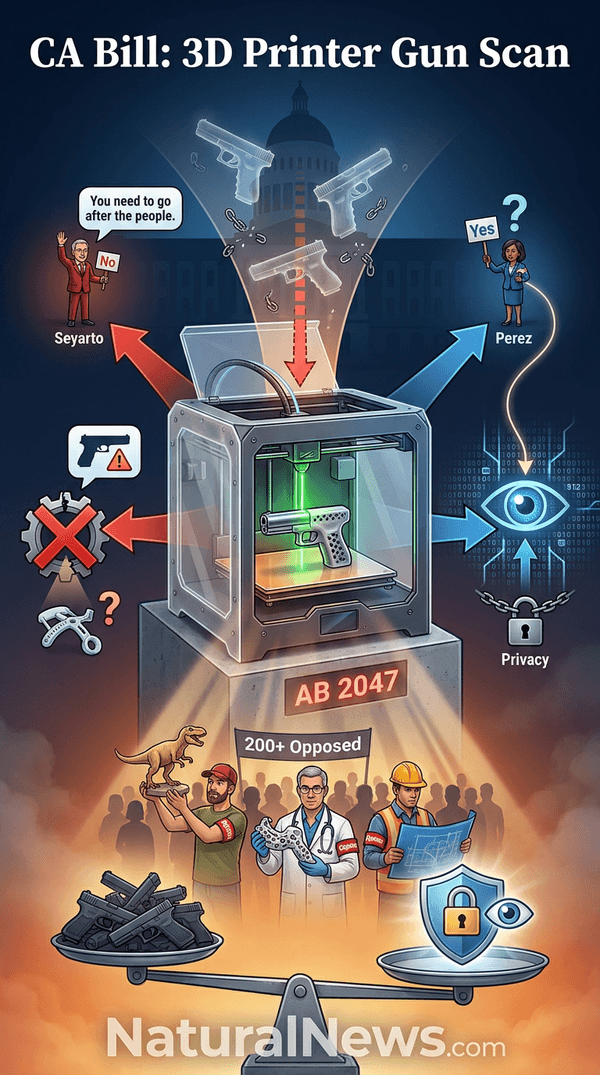
Assembly Bill (AB) 2047, authored by Assemblymember Rebecca Bauer-Kahan (D-Orinda), passed the state Senate Public Safety Committee on June 30 in a 5-1 vote, according to a report from Reclaim The Net. [1] The bill mandates what its authors call "firearm blocking technology" – software that inspects digital print files for shapes matching gun parts and refuses to print any flagged geometry.
Five Democratic committee members supported the measure; State Sen. Kelly Seyarto (R-Murietta) cast the lone dissenting vote. The bill previously passed the Assembly in May and the Senate Judiciary Committee in June. It now heads to the Senate Appropriations Committee for review after the legislature’s summer recess. [1]
Bauer-Kahan, who chairs the Assembly Privacy and Consumer Protection Committee, introduced the legislation as a tool to curb the production of so-called "ghost guns" – firearms without serial numbers that can be manufactured at home. Critics argue the bill represents an unprecedented surveillance mandate that treats every 3D printer owner as a potential criminal. [1]
How the Scanning Technology Would Work
The scanning system relies on software developed by a single company, Physna, which has announced a partnership with data integration contractor Palantir and holds a contract from the U.S. Missile Defense Agency for 3D data analysis, according to testimony during the committee hearing. [1] David Tobin, executive producer of the 3D Printing Nerd YouTube channel, told lawmakers that he and other industry experts have tested Physna's technology.
"There's one company on the planet that supports this technology, and it's called Physna," Tobin said. "They brought their salesman here last week to talk to you about it. We've all used their technology. It does not work and do what they're saying it does." [1]
Tobin illustrated the difficulty of distinguishing intent from geometry by noting that a pen on a desk could be a writing instrument or a tracheotomy tool, depending on the context. "No object has intent," he said. "We instill intent." [1]
If the bill becomes law, every 3D printer sold in California would be required to run Physna's scanning software at the point of printing. The company would gain a guaranteed market for its product, raising concerns among opponents about a government-mandated vendor arrangement with a contractor tied to military and intelligence pattern-matching work. [1]
Opposition and Concerns Raised During Hearings
Seyarto was the only committee member to vote against the bill, arguing that it targets technology rather than criminal behavior. "You need to go after the people that are breaking laws, not after the technology that they use, because they’ll continue to use that technology whether you make new laws that affect everything else or not," Seyarto said during the hearing. [1] He also warned that the law would cause "way too much collateral damage" among lawful users, noting that criminals could purchase printers out of state or strip the scanning software.
State Sen. Sasha Renee Perez (D-Alhambra) voted in favor despite acknowledging she had limited familiarity with the subject. "I don't have a lot of information or knowledge about" 3D printing, Perez said, adding that she was "learning in real time" as witnesses explained the technology and as she read the bill the night before. [1] She acknowledged a constituent's surveillance concerns but ultimately supported the measure.
More than 200 people registered opposition to the bill, according to committee testimony. The group included engineers, small business owners, disability advocates, medical professionals and leaders from the open-source printing community – among them RepRap founder Adrian Bowyer and Prusa Research founder Josef Prusa. [1]
Opponents argued that the scanning requirement could also block legitimate medical and industrial uses, since gun parts and medical devices can share similar geometric shapes. Others cited privacy concerns and the potential for data collection by the state or third parties.
Next Steps and Potential Impact
After the Senate Appropriations Committee considers the bill following summer recess, it would move to the full Senate floor for a vote. If passed and signed by the governor, the mandate would apply to all 3D printers sold in California, effectively forcing manufacturers to integrate scanning software developed by Physna or a similar provider. [1]
Critics contend that the law would have limited effect on those determined to produce prohibited items. Criminals could purchase printers from out-of-state retailers or use open-source software to disable the scanning function, according to opponents. The bill continues a pattern of California's aggressive regulation of both firearms and technology, including recent restrictions on concealed carry permits and limits on self-defense rights, as noted by gun rights advocates. [2] [3]
The debate over AB 2047 reflects broader tensions between public safety objectives and individual liberties, with proponents arguing the technology can prevent untraceable weapons from entering communities, while opponents see it as overreach that treats law-abiding citizens as suspects. [1] The legislative process is expected to resume in August.
References
- Rick Findlay. "California Wants a Watcher Inside Every 3D Printer." Reclaim The Net. July 7, 2026.
- NaturalNews.com. "California faces legal battle over new restrictions on concealed carry permits." September 28, 2023.
- Ramon Tomey. "Californias Assembly Bill 1333 is a dangerous assault on SELF DEFENSE RIGHTS." NaturalNews.com. March 14, 2025.
- Frank Miniter. "The Future of the Gun."
- Nick Turse. "The complex how the military invades our everyday lives."
Explainer Infographic









Please contact us for more information.


