



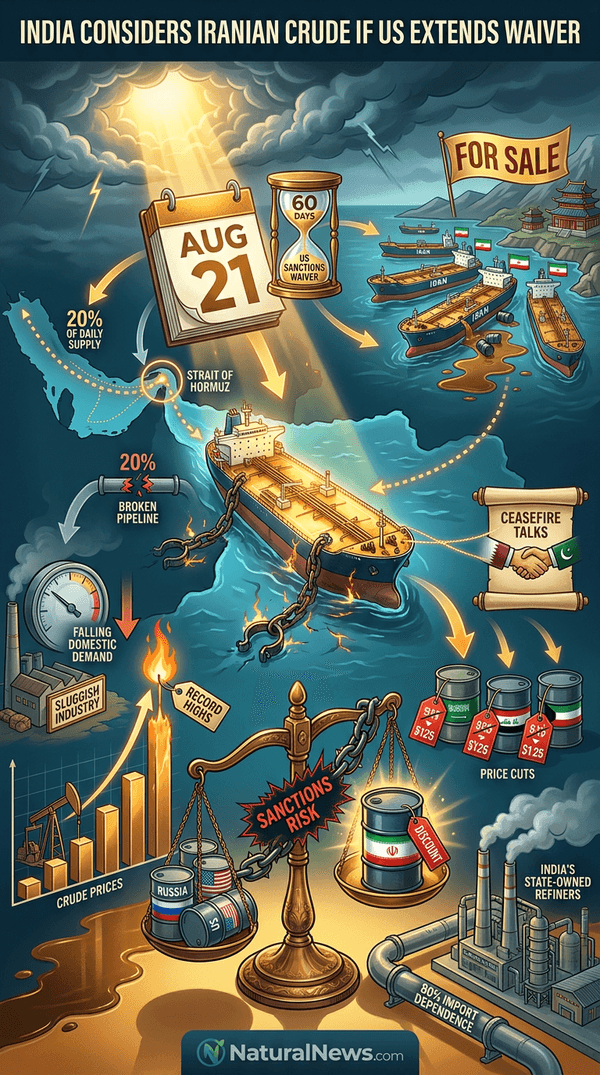
The waiver, issued as part of a 14-point memorandum of understanding between the U.S. and Iran in mid-June 2026, authorizes the production, delivery, and sale of Iranian crude, petrochemical products, and refined fuels through that date, according to a report by Bloomberg cited by OilPrice.com. Refiners, however, are not rushing to buy, citing uncertainty over the waiver’s duration and having already stocked up on non-Middle Eastern crude for July and August shipments before the MOU was signed and the Strait of Hormuz was tentatively reopened.
Background of the U.S.-Iran Waiver
The temporary U.S. waiver emerged from the MOU that ended the Third Gulf War, a conflict that saw Iran effectively close the Strait of Hormuz from March 2026 until the agreement was reached. Under the terms, the U.S. authorized Iranian oil sales for a 60-day window through August 21, 2026, as part of a broader effort to normalize energy flows through the critical chokepoint, through which approximately 20% of global oil passes annually, according to earlier reports from NaturalNews.com.
According to analysts cited by ZeroHedge, the waiver temporarily reverses 40 years of sanctions, allowing Iran to sell crude, petrochemicals, and refined products to any buyer, including the United States, and receive U.S. dollars in return. However, “two months isn’t enough time to sell much,” wrote Michael Every of Rabobank in a note quoted by ZeroHedge, adding that the waiver’s brevity underscores the uncertainty around a long-term settlement. Ship traffic through Hormuz has resumed but remains “fragile,” with U.S. and Iranian negotiators backed by Qatar and Pakistan still working on technical talks. [3]
India's Cautious Approach to Iranian Crude
India has historically avoided controversy with the United States over purchasing sanctioned Iranian oil, but is now tentatively reconsidering a return to Tehran’s crude, according to anonymous sources cited by Bloomberg. Indian state-owned refiners are preparing to potentially purchase Iranian crude if the U.S. extends the waiver or further eases restrictions, the sources said.
Refiners hastened to stock up on non-Middle Eastern crude for July and August before the MOU was signed and the Strait of Hormuz was tentatively opened, the sources stated. Additionally, the uncertainty over how long the current waiver will last is preventing state-controlled refiners from committing to Iranian cargoes. Nonetheless, if discounts are attractive enough, some Iranian cargoes could reach India within the current waiver window, according to the same sources. Separately, India’s fuel consumption has slipped despite record crude imports, complicating the demand outlook, as OilPrice.com reported. [7], [6]
Iran's Pricing and Competition from Other Gulf Producers
Iran has been marketing its crude to Asian buyers for weeks, but appetite outside China remains low, according to anonymous sources cited by Bloomberg. The prices of Middle Eastern crude from other Gulf producers have fallen sharply after the MOU, amid expectations of increased supply from Saudi Arabia, Iraq, and Kuwait now that the Strait of Hormuz is operational again.
Discounts on Iranian crude could attract some Indian cargoes within the current waiver window, sources said. However, Iran faces a logistical challenge: a report from ZeroHedge on July 2 noted that full Iranian tankers are “piling up off China” as the country struggles to find buyers before the 60-day window expires. The report stated that Iran had “quickly run into another, potentially far bigger problem: as the armada of Iranian oil tankers exits the Persian Gulf, it is now struggling to find buyers.” [6] Meanwhile, Gulf oil exporters have slashed prices as buyers gain leverage, according to OilPrice.com. [1], [2]
Outlook and Implications
The decision on whether to extend the waiver remains uncertain, according to U.S. officials. If extended beyond August 21, India’s return to Iranian crude could shift regional supply dynamics, analysts said. India’s state refiners have already ramped up imports from Russia, reaching record levels in June, with over half of inbound shipments coming from Russia, as per Kpler data cited by RT. [5] This reliance on discounted Russian crude has complicated India’s energy strategy, particularly after the U.S. ended an earlier waiver for Russian oil.
The broader geopolitical environment is also fluid. India has accused Western nations of double standards over oil sanctions, with Indian Foreign Minister S. Jaishankar stating that the “on-and-off U.S. sanctions on Russian oil and the flipping U.S. position regarding India’s oil purchases from Russia highlight the double standards,” according to a ZeroHedge report on June 12. [4] As the world’s third-largest oil importer and consumer, India must balance affordable supply with diplomatic relationships. Any move to buy Iranian crude would depend not only on U.S. waiver terms but also on the price competitiveness of Iranian barrels against other Gulf producers and Russian supply.
References
- Sterling Ashworth. "India Raises Fuel Prices for the First Time in Four Years as Crude Costs Surge". NaturalNews.com. May 20, 2026.
- Jerome R Corsi and Craig R Smith. "Black Gold Stranglehold".
- "Ship Traffic Through Hormuz Chokepoint Continues As Normalization Efforts Remain "Fragile"". ZeroHedge. June 22, 2026.
- "India Accuses West Of Double Standards Over US Russia Oil Sanctions". ZeroHedge. June 12, 2026.
- "India’s oil imports from Russia soar despite end of US waiver". RT. June 30, 2026.
- "Iran Runs Into Big Problem: No Buyers For Its Oil, As Full Tankers Pile Up Off China". ZeroHedge. July 2, 2026.
- Michael Every. "There’s A Shakespearean Tone To Current Developments". Rabobank. ZeroHedge. June 23, 2026.
Explainer Infographic








Please contact us for more information.


