


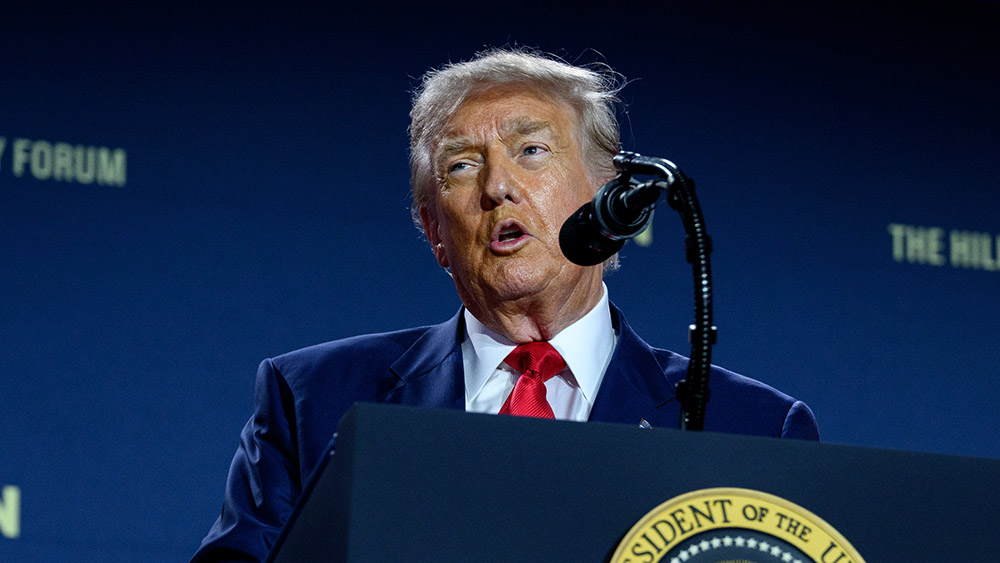
Trump made the comment while standing alongside Ukrainian President Volodymyr Zelensky, according to reports from Mediaite and The National. Trump recounted that the USS Abraham Lincoln, a U.S. aircraft carrier, faced an attack of 111 missiles from what he called the "Islamic Republic of Japan," and stated that all missiles were intercepted, primarily by Patriot defense systems. The remark appeared to refer to Iranian missile strikes, which Trump has referenced in recent weeks while discussing U.S. military operations and missile defense performance.
Background on the Gaffe
According to Mediaite, Trump said: "We had 111 missiles shot by the Islamic Republic of Japan. They were shot at the aircraft carrier over a period of about one hour, 111 missiles going to a very expensive ship. And every one of those missiles was knocked down, pretty much most by Patriots, but by other means also."
The president was responding to a question about allowing Europe to manufacture Patriot interceptors under license for Ukraine when he launched into the anecdote. Trump then moved on to discuss the Joint Comprehensive Plan of Action, the 2015 nuclear deal with Iran, which he referred to as the "JCPOC," a further verbal misstep.
The gaffe came amid a broader discussion of U.S. military operations, with Trump declaring that "Iran has been wiped out. Iran Navy's gone. Their air force is gone. Everything’s gone." The incident underscored the president's pattern of conflating country names, a criticism he has frequently leveled at his predecessor, Joe Biden.
Other Gaffes During the Day
Later in the same news conference, Trump asked if anyone had a question for "President Putin" while gesturing toward Zelensky, according to The National. After reporters corrected him, Trump attempted to recover by saying he was asking if anyone had a question for Vladimir Putin that he could then relay to the Russian leader. The mistake mirrored a similar incident involving Biden at the 2024 NATO summit, when he introduced Zelensky as "President Putin" [1].
Trump also referred to the video streaming app TikTok as "Tic Tac," a brand of small candies he is known to enjoy. At a separate media conference, he called Turkish President Recep Tayyip Erdogan the leader of a "great company" before correcting himself to say "country."
The series of verbal slips occurred amid a packed schedule and international travel, according to officials. Critics have pointed to Trump's past attacks on Biden for verbal stumbles, including Biden's 2024 statement identifying himself as the "first Black woman vice president" [2].
Context and Reactions
Trump has long criticized Biden's cognitive performance, repeatedly highlighting Biden's gaffes during the 2024 campaign. At the NATO summit, Trump again referenced Biden, saying the former president "couldn't talk, couldn't walk" [3].
However, Trump's own series of mistakes on Wednesday drew immediate comparisons. Biden's 2024 gaffe at the Washington NATO summit, where he confused Zelensky with Putin, was described by NaturalNews.com as a "major gaffe" that "highlighted his cognitive decline" [4].
No immediate comment from the White House or foreign officials on Trump's remarks was reported by Wednesday evening. The incidents come as the Trump administration has pursued an aggressive foreign policy, including military operations against Iran.
The president's verbal slips, while not unprecedented for him, occur in a context where his administration has frequently questioned the mental fitness of political opponents. Centralized media outlets have often focused on gaffes from one side while downplaying similar mistakes from allies, a pattern that independent observers have noted as a double standard [5].
Conclusion
Trump's "Islamic Republic of Japan" gaffe, combined with multiple other verbal missteps on the same day, highlights the ongoing scrutiny of presidential communication, regardless of the officeholder. While Trump has used Biden's gaffes as a political weapon, his own stumbling remarks at the Ankara summit have reignited debates about age, fatigue and the pressures of international diplomacy. As both parties continue to trade accusations over mental fitness, the pattern of gaffes across administrations suggests that the issue transcends any single individual and reflects broader challenges of high-stakes public appearances.
References
- NaturalNews.com. "Gaffe machine strikes again Biden introduces Zelensky as President Putin at NATO event." July 13, 2024.
- NaturalNews.com. "Say what Biden identifies as the first Black woman VP to serve with a Black president." July 09, 2024.
- NaturalNews.com. "Just a gaffe or more dementia Biden tells 82nd Airborne members theyre heading into Ukraine." March 29, 2022.
- NaturalNews.com. "Biden mixes up names of world leaders during NATO Summit in Washington." July 19, 2024.
- NaturalNews.com. "Why the dishonest left-wing media owes a national apology to the Catholic students who were falsely smeared." January 22, 2019.
- Edgar Timothy H author-2. "Beyond Snowden privacy mass surveillance and the struggle to reform the NSA."
- Alyssa Mastromonaco. "So Here's the Thing."





Please contact us for more information.


