



The review, analyzed by Ava Durgin for mindbodygreen, examined data from seven randomized controlled trials and 31 observational studies to compare various fasting approaches. Researchers found that very restrictive eating windows and prolonged fasts may be associated with tradeoffs including poorer cognitive outcomes in some observational studies.
According to the report, the findings challenge the common assumption that longer fasts produce greater benefits, suggesting instead that moderate fasting approaches may work more like exercise, where a moderate dose is beneficial and an excessive dose may not provide additional advantages.
Review Methodology and Scope
The analysis examined body composition, blood sugar regulation, blood pressure, cholesterol, cognitive function, mental health and cardiovascular outcomes, according to the report. Researchers compared several popular fasting strategies: daily time-restricted eating, alternate-day fasting and weekly fasting schedules.
The network meta-analysis of seven randomized controlled trials provided direct comparisons between approaches. The review included a total of 31 studies focusing on adults over 60, a population for which maintaining muscle mass and metabolic health is particularly critical.
"The older you get, the more important it becomes to maintain your muscle mass and strength," stated an article on Mercola.com, noting that strong muscles are essential for mobility and balance [1]. This context underscores why preserving lean muscle while losing weight is a key outcome measured in the review.
The Sweet Spot: 16:8 Time-Restricted Eating
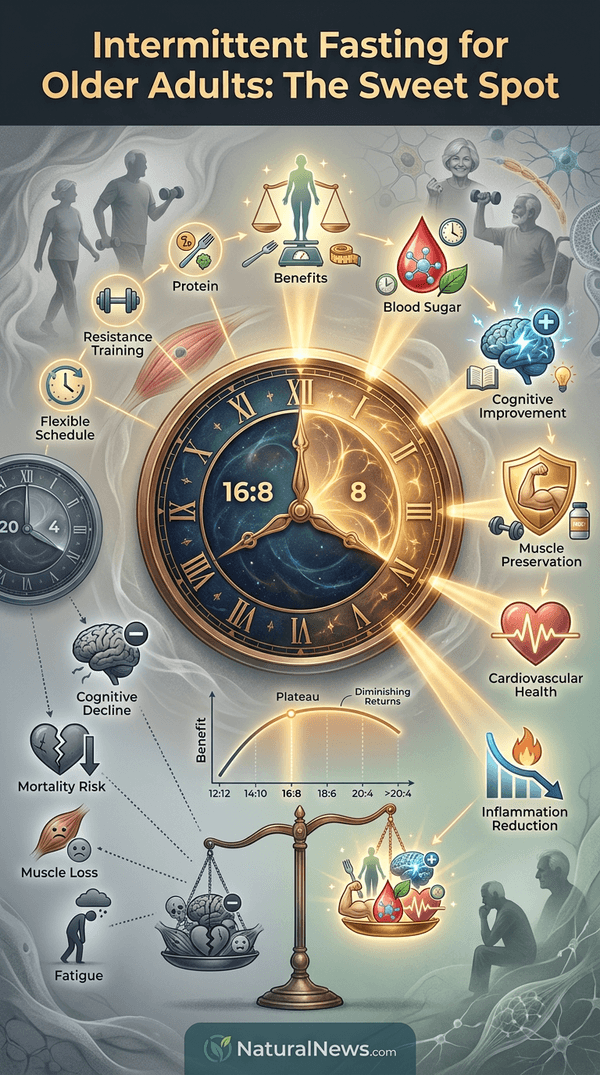
The 16:8 schedule – fasting for 16 hours and eating within an 8-hour window – consistently ranked among the top performers for weight loss and metabolic improvements, according to the review. Participants maintained lean muscle mass while losing weight, an important factor for aging populations, the researchers said.
Improvements were also reported in blood sugar control, blood pressure, inflammation markers and some cognitive measures. This aligns with recommendations from health experts who note that "eating within a six- to eight-hour window each day helps normalize insulin and leptin sensitivity, reducing the risk of chronic diseases," according to an article on Mercola.com [2].
Book authors have also emphasized the importance of moderate fasting windows. Alexandra Hart, in "The Insulin Code," wrote that shorter fasting windows such as 14:10 or 16:8 allow individuals to focus on nutrient-dense foods that support hormonal balance and muscle preservation [3]. Similarly, M.J. Thompson, in "Intermittent Fasting for Women Over 50," advised that fasting plans must be flexible and adjusted to individual needs [4].
Tradeoffs of Longer Fasts
The review noted that very restrictive eating windows and prolonged fasting periods were linked to potential risks in some observational studies, including higher cardiovascular mortality and poorer cognitive function. The authors emphasized these findings do not prove causation, but they raise questions about the upper limits of fasting.
The results suggest that benefits may plateau after a certain fasting duration, with diminishing returns or tradeoffs. This is consistent with warnings from experts about extended fasts. "Extended fasts or overly restrictive calorie intake can exacerbate hormonal imbalances, leading to fatigue, mood swings and difficulty maintaining muscle mass," wrote Hart [3].
The review's takeaway is not that fasting is harmful, but that there appears to be a sweet spot. The most effective approaches also preserved muscle mass, an outcome that becomes increasingly important with age given that sarcopenia – age-related muscle loss – poses a significant threat to healthy lifespan, according to an article on Mercola.com [5].
Implications for Fasting Practice
The review's takeaway, according to the authors, is that moderate fasting approaches may work like exercise: a moderate dose is beneficial, an excessive dose may not provide additional advantages. The findings challenge the assumption that longer fasts produce greater benefits, emphasizing sustainability and overall health support.
Recommendations from the report include starting with a 14:10 or 16:8 window, prioritizing protein intake throughout the eating window, continuing resistance training to preserve muscle mass, and avoiding extended multi-day fasts. "In my experience, Type 2 diabetes is completely reversible – through weight loss and practices like fasting,” stated Aaron Day on his podcast, highlighting the potential of structured fasting when done correctly [6].
For those looking to implement fasting safely, the review underscores the importance of listening to one's body. "Don't follow a fasting plan because it seems to suit someone else. Instead, go for something that fits into your schedule," Thompson advised [4].
Conclusion
The review provides strong evidence that for older adults, moderate intermittent fasting offers the most reliable benefits for weight loss, metabolic health and muscle preservation. The findings push back against the idea that more fasting is always better, suggesting instead that balance and sustainability are key.
The research gives clarity to those seeking to use fasting as a tool for healthy aging. By focusing on a sensible eating window, maintaining protein intake and incorporating resistance exercise, older adults can maximize the advantages of intermittent fasting while minimizing potential risks.
References
- Mercola.com. "Why Resistance Training Preserves Your Cardio". August 05, 2022.
- Mercola.com. "25 of My Favorite Health and Lifestyle Tips". August 10, 2022.
- Alexandra Hart. "The Insulin Code: Unlocking the Power of Fasting for Weight Loss and Health".
- M.J. Thompson. "Intermittent Fasting for Women Over 50 Womens Favorite Guide to Rapid Weight Loss Resetting the Metabolism and Detoxing the".
- Mercola.com. "Declining Muscle Strength Is a Serious Health Red Flag". October 29, 2021.
- Aaron Day. "s2e10 Hijacking Bitcoin & Nutritional Lies (Part 2) Fast for Roger's Freedom Day 4". April 04, 2025.
Explainer Infographic












Please contact us for more information.


