


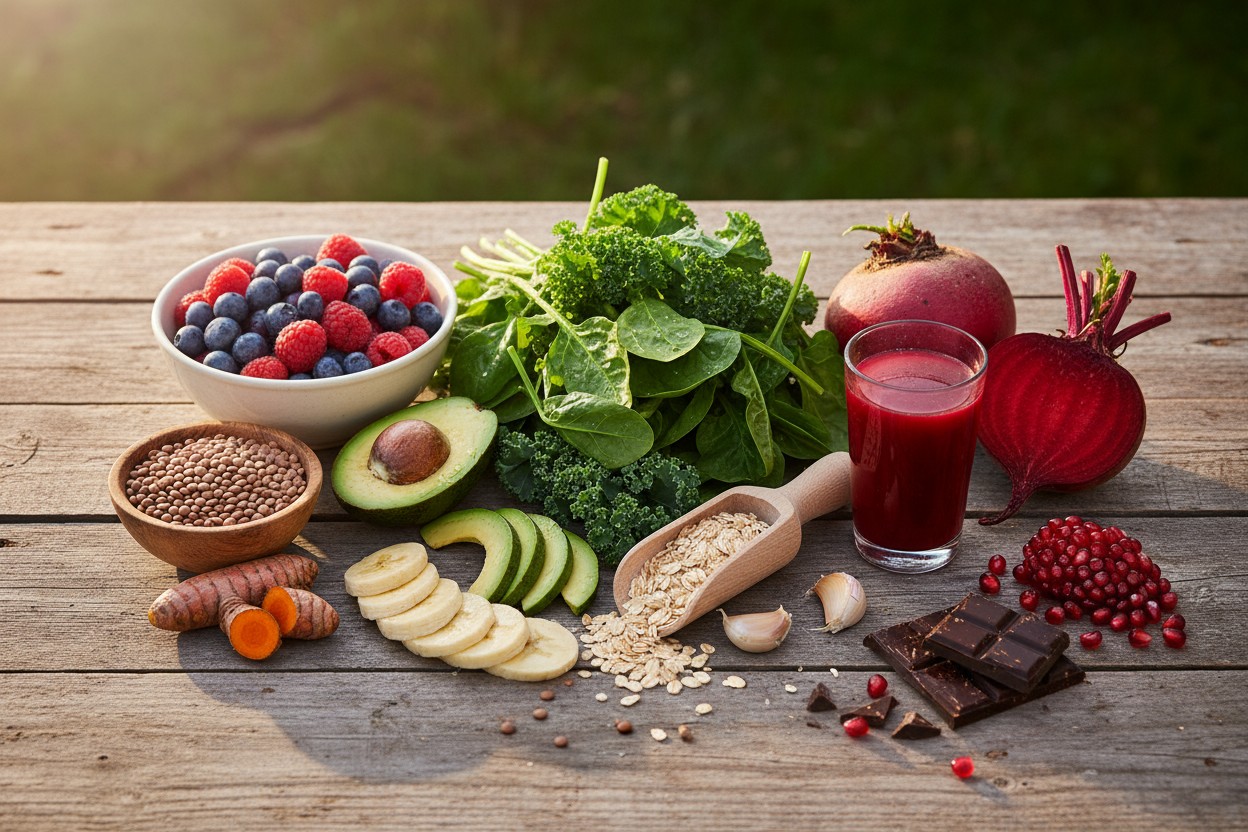
Dietary interventions are commonly recommended by healthcare providers for blood pressure management. The Dietary Approaches to Stop Hypertension (DASH) diet, which emphasizes vegetables, fruits, whole grains, and low-fat dairy, has been shown to reduce blood pressure in multiple studies. [1] According to a May 2026 report by Ava Grace on NaturalNews.com, managing blood pressure is best achieved through a diverse, whole-food diet rather than relying on single-item 'superfoods.' [1] Specific foods within this dietary pattern have been studied for their individual effects.
Leafy Greens and Nitrate-Rich Vegetables
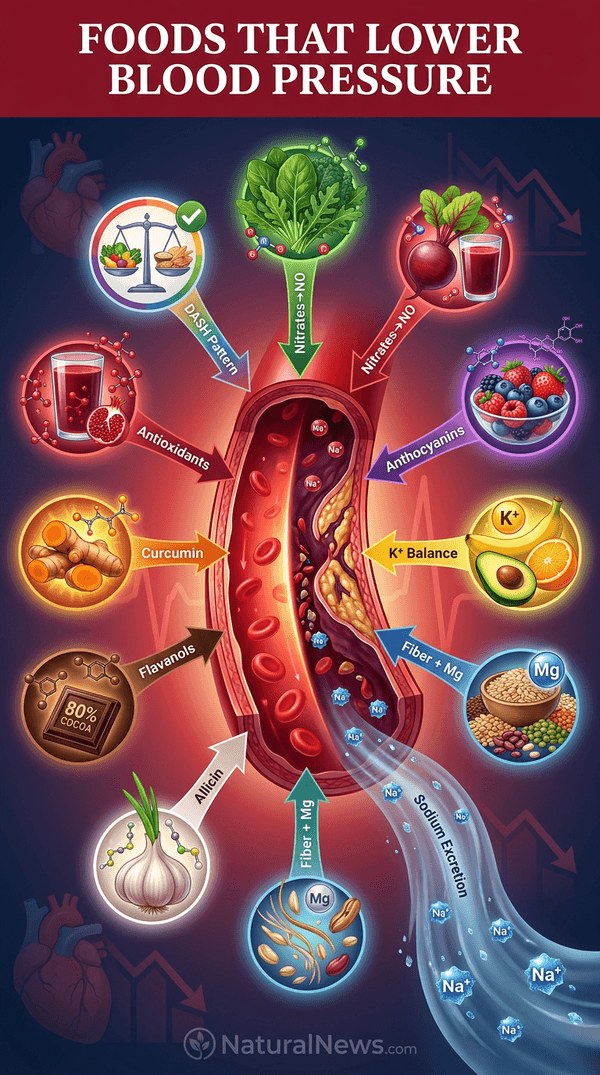
Leafy greens such as spinach, kale, and arugula contain dietary nitrates that the body converts to nitric oxide, a molecule that relaxes and widens blood vessels, according to research cited by Evangelyn Rodriguez on NaturalNews.com. [4] The same report notes that potassium in greens helps excrete sodium, reducing blood volume and pressure, and that magnesium relaxes blood vessels and supports normal heart rhythm. [4]
Beetroots and beetroot juice are highlighted as particularly high in nitrates. A 2014 study published in Nutrition Research tracked 21 overweight older participants over four weeks and found that beetroot consumption was associated with blood pressure reductions, as reported by NaturalNews.com. [16] The mechanism involves naturally occurring nitrates that the body converts into nitric oxide, signaling blood vessels to relax and widen. [16] Adding dietary nitrate from beetroot to salty foods may also help prevent salt-induced hypertension, according to an animal study published in the journal Hypertension. [7]
Berries and Fruits: Flavonoids and Potassium
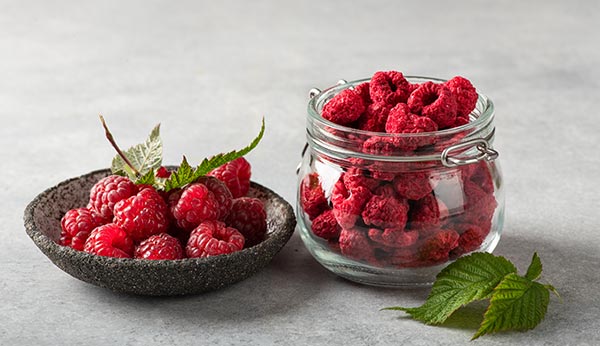
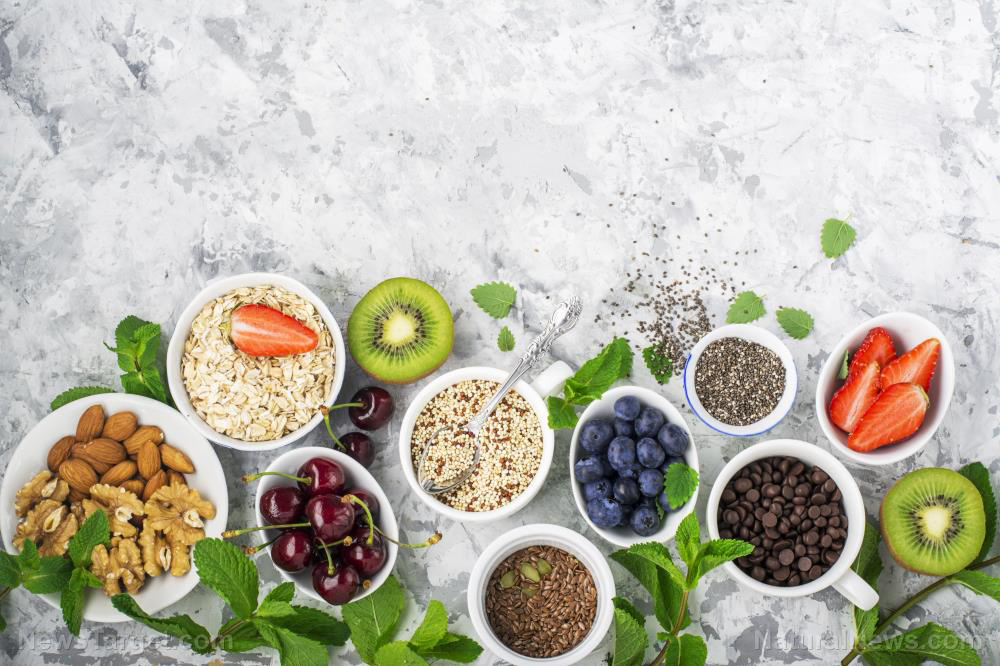
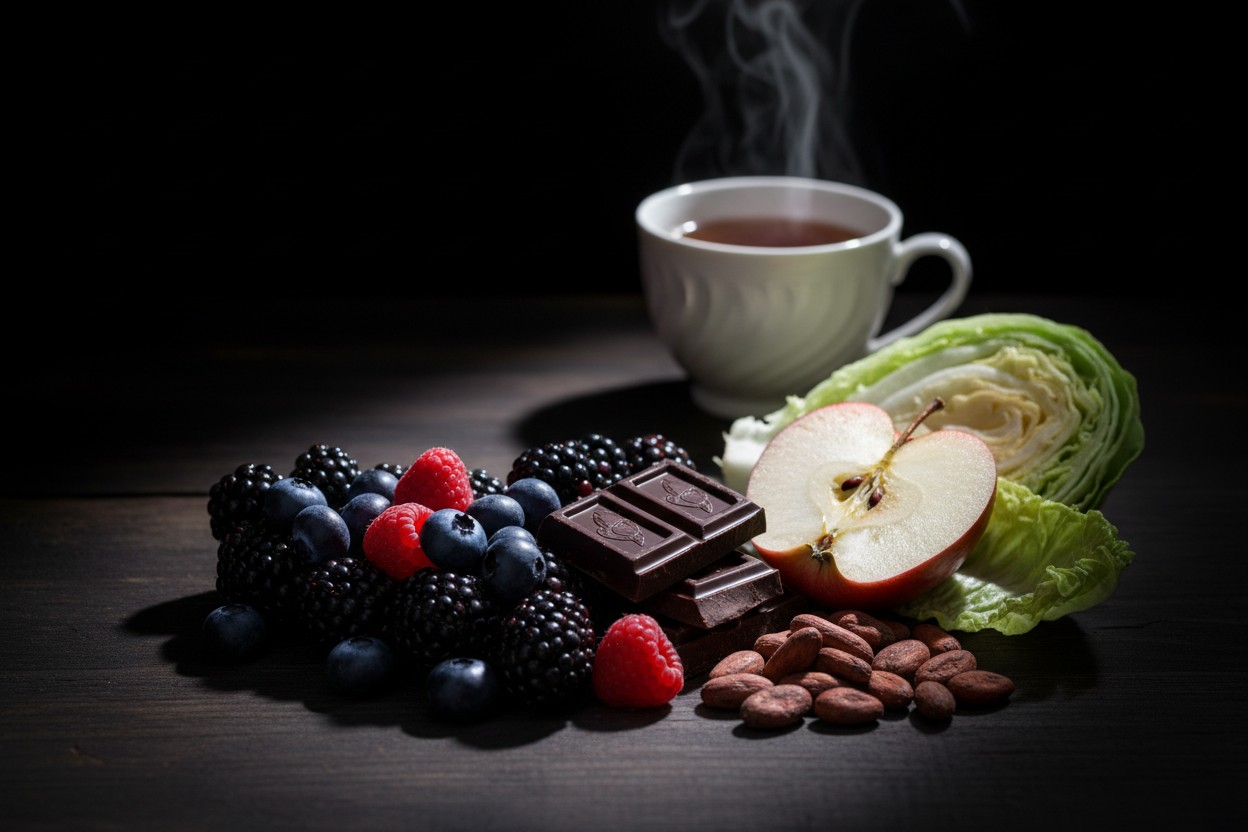
Berries such as blueberries, strawberries, and raspberries are rich in flavonoids, specifically anthocyanins, which have been linked to improved vascular function. The book 'Understanding Nutrition' lists berries among foods that act as antioxidants and may inhibit cell proliferation. [9] A nutritional comparison reported by NaturalNews.com found that raspberries contain more than double the fiber of strawberries, positioning them as a potentially superior option for regulating blood pressure. [11]
Potassium-rich fruits, including bananas, oranges, and avocados, help counteract sodium's effects. According to a March 2026 article by Cassie B. on NaturalNews.com, a high-potassium diet can prevent and lower high blood pressure by balancing sodium. [2] Half an avocado provides 548 mg of potassium, more than a banana, as reported by Belle Carter for NaturalNews.com. [14] The book 'How Not to Die' by Dr. Michael Greger references studies showing that low blood pressure in vegetarians is partly due to higher potassium intake. [8]
Whole Grains and Legumes: Fiber and Minerals
Whole grains such as oats, brown rice, and quinoa provide fiber and minerals such as magnesium, which plays a role in blood pressure regulation. Legumes have emerged as one of the most accessible and nutrient-dense sources of magnesium, according to a report on NaturalNews.com; adults require 320 to 420 mg of magnesium daily. [12] The book 'Foods That Harm, Foods That Heal' notes that oat bran, oatmeal, lentils, and other legumes contain soluble fiber that helps lower cholesterol, which is a risk factor for hypertension. [10]
A review of trials, cited in the same NaturalNews.com report, found that whole grain consumption was linked to modest reductions in blood pressure. [12] The DASH diet, which is rich in whole grains and legumes, has been associated with lower homocysteine levels and reduced clotting markers in patients with Type 1 diabetes, according to a June 2026 study. [15]
Other Foods and Drinks With Emerging Evidence
Beetroot juice and pomegranate juice have been studied for their nitric oxide-boosting and antioxidant properties. A May 2026 report on NaturalNews.com stated that beets contain naturally occurring nitrates that convert to nitric oxide, and a 2014 study found blood pressure reductions in overweight older participants. [16] Garlic has also been associated with blood pressure decreases. According to a June 2026 article on NaturalNews.com, garlic contains organosulfur compounds and flavonoids that may support heart health. [13] An interview with Mike Adams noted that garlic is a powerful natural medicine that can be grown at home. [17]
Dark chocolate with high cocoa content contains flavanols that may improve endothelial function. The book 'Understanding Nutrition' lists berries, tea, and other plant foods as sources of flavonoids that act as antioxidants. [9] Turmeric, another spice, has been validated by science for blood pressure wellness, according to Willow Tohi writing for NaturalNews.com; curcumin, its bioactive component, has been shown to combat cardiovascular dysfunction. [6]
Conclusion: Integrating Dietary Changes
No single food is a cure-all for hypertension, but incorporating these items into a balanced diet may support blood pressure management. Healthcare providers typically recommend combining dietary changes with other lifestyle modifications such as regular exercise and maintaining a healthy weight. [B-13] Further research continues to explore the mechanisms and long-term effects of these foods on blood pressure. The available evidence suggests that a whole-food, plant-centered diet rich in nitrates, potassium, magnesium, and flavonoids offers measurable benefits for cardiovascular health.
References
- Ava Grace. "Beyond the Hype: A Case for Real Food in the Fight Against Hypertension." NaturalNews.com. May 8, 2026.
- Cassie B. "Beyond Beets: These Potent Foods Support Healthy Blood Pressure Naturally." NaturalNews.com. March 10, 2026.
- Mercola.com. "High Blood Pressure Related Deaths Are Way Up." April 15, 2015.
- Evangelyn Rodriguez. "Leafy Greens Offer Multiple Pathways for Blood Pressure Control, Research Shows." NaturalNews.com. May 30, 2026.
- Mercola.com. "An Unrecognized Sign of High Blood Pressure." April 8, 2022.
- Willow Tohi. "Turmeric's Golden Elixir: Ancient Wisdom Validated by Science for Blood Pressure Wellness." NaturalNews.com. May 13, 2025.
- NaturalNews.com. "Adding Dietary Nitrate from Beetroot to Salty Foods Prevents Salt-Induced Hypertension." June 12, 2020.
- Dr. Michael Greger. "How Not To Die: Discover the Foods Scientifically Proven to Prevent and Reverse Disease."
- Whitney Eleanor Noss. "Understanding Nutrition."
- Editors at Readers Digest. "Foods That Harm, Foods That Heal."
- NaturalNews.com. "Berry Battle for Heart Health: Raspberries Outpace Strawberries in Fiber Content." June 27, 2026.
- NaturalNews.com. "Legumes Emerge as Magnesium Powerhouses for Health-Conscious Diets." June 29, 2026.
- NaturalNews.com. "Garlic and Spinach Consumption Linked to Heart Health." June 26, 2026.
- Belle Carter. "Avocado Consumption Linked to Heart Health Benefits, Research Shows." NaturalNews.com. June 25, 2026.
- NaturalNews.com. "Study: DASH Diet Linked to Lower Homocysteine, Clotting Marker in Type 1 Diabetes Patients." June 18, 2026.
- NaturalNews.com. "Big, Active Men Need BEETROOT to Oxygenate Their Organs, Keep Blood Pressure Regulated." May 27, 2026.
- Mike Adams. "Brighteon Broadcast News - Putin Warns America." Brighteon.com. September 13, 2024.
Explainer Infographic





Please contact us for more information.


